Testimonials
Services
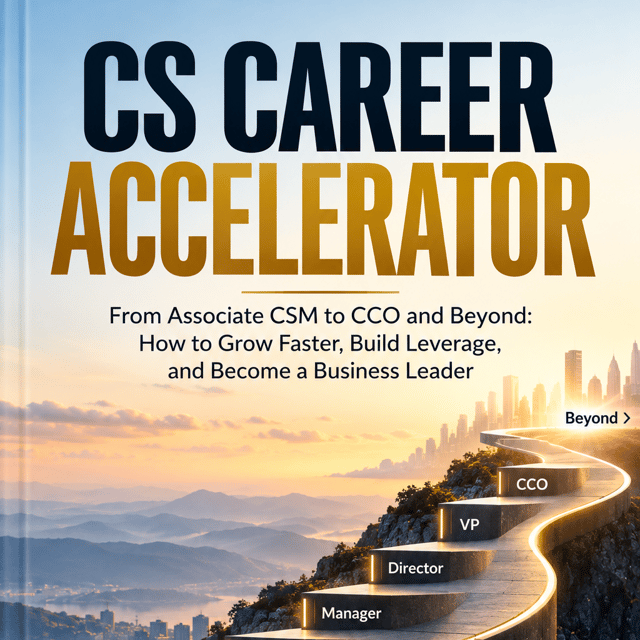
CS Career Accelerator: From CSM to CCO
Quick chat

AI Powered Customer Success Playbook
Customer Success Leadership Accelerator
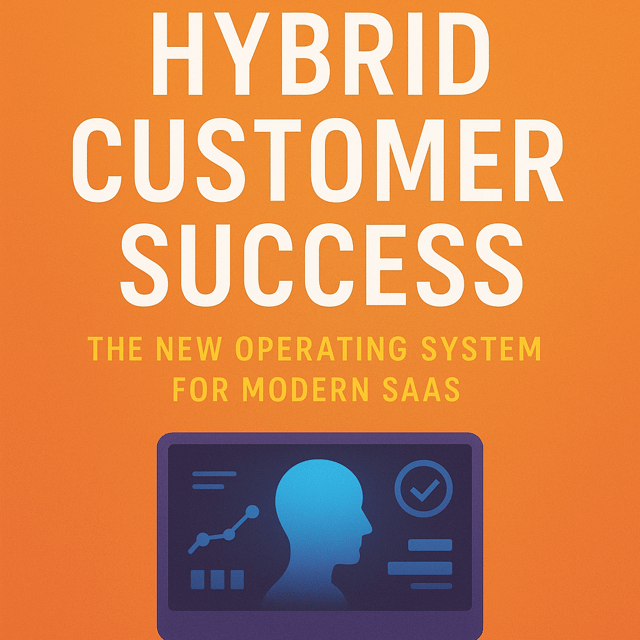
Hybrid Customer Success: The Scalable CS Model
Customer Success Renewal FAQ Playbook

LinkedExp: Export & Analyze LinkedIn Posts
Fractional CS Leader for Startups & Scaleups
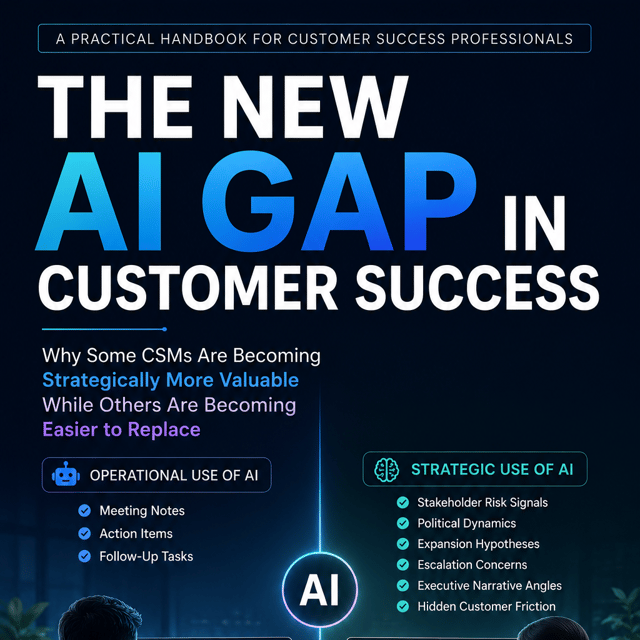
Strategy & Consulting for B2B SaaS Companies
Customer Success | Coaching Package (4 sessions)
Discovery Call
Land Your Next CS Role. Resume + Interview

Transform your Customer Success Experience
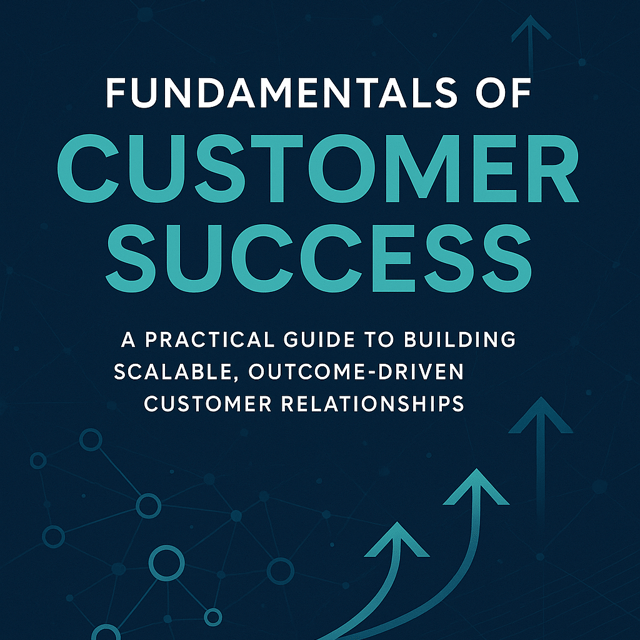
Fundamentals of Customer Success
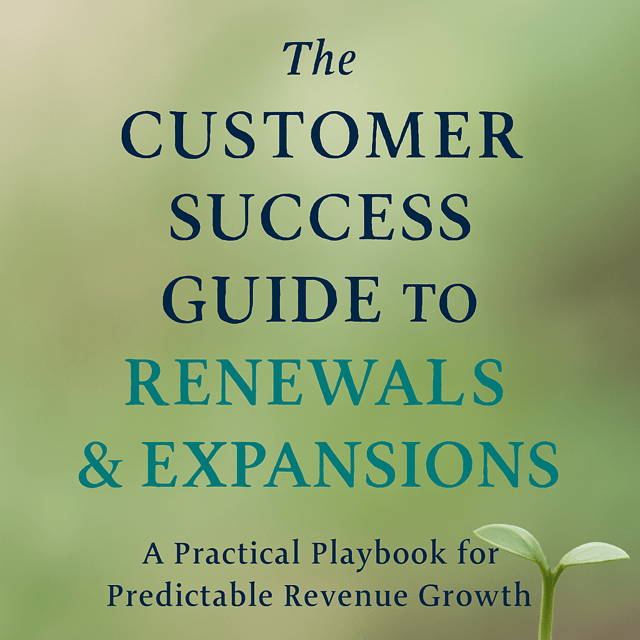
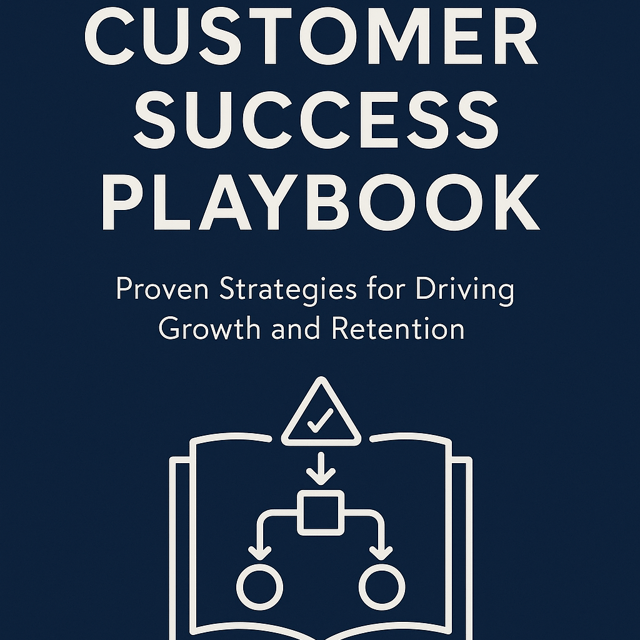

LinkedSnip - Save & Insert LinkedIn Snippets
Customer Success Desk Cheat sheet
Webinars & Podcasts invite
Unlock Your Dream Customer Success Career!
CS Playbook Session
CRM Setup & Consultation
About me
- All services discounted for a month. Hurry!

Frequently asked questions
How to build a customer success strategy for a B2B SaaS company?
Start by segmenting customers by revenue, lifecycle stage, and expansion potential, because each segment needs a different touch model — high-touch, low-touch, or tech-touch. Define the outcome each segment is buying, then map the journey to it: onboarding milestones, adoption signals, health scoring, renewal checkpoints, and expansion triggers. Add playbooks for the moments that decide retention and pick the metrics you will be measured on, such as churn and NRR. A simple customer success strategy framework many B2B SaaS teams follow is: segment, define outcomes, design the journey, staff the touch model, measure, and iterate.
What should a customer success strategy example include?
A practical customer success strategy example includes customer segmentation, a success plan per segment, onboarding with a defined time-to-value target, a health score built from usage and engagement data, and clear renewal and expansion plays triggered by those signals. It should also spell out the touch model for each segment and an owner for every stage, so the strategy is executable rather than just a deck. If an example has no thresholds, triggers, or owners attached, it will not hold up against a real book of business.
What is net revenue retention in SaaS?
Net revenue retention (NRR) measures how much recurring revenue you keep from existing customers over a period, after adding expansion and subtracting downgrades and churn. If a set of customers represented ₹1 crore of ARR a year ago and represents ₹1.15 crore today, NRR is 115% — the base grew without adding a single new customer. An NRR above 100% means expansion from existing customers more than offsets churn, which is why investors treat it as one of the strongest health signals in SaaS.
How to calculate net revenue retention?
The net revenue retention formula is: (starting ARR or MRR + expansion − contraction − churn) ÷ starting ARR or MRR × 100. Take the recurring revenue from a fixed group of customers at the start of the period, add upsells and cross-sells from that same group, subtract downgrades and lost revenue, then divide by the starting figure. Revenue from new customers signed during the period is excluded — NRR looks only at the existing base. Calculate it monthly if you run on MRR and annually if you run on annual contracts.
What are good net revenue retention benchmarks for B2B SaaS?
Commonly used net revenue retention benchmarks put 100%+ at good, 110%+ at very good, and 120%+ at excellent, particularly for mid-market and enterprise SaaS where expansion headroom is larger. SMB-heavy products often land between 90% and 100% because small customers churn more and expand less. Benchmark against companies with a similar customer segment and deal size rather than public SaaS headlines, since segment mix changes what a realistic target looks like more than any other factor.
How can a SaaS company improve net revenue retention?
Improve NRR by working both levers: cutting churn and contraction while adding deliberate expansion. In practice that means tighter onboarding so customers reach value faster, early warning on at-risk accounts through usage-based health signals, business reviews tied to the customer's own outcomes rather than your product features, and defined upsell paths for accounts whose usage is growing. Start renewal conversations 90–120 days before the renewal date instead of in the final week. Teams that design expansion as a repeatable motion, not a happy accident, see the largest NRR gains.
What is SaaS retention?
SaaS retention is a measure of how many customers and how much recurring revenue a subscription business keeps over a period, usually tracked as logo retention and revenue retention. Because SaaS revenue compounds, retention is often a bigger growth lever than new sales — every point of churn you remove keeps paying you in every future period. It is normally monitored through churn rate, customer retention rate, and revenue retention metrics such as gross revenue retention and net revenue retention.
What are the most effective SaaS customer retention strategies?
The SaaS customer retention strategies that consistently work are structured onboarding with a clear time-to-value target, continuous proof of value through reviews and success plans, proactive risk management using usage and engagement signals, and an easy expansion path once a customer is succeeding. Good support and product reliability are hygiene factors — they prevent churn but do not create loyalty on their own. The real differentiator is making customers measurably successful at the outcome they bought the product for, and proving that value back to them before every renewal.
What is a good customer retention rate in SaaS?
For B2B SaaS, a customer retention rate above 90% annually is generally considered healthy, which means annual logo churn under 10%. SMB-focused products often run lower — anywhere from 70% to 85% — because small businesses churn for reasons unrelated to the product, while enterprise products should sit well above 90%. Track it alongside revenue retention too, because a product can keep a high number of small logos and still lose meaningful revenue.
Which SaaS customer retention metrics should I track?
The core SaaS customer retention metrics are logo churn rate, revenue churn rate, gross revenue retention, net revenue retention, customer retention rate, and expansion revenue as a share of ARR. Supporting indicators worth watching are time-to-value in onboarding, product adoption depth, health scores, and renewal rate by cohort. GRR tells you whether you are holding the base without expansion, NRR tells you whether existing customers are growing in value, and usage metrics explain why — read them as a set rather than betting on a single number.
How do I transition into a customer success role from a technical or support background?
Treat your background as the bridge, not the barrier. Reframe what you already do in customer-outcome language: engineers can point to implementations, escalations, and technical problem-solving they owned; support professionals can point to resolution, product depth, and customer communication. Then learn the commercial layer that separates CS from support — retention, renewals, expansion, health scoring, and QBRs. Build proof with a metrics-driven resume that shows impact on customer outcomes, and target products you already understand. Domain familiarity plus commercial vocabulary is what usually lands the first CS role.
How do I prepare for a customer success manager interview?
Prepare for three layers of questions: customer scenarios such as handling an at-risk account or a churn threat, commercial questions on renewals, upsells and QBRs, and metric questions on churn, NRR, adoption and time-to-value. Have four or five STAR-format stories ready that show measurable customer outcomes — an account saved, adoption increased, revenue expanded. Study the company's product and customer segment beforehand, because SMB, mid-market and enterprise CS are genuinely different jobs, and asking sharp questions about their churn and CS maturity signals seniority.
What does a fractional customer success leader do?
A fractional customer success leader runs the CS function part-time or on contract — building the retention strategy, designing onboarding and renewal processes, coaching the team, and standing up churn and NRR reporting — without the cost of a full-time executive. Startups and scaleups typically bring one in when churn is climbing, a CS function needs to be built from scratch, or the existing team needs senior direction before a full-time VP-level hire makes sense. You get executive-level CS ownership and accountability for retention at a fraction of the cost of a permanent hire.
When should a SaaS startup hire its first customer success manager?
A common trigger is when the founder or sales team can no longer personally handle onboarding, adoption and renewals — often after the first 15–30 B2B customers, or once recurring revenue makes the salary a defensible investment. Earlier warning signs that CS is overdue: onboarding is inconsistent, churn reasons are unknown, renewals get discovered late, and expansion happens only by accident. Quiet churn with no expansion is also a CS gap. Prioritize segment fit — someone who has retained customers like yours — over generic SaaS experience.
How is AI used in customer success?
AI is mostly being applied to the operational layer of CS: summarizing customer calls and QBR notes, flagging churn risk from product usage patterns, drafting renewal and outreach messages, and surfacing health insights from CRM and product data. The practical benefit is time — less manual reporting and note-taking, more time in real customer conversations. The emerging divide is between teams that use AI to deepen customer understanding and teams that use it merely to automate communication; the first approach improves retention, the second usually weakens relationships.