Testimonials
Services
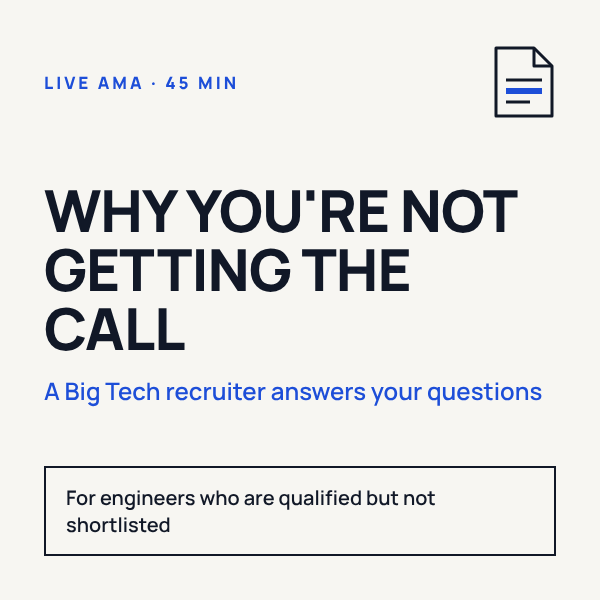
Why You’re Not Getting the Call: Live AMA
Quick Resume Review(3 days)
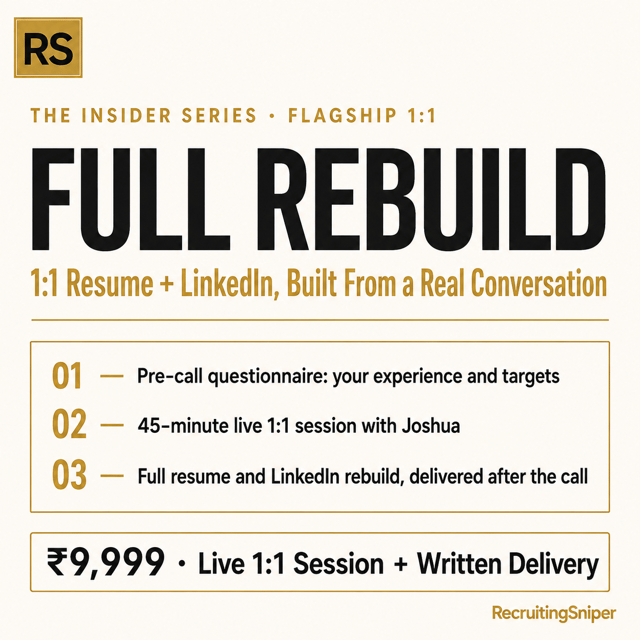
Full Rebuild: 1:1 Resume + LinkedIn
Executive LinkedIn Ghostwriting: Intake
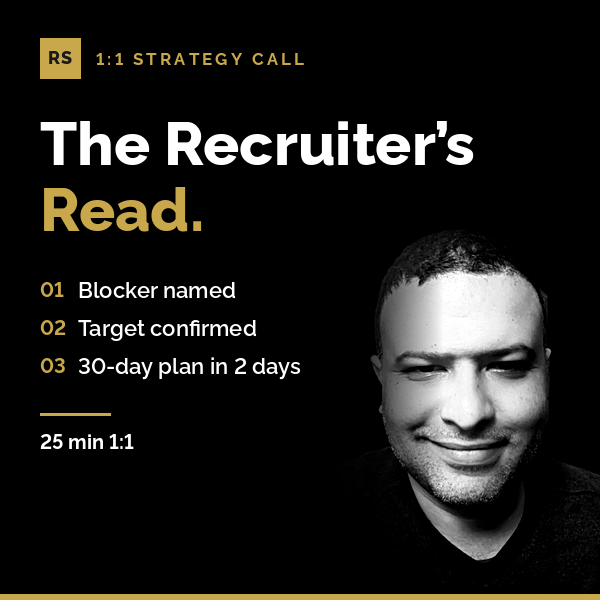
The Recruiter’s Read: 1:1 Career Strategy
The Impact Document Rebuilt for 2026
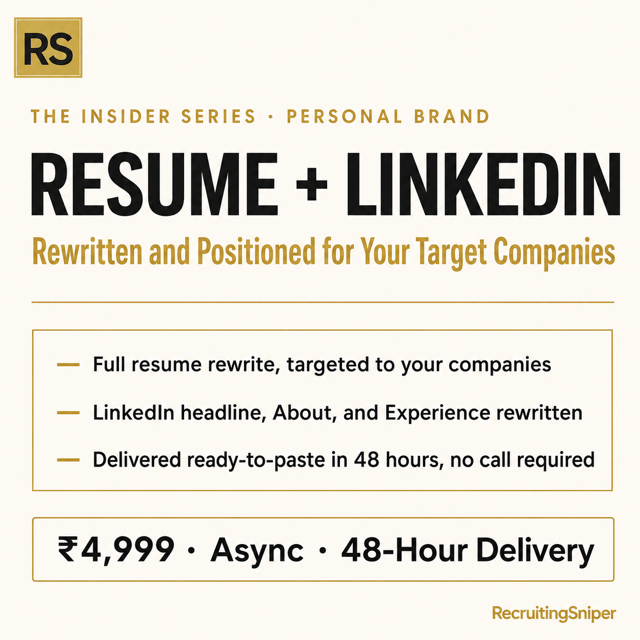
Resume + LinkedIn - Reviewed and Rewritten
About me
- Joshua praised for supportiveness, insightful guidance, and effective query resolution.
 AI-generated based on testimonials
Frequently asked questions
How to prepare for a FAANG interview?
Start by understanding the loop for your target level: coding and data structures, system design or domain depth, and behavioral rounds. Prepare in that order — refresh core DSA patterns with daily timed practice, write out 8–10 STAR stories from real projects, and align your resume with the impact you claim in them. Do at least 3–5 mock interviews before the real loop, because feedback from mocks is what converts knowledge into performance. If you're targeting engineering-manager or staff-plus roles, weight leadership and system-design signal more heavily than raw problem count.
How long to prepare for a FAANG interview?
For most working professionals, 3–6 months of consistent preparation is realistic. You may need only 8–12 weeks if you already code regularly and mainly need system design and behavioral polish, while 6+ months is safer if you're returning after a gap, moving from a service-based to a product company, or stepping into management. Leadership roles take longer because executive storytelling needs repeated refinement. Whatever your baseline, keep the final 2–3 weeks for company-specific mocks rather than new topics.
Is a FAANG interview preparation course worth it?
A course is worth it when you need structure, accountability, and feedback — the three things self-study rarely provides. If your fundamentals are already strong, curated problem lists, a good book, and peer mocks may be enough. But if you keep restarting, don't know what interviewers are actually scoring, or keep failing loops without understanding why, a structured FAANG interview preparation course with live mocks and mentor feedback usually pays for itself. Judge any program by the quality of its mock interviews and personalized feedback, not the number of recorded hours.
What should a FAANG interview preparation roadmap look like?
A practical 12–16 week FAANG interview preparation roadmap runs in phases: weeks 1–4 on core data structures and patterns (arrays, hashing, trees, graphs, DP) with daily timed problems; weeks 5–8 on system design fundamentals plus one deep-dive area for your level; weeks 9–10 on behavioral and leadership stories in STAR format; and weeks 11 onward on full-length mocks, company-specific research, and applications with referrals running in parallel. Reverse-plan from your target interview date and keep applying during prep — competing offers strengthen your position.
How is FAANG interview prep in India different from other countries?
The evaluation bar is global, so the core work — DSA, system design, and behavioral rounds — is identical. What differs in India is market context: application volumes are extremely high, so referrals and recruiter visibility decide who gets shortlisted; many candidates prepare alongside demanding service-company jobs, so timelines stretch; and India's ecosystem of GCCs, unicorns, and product companies runs loops that closely mirror FAANG's. Preparing for the FAANG bar in India effectively prepares you for the entire product-company market.
What is LinkedIn profile optimization?
It's the process of aligning every element of your profile — headline, About section, experience bullets, skills, and activity — with the keywords recruiters actually search for, so you appear in the right searches and profile views turn into conversations. It covers positioning (the role you're targeting), proof (quantified achievements), and visibility (search ranking, engagement, recommendations). Done well, your profile becomes a passive pipeline: recruiters find you instead of you chasing them.
How do you optimize your LinkedIn profile?
Work through it in this order: rewrite your headline around the role you want rather than the title you have, load your About and Experience sections with keywords from target job descriptions, convert responsibilities into metric-backed achievements, align your skills section to those keywords, add a professional photo and banner, and gather recommendations that reinforce your positioning. Then adjust your open-to-work settings for your situation and engage with content in your niche weekly so the algorithm keeps surfacing you. Optimize toward one clear target — a profile aimed at everything ranks for nothing.
How to check LinkedIn profile optimization?
Run a five-point audit. Search your target job title on LinkedIn and see if your profile appears in the top people results. Check your Social Selling Index score and your search appearances in profile analytics. View your profile as a public visitor and as a recruiter — your target role should be obvious within three seconds. Verify that keywords appear in your headline, About, and experience bullets, not just the skills list. Free LinkedIn profile optimization tools can flag missing basics, but judging whether your positioning actually speaks to the roles you want still needs a human eye.
What is a LinkedIn Open Profile?
An Open Profile is a LinkedIn Premium feature that makes your full profile visible to anyone on the platform, including people outside your network, and lets any member message you for free instead of using paid InMail credits. It's built for people who want inbound opportunities — job seekers open to recruiter conversations, consultants, freelancers, and mentors. The trade-off is volume: you'll receive more messages, including irrelevant ones, so it works best once your headline and About section are sharply positioned.
Are LinkedIn profile optimization services worth it?
They're worth it in three situations: you're targeting senior or leadership roles where positioning matters more than keywords, you're repositioning yourself (for example, services to product companies, or IC to management), or your profile gets views but no relevant messages. A good service rewrites positioning rather than stuffing buzzwords — a clear headline, an About section with a point of view, quantified experience bullets, and a LinkedIn that tells the same story as your resume. If you have clarity and time, DIY works; if the market is giving you silence, an outside-in, recruiter's-eye rewrite usually fixes what you can't see yourself.
Can I use AI for LinkedIn profile optimization?
Yes — AI is genuinely useful for the drafting layer: generating headline variants, restructuring your About section, extracting keywords from target job descriptions, and tightening experience bullets. What AI can't do is know your real achievements, so output stays generic unless you feed it your metrics, target roles, and concrete examples. The practical workflow is AI for structure and first drafts, your own or a mentor's judgment for positioning and proof, and a final pass to remove the generic phrasing recruiters have learned to spot.
What is the best job search strategy?
There's no single best one, but the highest-performing job searches combine the same fundamentals: target a shortlist of 20–30 companies instead of mass applying, tailor your resume for each role so it clears ATS screening, go referral-first because referred applications convert far better than cold ones, do direct outreach to recruiters and hiring managers, and track everything in a simple pipeline so follow-ups never slip. Depth beats volume in every market — ten tailored, referral-backed applications outperform a hundred cold ones.
How to develop a job search strategy?
Build it in six steps. One: define the exact role and level you're targeting. Two: audit the gap between your current profile and what that market demands. Three: rewrite your resume and LinkedIn around that single target. Four: create a tiered company list. Five: set weekly quotas for applications, outreach, and conversations, and choose your channels — referrals, recruiters, job boards, direct outreach. Six: review weekly and double down on channels producing conversations while cutting those producing silence. Treat the search as a pipeline you manage, not a form you fill once.
What should a job search strategy for 2026 include?
A job search strategy for 2026 needs to account for AI sitting between you and the recruiter: ATS and AI screening make keyword alignment with the job description non-negotiable, and AI fluency itself is becoming a screening signal, especially for engineering, data, and product roles. Referrals and warm introductions carry even more weight now that application volumes have exploded. Keep your resume as a quantified impact document rather than a duty list, and be ready to demonstrate — not just claim — how you use AI tools in your function.
Does using a job search strategy template actually work?
A template works as a starting structure, not as the strategy itself. A useful job search strategy template includes your target role statement, a tiered company list, a pipeline tracker (applied, interviewing, closed) with dates, weekly targets for applications and outreach, a follow-up cadence, and a list of people to ask for referrals. Templates fail when copied blindly — one built for fresh graduates won't fit a staff engineer or an engineering manager. Use it as a checklist, then adapt the channels and weekly numbers to your seniority and market.