Testimonials
Services
Portfolio + Projects Discussion
Design Consultation (Project)

Become top 1% UX Designer
🚀 UI/UX Kickstart Discussion
Figma Masterclass & Motion Design
Frequently asked questions
How to become a UI/UX designer in India without a design degree?
You don't need a formal design degree — most Indian startups and product companies hire based on skills and portfolio. Learn design fundamentals (visual hierarchy, typography, UX laws), master Figma, and build 2–3 end-to-end case studies that show your problem-solving process, not just pretty screens. If you're working out how to start a UI/UX design career with no experience, start with free resources, then speed things up with feedback from working designers instead of learning in isolation.
Is UX design a good career in India?
Yes — UX design is one of the strongest non-coding tech careers in India right now. Every fintech app, e-commerce platform, and D2C brand needs designers, product companies pay competitively, and the field rewards problem-solving over pedigree. The catch is that entry-level competition is high, so portfolio quality and your ability to explain design decisions matter more than certificates.
What does a UI/UX designer do on a day-to-day basis?
A UI/UX designer researches user problems, maps user flows and wireframes, designs screens in Figma, builds clickable prototypes, and works with product managers and developers to ship features. The split varies — at startups you own everything from research to final UI, while larger companies separate UX and UI roles. Most beginners underestimate how much of the job is communication and defending design decisions.
How to learn UI/UX design from scratch on your own?
Follow a sequence instead of random videos: first design principles and UX fundamentals, then Figma through guided practice, then study and rebuild real apps screen by screen, and finally create 2–3 original case studies. Expect 4–6 months of consistent effort. The difference between people who land jobs and people who stay stuck in tutorials is usually structured feedback at every stage.
Do I need a paid UI/UX design course to get a job, or can I self-learn?
Plenty of designers in India are fully self-taught — recruiters evaluate your portfolio, not your course certificate. A structured UI/UX design course mainly buys you accountability and a learning path; free resources cover the same ground if you're disciplined. If you're going to spend money, 1:1 mentorship or portfolio feedback usually delivers more job-ready value than a recorded course.
How to get a UX design job as a fresher in India?
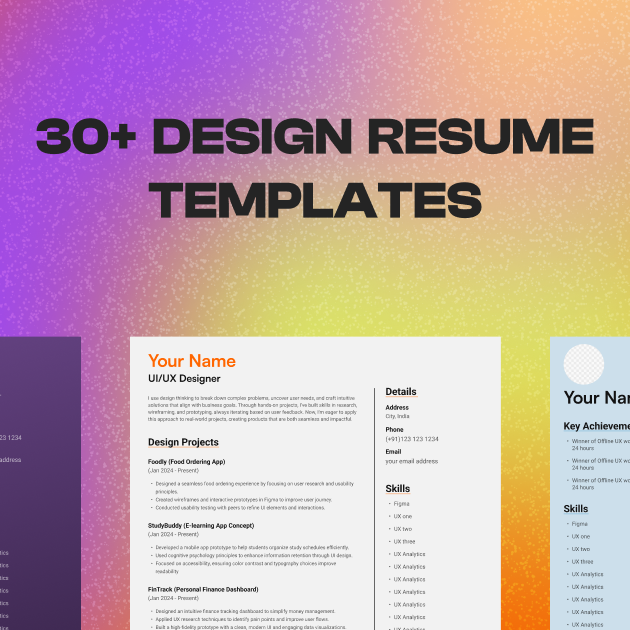
As a fresher, your portfolio is your resume — 2–3 strong case studies with a clear problem, process, and outcome beat ten decorative screens. Get your resume ATS-friendly, apply directly to startup roles on job platforms, and reach out to designers for referrals and portfolio feedback. Most freshers land their first role only after multiple rounds of portfolio iteration, so treat early rejections as feedback loops, not failure.
What is the average UI/UX designer salary in India?
UI/UX designer salary in India varies widely with portfolio quality, skills, and company type — service agencies and early-stage startups pay less, while product companies pay significantly more. Freshers start modest, but designers who can own research, interaction design, and handoff independently see steep jumps within 2–3 years. Your portfolio and interview performance influence offers more than your degree.
What does a typical UX design career path look like in India?
Most designers begin as a UI/UX designer or product design intern, progress to product designer, then senior designer, and eventually design lead or head of design. Some branch into UX research, design systems, or motion design along the way. In India, the most common growth jump is moving from service-based companies to product companies, where scope and pay are both higher.
Is a UX design career coach worth it for beginners?
If you're stuck in tutorial loops, getting rejected without knowing why, or switching from another field, a UX design career coach can compress months of guesswork into a few focused sessions — they catch portfolio, resume, and interview mistakes you can't see yourself. The right time is once you have some work to review; no coach can learn Figma or build case studies for you.
Which is the best Figma tutorial for beginners?
The best Figma tutorial for beginners is one that makes you build along, not just watch — cover frames, auto layout, components, and prototyping in one complete project, then test yourself by recreating a real app's screens. Free YouTube series are enough to start. What most beginners actually lack is correction on what they build, which is why live 1:1 Figma classes work faster than stacking up more recorded courses.
How to use Figma as a complete beginner, and what is a Figma file?
Open Figma in your browser (it's free to start), create a design file, and practice the core workflow: frames as your artboards, shapes and text for layout, auto layout for structure, and components for reusable elements. A Figma file is the living document where your entire design sits — screens, prototypes, and design system — and because it's cloud-based, multiple people can view and edit it together in real time, which is why teams prefer it over static design tools.
What is Framer used for, and do UI/UX designers need to learn it?
Framer is used to turn designs into real, publishable websites without heavy coding — designers use it for portfolios, landing pages, and interactive prototypes that behave like live products. It's worth learning because teams increasingly want designers who can ship, and the Figma-to-Framer workflow is becoming common for building sites. If you already know Figma, Framer is the most natural next skill and makes your portfolio instantly stand out.
How to switch from mechanical engineering to UX design?
Mechanical engineers transition into UX design well because both fields are built on problem-solving, systems thinking, and moving from technical drawings to working prototypes. Learn UX fundamentals and Figma, document 2–3 redesigns as case studies, and position your engineering background as a strength in interviews rather than hiding it. Designers like Noble — a mechanical engineer turned product designer who now heads design at a top Indian job platform and has trained 210+ students — prove this switch is very much doable.
How to build a UX design portfolio when you have no client projects?
Use concept projects and redesigns: pick a real app with a genuine usability problem, then document your research, iterations, and final solution as a structured case study. You can also volunteer for NGOs, student communities, or small local businesses to get semi-real work. Two deep case studies beat six shallow screens — and get the portfolio reviewed by an experienced designer before applying, since self-spotted gaps are the most common rejection reason.
Will AI replace UI/UX designers?
No — AI is changing how UI/UX designers work, not eliminating the role. AI can generate layouts, variations, and copy quickly, but understanding users, framing the right problem, making product trade-offs, and collaborating with teams remain human skills. The real risk is ignoring AI: designers who use AI tools in their workflow are becoming faster and more employable, and AI fluency is quickly turning into a baseline expectation in design hiring.