Testimonials
Services

Career Consultation | Build Your Career in Canada

🚀💼 Dream Job Tracker for Job Seekers! - New!!
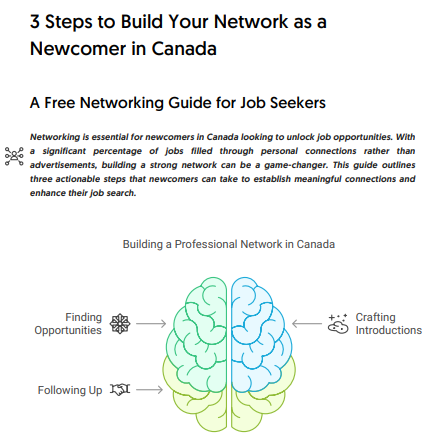
🚀 3 Steps Guide to Build Network in Canada

5 Hacks to Crack Canada’s Job Market - Shashank S
Resume Review - ATS Score & Resume Help
🇨🇦 Canada Career Success Playbooks Bundle
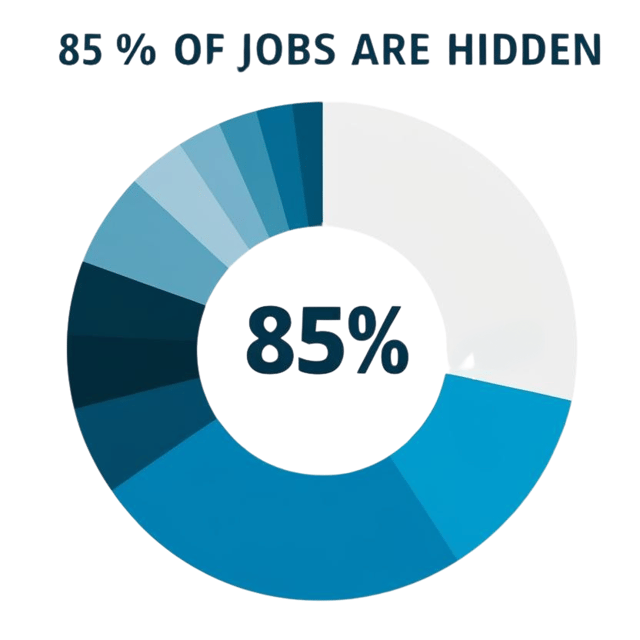
Playbook to Unlock Canada’s Hidden Job Market

🎯 Dream Job Tracker for Job Seekers!
Connect on a Coffee Chat☕
About me
- Students: 20% off any 1:1 session with a valid student email or student ID. One use per person.

Frequently asked questions
How is the job market in Canada right now?
It's competitive but far from closed. Hiring has cooled in some white-collar sectors, while healthcare, skilled trades, finance, tech, and logistics continue to recruit actively. The bigger change is how people get hired — generic mass applications get far fewer replies now, while candidates who tailor each application, use an ATS-friendly resume, and find referrals through their network are still landing roles.
Is the Canada job market bad, or is it just online negativity?
It's tougher than a few years ago — more applicants per posting, longer hiring timelines, and newcomers often needing Canadian experience or local references to get a first break. But "bad" oversells it. People with targeted applications, strong resumes, and warm referrals are hired every day, so treat online negativity as a warning to sharpen your strategy rather than a reason to give up.
What is the Canada job market outlook for 2026?
The near-term outlook points to continued competition in many office-based roles, with steady demand in healthcare, skilled trades, financial services, cybersecurity, and data-related jobs. Employers are hiring more selectively, which raises the bar on resume quality, interview readiness, and networking. Job seekers who align their skills with in-demand areas and apply through referrals have a clear advantage.
What is the meaning of an ATS-friendly resume?
An ATS-friendly resume is one that applicant tracking system (ATS) software can read, parse, and score without errors. ATS software scans your file for keywords, job titles, and structure, and ranks you against the job posting before a human ever sees it. Heavily designed layouts, tables, graphics, text boxes, and unusual section headings can break that parsing and get qualified candidates filtered out.
How to make an ATS-friendly resume that still stands out to recruiters?
Use a clean single-column layout with standard headings like Summary, Experience, Skills, and Education, and save it as a Word document or simple PDF. Pull the exact keywords from each job posting into your bullets naturally, and quantify achievements with numbers, percentages, or dollar figures. Skip tables, columns, photos, and icons, then test the file with an ATS scanner or a professional resume review before applying.
Do ATS-friendly resume checkers really work?
Yes, as a first check — they're good at catching missing keywords, weak formatting, and sections that won't parse correctly. Keep in mind that no checker is identical to the specific ATS an employer uses, so scores vary between tools. Treat a low score as a signal to fix structure and keyword alignment, and pair the automated result with human feedback for high-priority applications.
Which ATS-friendly resume template should I use?
Choose a simple, single-column ATS-friendly resume template with a standard font, clear section headings, and plain bullet points — no photos, tables, text boxes, or graphics. The most reliable ATS-friendly resume format is reverse-chronological, with your most recent role first and consistent dates and job titles. Free templates in Word or Google Docs work well as long as you keep the structure simple and customize it for every posting.
What is job interview preparation, exactly?
It's the process of getting ready to perform at your best in an interview, not just skimming the job description. Real preparation means researching the company, mapping your experience to the role's requirements, practising common and behavioural questions out loud, preparing your own questions, and doing mock interviews to sharpen your delivery. Candidates who prepare this way give structured, confident answers instead of improvising under pressure.
Which interview preparation tips make the biggest difference?
Practise your answers out loud rather than in your head, and structure your stories using the STAR method — Situation, Task, Action, Result. Prepare five or six flexible stories you can adapt to different questions, research the company's recent updates, and end with two or three thoughtful questions of your own. The single biggest upgrade is a mock interview with honest feedback, which exposes weak spots you can't hear on your own.
Which interview preparation questions should I practise before an interview?
Start with the core ones: "Tell me about yourself," your strengths and weaknesses, "Why this role?" and "Why this company?" Then add behavioural questions — handling conflict, missing a deadline, leading a team, solving a hard problem — answered in STAR format, plus the technical questions your specific job posting hints at. Rehearsing these in advance turns the real interview into recall instead of improvisation.
Is interview preparation coaching worth it?
If you're getting interviews but not offers, it usually is — that pattern almost always means the issue is presentation, not qualifications. A coach provides what self-practice can't: honest feedback on rambling or vague answers, help structuring stories that land, and realistic mock interview pressure. It pays off most for competitive roles, career changers, and people returning to the job market after a long gap.
Are interview preparation AI tools as effective as practising with a person?
AI tools are genuinely useful for generating likely questions, drafting answer frameworks, and rehearsing on demand. Where they fall short is nuance — they can't fully recreate real interview pressure or give the personalized, industry-specific feedback an experienced mentor can. The strongest approach is to use AI to build and polish your answers, then pressure-test them in a live mock interview with a coach or seasoned professional.
How do I access the hidden job market in Canada?
A large share of Canadian roles are filled through referrals and internal candidates before they're ever posted publicly, so the goal is to be known before the job opens. Connect with people at target companies on LinkedIn, ask for short informational interviews instead of asking for jobs, attend industry meetups and alumni events, and follow up consistently. Treating it as a structured routine — tracking contacts and touchpoints — works far better than random outreach.
How long does it take to build a network in Canada as a newcomer?
For most newcomers it takes several months of consistent effort, because Canadian hiring leans heavily on trust and referrals. Start with alumni associations, professional meetups, volunteer roles, and LinkedIn engagement — offer genuine interest and value before asking for anything. People who start networking in their first weeks in Canada consistently land roles faster than those who wait until after months of unanswered applications.