Testimonials
Services
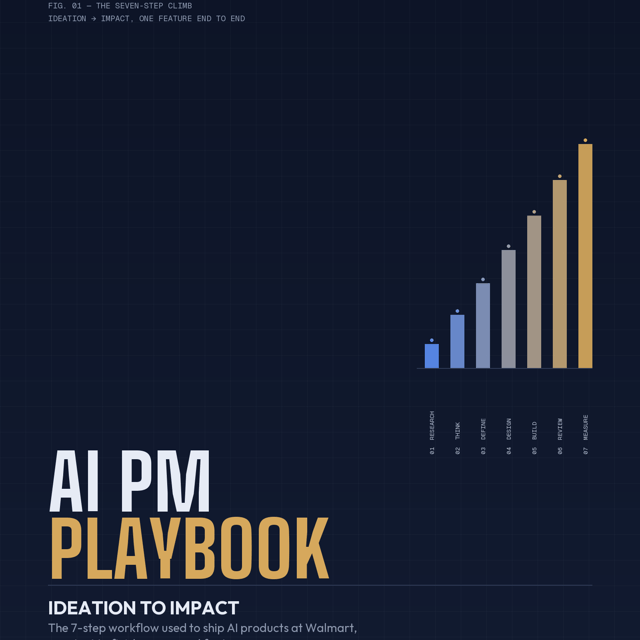
User Study Guide for PMs in Fortune 10 Firms
Resume Review & Mock Interview
Break into & Grow in Product Roles - Full Course
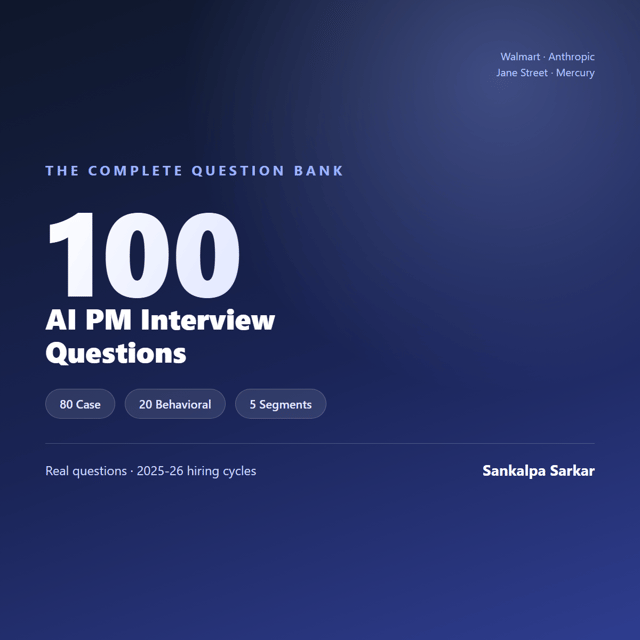
Interview Questions - 1 Cr Salary PM Roles
How to Ace Product Interviews & be Memorable
Break into & Grow in PM Role - Fast Track Mode
About me
- MeraTalent — Free ATS Resume Checker & Scorehttps://www.meratalent.com
Frequently asked questions
How to crack a product manager interview?
Cracking a PM interview comes down to structured preparation, deliberate practice, and strong storytelling. Master the core round types — product sense, metrics and execution, strategy, and behavioural — and prepare 4–5 personal stories with measurable impact that you can adapt to different questions. Practise answering out loud or in mock interviews, since interviewers evaluate how you think, not just what you know. Finally, research the company's product and users so your answers are tailored instead of textbook.
How to answer product management interview questions?
Start every answer by clarifying the question and stating your assumptions, then follow a clear structure — for design questions, cover users, pain points, solutions, and trade-offs; for metric questions, define what success means before suggesting numbers. Anchor everything in user empathy and business impact, and quantify wherever possible. Interviewers care more about your reasoning than the "right" answer, so think aloud, prioritise explicitly, and welcome pushback instead of reciting a memorised framework.
What is a product manager interview like?
Most companies run 3–5 rounds over a few weeks: a recruiter or hiring manager screen, followed by rounds on product sense, analytics and metrics, strategy, and behavioural fit, with some firms adding a case study, assignment, or domain round. Each round usually lasts 45–60 minutes. In India, fintech, banking, and SaaS companies often add domain-depth questions, so expect scenarios like improving a payments app or defining metrics for a lending product.
What are the common product management interview questions for freshers?
Freshers are usually tested on guesstimates, product teardowns of everyday apps, questions around internships or academic projects, and motivation questions like "Why PM without a tech or MBA background?" Prepare by doing detailed teardowns of 2–3 apps you use daily, practising 15–20 guesstimates, and reframing college projects as product stories with a user problem, your decisions, and the outcome. Interviewers don't expect work experience from freshers — they expect structured thinking and genuine product curiosity.
How do I answer the "Why are you interested in product management?" interview question?
Connect three dots: what you have done so far, the specific skills product management demands, and why the move makes sense now. For example, an engineer can point to building user-facing features and wanting to own the "what" and "why", not just the "how". Avoid generic lines like "I love building products" — instead reference a real moment when you identified a user problem or drove a change, and tie your motivation to the company's product and users so the answer feels specific, not rehearsed.
Which is the best product management interview book?
Look for a book that covers the full interview loop — product sense, guesstimates, metrics, strategy, and behavioural questions — with worked examples rather than only Silicon Valley stories. A good book builds your frameworks and vocabulary, but reading alone rarely converts into offers: pair it with writing your own answers and doing mock interviews. If you're targeting a specific domain like fintech or AI, prioritise material from authors who have actually shipped products in that space.
How to get a product manager job?
The most reliable route is to get close to product work in your current role — own a feature, run user interviews, or volunteer for cross-functional projects — and then present these as outcome-driven stories on your resume. Many professionals in India transition through adjacent roles such as product analyst, project manager, or APM programs, or through startups that value domain depth over titles. Network with PMs at your target companies for referrals, and treat interview preparation as a separate, dedicated project.
Is product management a good career?
Yes, if you enjoy ambiguity, influencing without authority, and owning outcomes end to end. In India, demand is strong across fintech, SaaS, e-commerce, and now AI-first companies, and senior PM compensation rivals or exceeds engineering leadership tracks. The honest trade-offs are that entry is competitive — especially for career switchers — and growth depends on shipping visible impact. For the right profile, few careers offer this mix of scope, pay, and future optionality.
What does a product manager career path look like in India?
The typical ladder is APM/Associate PM → Product Manager → Senior PM → Group/Principal PM → Director of Product → VP/CPO, with roughly 2–4 years per level depending on company scale and impact. Compensation grows steeply with each jump, and product-led companies in fintech, SaaS, and e-commerce pay a significant premium over services or traditional IT firms. Many PMs also branch into startup founding, consulting, or adjacent leadership roles, so the path carries more optionality than a single ladder suggests.
When should I work with a product manager career coach?
A coach adds the most value at three moments: when you're switching into product from another function and need a clear positioning roadmap, when you're getting interviews but failing repeatedly and can't diagnose why, and when you're targeting top product companies and need expert feedback on your resume, storytelling, and mock interviews. Self-study resources cover frameworks well, but a coach who has built and scaled real products can spot gaps in your thinking that books cannot. If you're already converting offers consistently, you likely don't need one.
How to become an AI product manager?
Build on core PM fundamentals — discovery, prioritisation, metrics — and layer AI literacy on top: how ML models and LLMs actually work, what data they need, and where they fail. The fastest credibility builder is shipping something — an AI feature at your current job, a side project using LLM APIs, or detailed AI product case studies. AI PM hiring in India is accelerating in fintech, e-commerce, and SaaS, so target companies where AI is core to the product, not a marketing label.
What does an AI product manager do?
An AI product manager owns products where machine learning drives the core value — defining which problem is worth solving with AI, partnering with data science teams on model choices and evaluation, managing data quality, and navigating trade-offs unique to probabilistic systems such as accuracy vs latency, hallucination risk, and user trust. Unlike a traditional PM, success metrics often revolve around model performance and human-AI interaction quality, not just feature adoption.
What is an AI product manager's salary?
AI PMs typically command a premium over traditional PM salaries because demand is growing faster than the supply of people who combine product skills with genuine AI understanding. The actual figure varies widely with experience, company stage, and city — AI-first product companies and well-funded startups in India pay at the top of the band, while the premium is smaller where AI is a side feature. Before negotiating, benchmark against live openings for AI PM roles at your target companies rather than generic PM salary reports.
Do I need an AI product management course to become an AI PM?
No course is mandatory — hiring managers care whether you can reason through an AI product problem and show evidence of building or deeply analysing AI features. A structured course helps if you need guided learning on ML/LLM fundamentals or want accountability, so evaluate options on practical projects, mentors who have actually shipped AI products, and outcomes of past learners rather than certificates alone. Many people combine free resources for fundamentals with a focused playbook or mentorship for interview readiness.
Is the IBM Product Manager Professional Certificate worth it?
It can be a reasonable starting point if you're from a non-product background and want a structured introduction to PM fundamentals, tools, and vocabulary. That said, in India, certificates rarely move hiring decisions on their own — recruiters screen for outcome-driven experience and strong interview performance. If you take it, treat it as a foundation and invest the larger share of your effort into real product case practice, portfolio projects, and mock interviews.