Testimonials
Services
Absorption and stripping full notes
Resume Template 3
Resume Template 1
Resume Template 4
Pipe Network Hydraulics – Live Excel Calculator
Career Guidance and Resume review
Line Sizing Incompressible Flow Excel Workbook
AI PROMPT ENGINEERING FOR PROCESS ENGINEER
Pump Hydraulics – Power NPSH Live Excel Calculator
Tank Sizing – Capacity Excel Calculator
First 100 days for Process engineers
Control Valve Sizing – Live Excel Calculator
Mass Transfer – GATE & Process Engineer Handbook
Heat Transfer – Engineering Handbook
Thermodynamics – Complete Textbook for GATE, PSU
PSV Sizing Bundle – All Scenarios Calculations
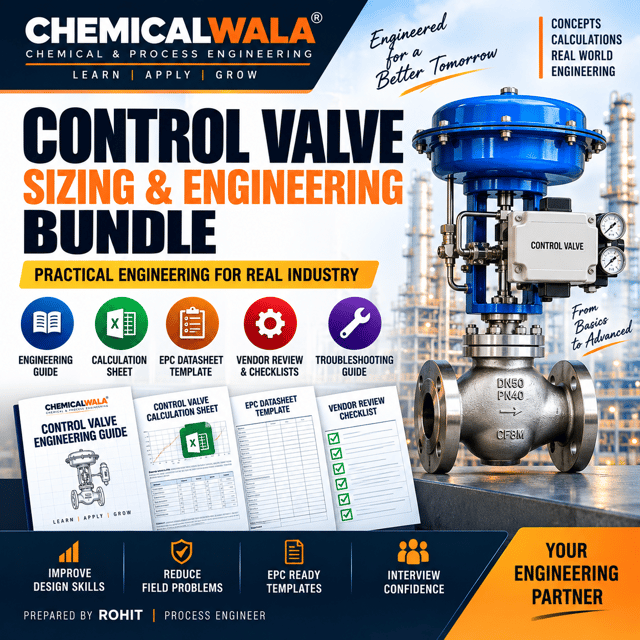
Control Valve Sizing, Selection & Design Bundle
Flare Load Calculation & Flare System Design
Process engineer Design – 5 EPC Design Handbooks
Engineer Resume Review
Resume Template 5
Resume Template 2
Process engineer career guidance
Process Engineering Career & Technical Guidance
Gas–Liquid Separator & KO Drum Sizing
Compressible Gas Line Sizing Excel Workbook
PUMP ENGINEERING HANDBOOK
Reactor Sizing – PFR & Batch Excel Calculator
Process Vessel Sizing – Horizontal & Vertical
Heat Exchanger Design – Live Excel Workbook
PSV Sizing – Gas, Vapour & Liquid Excel Calculator
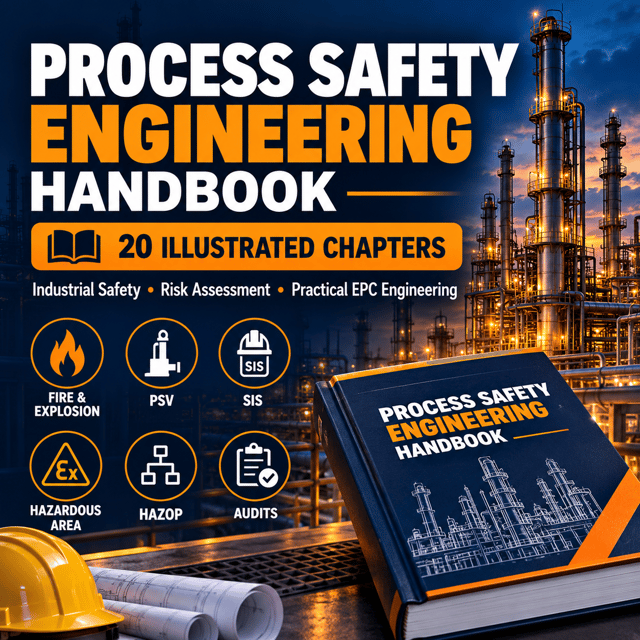
Process Safety Engineering Handbook
Process Engineering Career & Technical Guidance
Line Sizing – Complete Engineering Design Bundle
HEAT EXCHANGER DESIGN & SIZING BUNDLE
Chemical Engineering Core Subjects Master Bundle
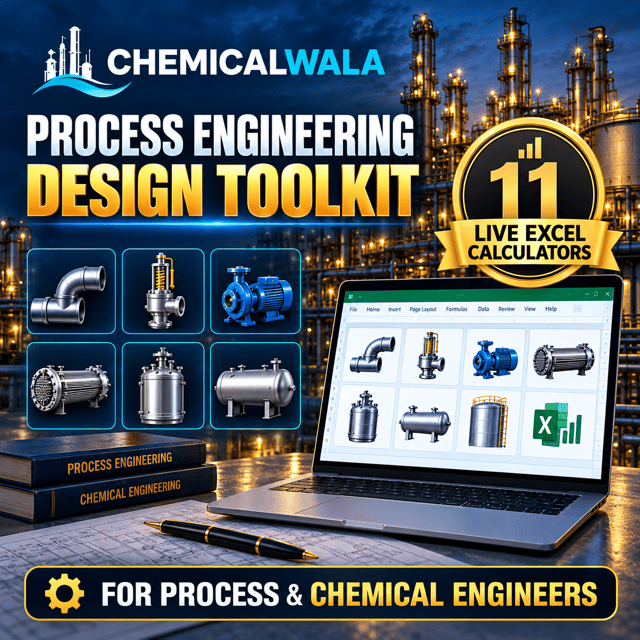
Process Engineering Design – 11 Excel Calculators
About me
Frequently asked questions
How to become a process engineer after chemical engineering?
Start by building the skills the role actually demands: strong fundamentals in fluid mechanics, heat transfer, mass transfer and reaction engineering, plus comfort with process calculations and reading P&IDs. Internships or industrial training at plants, EPC companies or design consultancies matter more than marks. Then prepare a focused resume for core roles and rehearse technical interviews. Structured career guidance from a practising process engineer can shorten this learning curve significantly.
What is process engineering in chemical engineering?
Process engineering is the branch of chemical engineering that deals with designing, operating and optimising the processes that convert raw materials into useful products — whether that is refining crude oil, producing fertilisers or running a pharmaceutical batch plant. While the degree covers the theory, process engineering is its industrial application: process design, equipment selection, troubleshooting and improving plant performance. It is the most common core-sector path for chemical engineering graduates in India.
What is process engineering in oil and gas?
In oil and gas, process engineering covers everything from refining and petrochemicals to gas processing and upstream facilities. A process engineer in this sector works on process design, heat exchanger networks, distillation and separation systems, flare and relief systems, and keeping the plant safe and efficient. Refineries, oil and gas companies and EPC contractors are among the largest employers of process engineers in India, which is why many chemical graduates target this sector specifically.
Is chemical engineering a good career in India?
Yes, but with a condition. Core sectors like oil and gas, specialty chemicals, pharmaceuticals, fertilisers and energy keep hiring, and process roles are hard to outsource. The catch is that a degree alone is no longer enough — graduates who build practical skills such as simulation, equipment knowledge and interview readiness land the better-paying core jobs, while others often drift into unrelated roles. So the career is good for those who make themselves industry-ready.
What are the chemical engineering career options after graduation?
The main chemical engineering career options in India include process engineer, process design engineer, production or plant engineer, quality and process safety roles, technical services, R&D, and PSU jobs through GATE. Beyond core industry, graduates also move into higher studies or allied fields. Process engineering is usually the most direct use of the degree, and knowing these paths early helps you pick the right internships and skills instead of deciding blindly in final year.
How to get a chemical engineering job in India as a fresher?
Focus on three things: skills, proof and visibility. Build what the core sector tests — process calculations, equipment basics, simulation tools and P&ID reading. Then prove it on your resume with projects, industrial training and quantified outcomes instead of vague lines. Finally, apply in a targeted way through campus placements, PSU notifications, EPC and design consultancies, and LinkedIn outreach to practising engineers. A resume review from someone already working in the field quickly shows you what recruiters ignore and what gets shortlisted.
How to prepare for a process engineer interview?
Prepare in layers. First, revise the subjects interviewers rely on — mass transfer, fluid flow, thermodynamics, and equipment like pumps, heat exchangers and distillation columns. Second, prepare plant-level thinking: safety, troubleshooting scenarios and how you would approach practical problems. Third, practise explaining your projects and internships clearly, since freshers are judged heavily on how well they understand what they have done. Working through a dedicated process engineer interview handbook and doing a mock interview makes a noticeable difference.
What are the most common process engineer interview questions and answers?
Frequently asked process engineer interview questions include: what is NPSH and how do you avoid cavitation, how does a distillation column work, difference between centrifugal and positive displacement pumps, purpose of a relief valve, and troubleshooting questions like "a pump is losing flow — what will you check?" Strong answers are not textbook definitions; interviewers expect you to explain the concept, connect it to real equipment and describe what you would do on site. Practising structured answers beats reading scattered notes.
What is the process engineering salary in India for freshers and experienced engineers?
Process engineering salary in India varies widely by sector and skill level. Freshers in core process or design roles typically start around ₹3–6 LPA, while PSUs and large oil and gas companies often pay noticeably more. Engineers who move into process design with strong simulation skills, or who work with EPC and consultancy firms, generally see faster growth because these skills are scarce. Location matters too, with industrial belts around refineries and chemical hubs offering more openings.
Which process engineering courses are actually worth doing?
Useful process engineering courses fall into three buckets: simulation and design tools such as Aspen HYSYS or equivalent simulators, core subject deep-dives like process design, piping and equipment, and safety-related training. Avoid collecting certificates for their own sake — recruiters value a course where you actually design or build something you can explain in an interview. If you are unsure, a short conversation with a practising process engineer can help you choose based on whether you are aiming for design, plant operations or further studies.
Which process engineering books should every chemical engineer read?
The standard process engineering books most engineers rely on are the Coulson & Richardson series, Perry's Chemical Engineers' Handbook as a reference, Kern for heat transfer and Treybal for mass transfer. Alongside these classics, role-specific handbooks — for example a good pump engineering handbook or a mass transfer guide aimed at both GATE and industry — bridge the gap between textbook theory and what is used on the job. Read one core subject at a time rather than skimming many books.
Which process engineering equipment should a fresher learn first?
Start with the equipment present in almost every plant: pumps (especially centrifugal pumps and NPSH), heat exchangers, distillation and separation columns, compressors, valves and safety devices like relief systems. Understanding process engineering equipment at this level — how it works, why it fails and how it is selected — is what separates interview-ready candidates from those who only remember theory. An equipment-focused resource like a pump engineering handbook is one of the fastest ways to build this practical base.
Is AI prompt engineering for process engineers actually useful, or just hype?
It is useful when applied to the right tasks. AI prompt engineering for process engineers means using AI tools to speed up everyday work — drafting calculations and explanations, summarising documents and standards, generating checklists, and preparing study plans for interviews or GATE. It does not replace engineering judgement: every output must still be verified against actual data and codes. For chemical engineers, especially freshers trying to learn industry practices quickly, this is becoming a genuine productivity skill rather than a gimmick.
How to prepare mass transfer for GATE as well as process engineering interviews?
Treat it as one subject with two uses. For GATE, focus on distillation, absorption, extraction, humidification and drying, and practise the numerical problems repeatedly until the mass balance and equilibrium concepts are solid. For interviews, the same topics appear as concept-based and plant-oriented questions, such as why a column floods or how trays differ from packing. Using a single well-organised mass transfer handbook that covers both GATE-style problems and industrial context is more efficient than preparing separately.
What should a chemical engineering resume for freshers include?
A strong chemical engineering resume for freshers should lead with practical signals: internships and industrial training, projects with quantified results, relevant software skills and core subjects you can defend in an interview. Keep it to one page, tailor it to each job description instead of sending the same file everywhere, and cut filler like generic objective statements. Since most fresher resumes in this field look identical, an experienced engineer's resume review or a proven industry-tested template usually fixes the gaps faster than trial and error.