Testimonials
Services
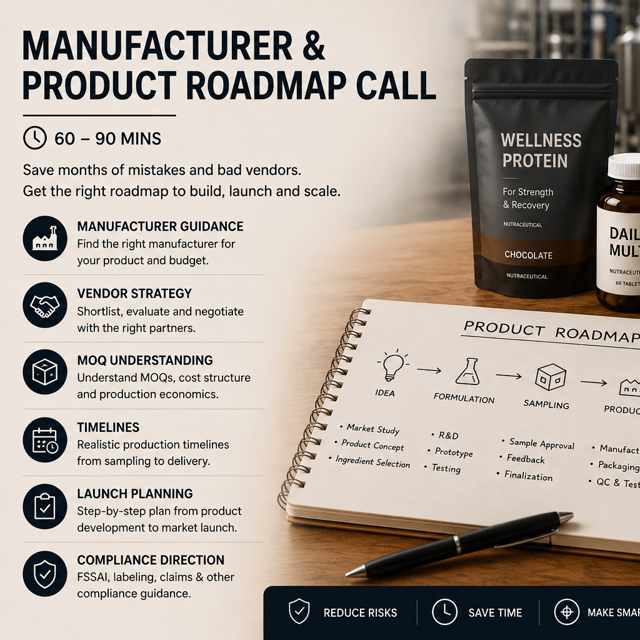
Manufacturer & Product Roadmap Call
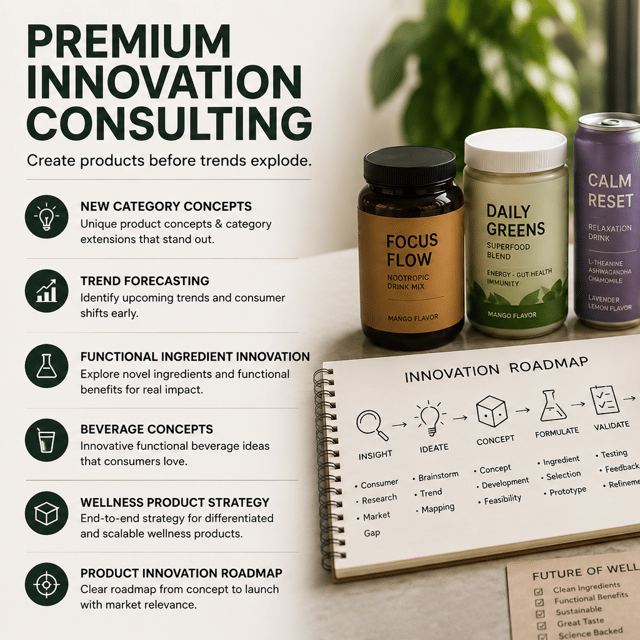
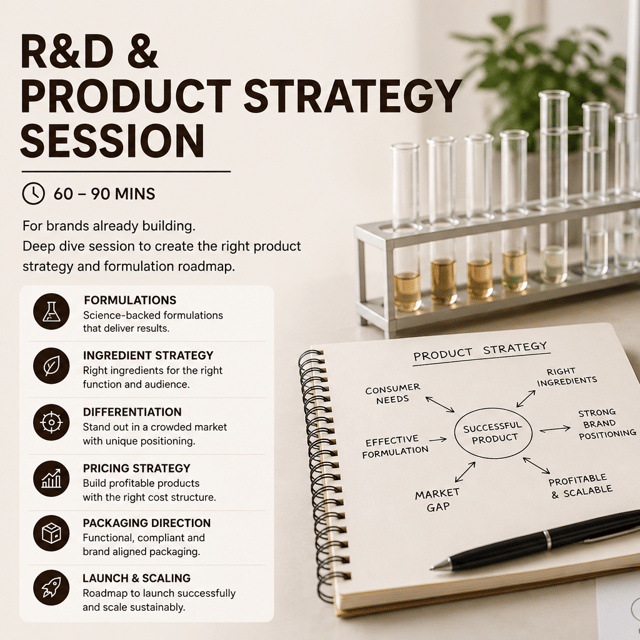
Product Market Fit + R&D & Strategy
About me
Frequently asked questions
What is the meaning of functional beverages?
Functional beverages are drinks formulated to deliver health benefits beyond basic hydration and nutrition. They are enriched with ingredients such as vitamins, minerals, protein, probiotics, adaptogens, or electrolytes, and are positioned as convenient ways to support energy, immunity, gut health, workout recovery, or overall wellness. The category sits at the intersection of beverages and preventive health, which is why it has become one of the fastest-evolving segments in the wellness space.
What are some examples of functional beverages?
Common examples of functional beverages include ready-to-drink protein shakes, probiotic and gut-health drinks, vitamin-fortified waters, immunity shots and juices, energy drinks with added nootropics or electrolytes, and meal-replacement drinks. The category keeps expanding as brands experiment with new formats like wellness shots, sparkling functional drinks, and coffee or tea blends with added adaptogens.
What is the functional beverage market?
The functional beverage market is the segment of the food and drink industry that covers beverages designed with a specific health benefit in mind, rather than just taste or refreshment. It includes products targeting fitness, immunity, digestion, mental focus, and general wellbeing, and it attracts everyone from D2C startups to large FMCG companies. Growth is driven by rising health awareness, fitness culture, and consumers actively looking for convenient formats that replace supplements.
What is the functional beverages market size in India?
Public estimates of the functional beverages market size in India vary from report to report because the category is defined differently across studies, but most agree the segment is expanding rapidly and is expected to grow much faster than the overall beverage market. The demand for functional beverages in India is being fuelled by rising health consciousness, a booming fitness culture, premiumisation, and e-commerce and quick-commerce platforms that make new launches instantly accessible across metros. If you are planning to enter the category, it is worth validating current figures from a recent market report before finalising your positioning and pricing.
What is a nutraceutical product?
A nutraceutical product is a food-derived product that provides health benefits beyond basic nutrition, often supporting specific functions like immunity, energy, joint health, or digestion. The category includes dietary supplements, fortified foods, functional beverages, herbal formulations, and ingredients extracted from food sources. In India, such products are regulated under FSSAI norms, which define permitted ingredients, dosage limits, and labeling requirements.
What is the nutraceutical industry?
The nutraceutical industry covers the businesses involved in developing, manufacturing, and marketing health-focused products such as dietary supplements, functional foods, functional beverages, and nutraceutical ingredients. It spans ingredient suppliers, formulation and R&D specialists, contract manufacturers, and consumer brands. In India, the industry has grown strongly on the back of preventive healthcare trends, rising disposable incomes, and increasing consumer trust in wellness products.
How to manufacture supplements in India?
The typical path starts with finalising your product concept, target audience, and format (capsules, tablets, gummies, powders, or drinks). Next, you get the formulation developed and tested, ensure the ingredients and dosage limits comply with FSSAI regulations, and then either set up your own licensed unit or tie up with a licensed third-party manufacturer who produces under your brand. Most new founders begin with a contract manufacturer to avoid heavy capital costs, run a pilot batch and stability checks, and only then scale production.
What does a supplement manufacturing partner do for a new brand?
A supplement manufacturing partner produces your products using their own licenses, equipment, and quality systems while you own the brand. They typically handle ingredient sourcing, blending, batching, packaging, quality checks, and regulatory documentation, while you focus on formulation decisions, branding, marketing, and distribution. This model lets new brands launch without investing in their own factory, which is why most first-time supplement founders start this way.
How do I choose the right supplement manufacturing company in India?
Check the company's FSSAI licensing and GMP, ISO, or WHO-GMP certifications, and confirm they have experience with your specific format, since capsule, gummy, powder, and beverage manufacturing are all very different capabilities. Also assess their minimum order quantities, in-house testing lab, willingness to share certificates of analysis and ingredient details, sampling support, lead times, and ability to scale with you. A partner who is transparent on sourcing, pricing, and documentation will save you serious problems later.
What does a nutraceutical formulation consultant do?
A nutraceutical formulation consultant helps convert a product idea into a commercially viable, compliant product. That typically includes identifying market gaps, selecting ingredients and dosages, deciding on the right format, balancing taste, stability, and cost, coordinating with manufacturers, and iterating through sampling rounds. For startups and growing brands without an in-house R&D team, a consultant shortens the path from concept to shelf and helps avoid expensive formulation and compliance mistakes.
How much does nutraceutical formulation development cost in India?
There is no single fixed cost, because nutraceutical formulation development depends on the complexity of the product, how novel the ingredients and format are, the number of sampling iterations needed, and the extent of lab testing and stability studies involved. A simple single-ingredient formulation costs far less to develop than a multi-ingredient product or an innovative delivery format. The practical approach is to define your product scope clearly first, then get quotations based on that brief so you can compare costs realistically.
Is it better to take a nutraceutical formulation course or work with a consultant?
It depends on your goal. A nutraceutical formulation course builds your theoretical understanding over time and is useful if you want to learn the science yourself, while a consultant gives you market-linked, application-ready guidance and helps you avoid costly trial-and-error when launching. Many founders do both — they build foundational knowledge through learning, then bring in an experienced consultant to make the critical formulation, compliance, and manufacturing decisions for their actual product.
How can a new brand compete with established functional beverages brands in India?
New brands usually win by not competing head-on with established functional beverages brands on price or shelf space. Instead, they differentiate through a specific benefit or niche audience (such as gut health, sleep, or women's wellness), cleaner labels with credible claims, format innovation like shots or sparkling functional drinks, better taste, and D2C or quick-commerce-first distribution. A clear founder story and community-led marketing also help smaller brands build loyalty that large FMCG players find hard to replicate.