Testimonials
Services
Full List of Indian Companies hiring RF Engineers
Mock RF Interview with Prem
Make my Resume
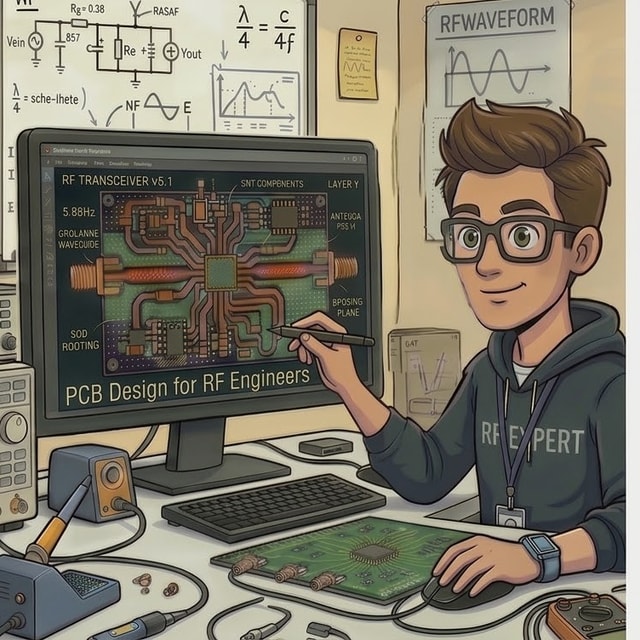
PCB Design for RF Engineers (4 Live Classes)
1:1 Consultation with Prem
Curated RF Job Recommendations
RF Job Search Bundle (4 Services included)
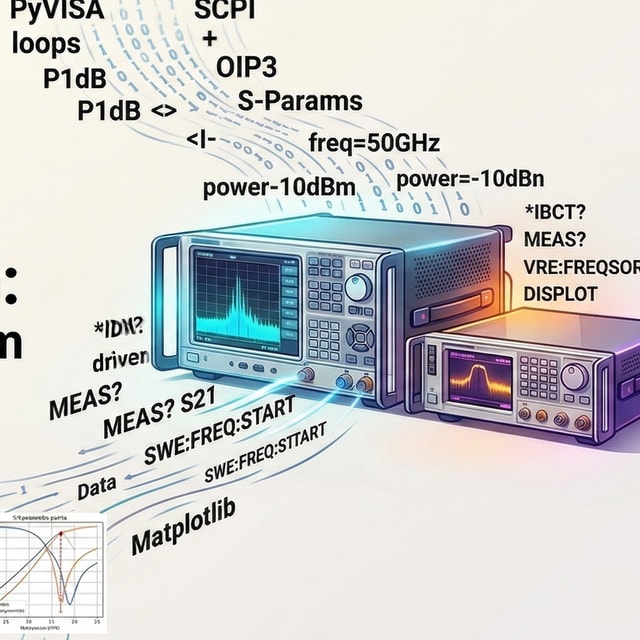
Python for RF Automation (4 Live Classes)
About me
- Prem's Notes | Premchand Ravella | Substackhttps://premsnotes.substack.com/

- WhatsApp Group Invitehttps://chat.whatsapp.com/FtExddVDqimCVbXfGPdqFh

Frequently asked questions
Are there RF engineer jobs for freshers in India?
Yes, but the entry points are specific. The most common RF engineer jobs for freshers are in network optimization and drive testing with telecom vendors, RF testing and validation with product companies, and graduate trainee roles in defence PSUs. Pure RF design openings for freshers are fewer and usually go to candidates with strong fundamentals, simulation projects, or internships. Building hands-on skills in antenna basics, MATLAB or ADS, and measurement concepts, combined with referrals, noticeably improves a fresher's chances.
Which cities in India have the most RF engineer jobs?
Bangalore and Hyderabad lead the list. Most RF engineer jobs in Bangalore come from semiconductor design centres, aerospace and defence organisations such as ISRO and DRDO labs, and wireless product startups, while RF engineer jobs in Hyderabad are concentrated in defence electronics and large chip design and validation centres. Delhi NCR has a strong presence of telecom vendors and operators, and Pune and Chennai also host optimization and R&D teams. If you are flexible about location, targeting these clusters first gives you the widest pool of openings.
What are the most common RF engineer interview questions and answers?
Across companies, most RF engineer interview questions and answers revolve around a core set of topics: S-parameters, VSWR and return loss, impedance matching and the Smith chart, noise figure and sensitivity, linearity and IP3, EVM and adjacent-channel power, modulation basics, link budgets, filters, mixers, PLLs, and antenna fundamentals. Interviewers look for reasoning rather than memorised formulas — for example, why 50 ohms is the standard impedance, or how a mismatch degrades receiver performance. Preparing structured answers for each topic, backed by one example from your own projects or coursework, works far better than reciting definitions.
Which RF basics interview questions should I prepare as a fresher?
Most fresher panels draw from standard RF basics interview questions: the RF frequency range, why 50 ohms is used, transmission line theory, reflection coefficient, VSWR and return loss, dB versus dBm, basic matching networks, an introduction to the Smith chart, noise figure, and simple antenna parameters like gain and polarization. Be ready to explain each concept in plain language and handle a short numerical or two. At the fresher level, interviewers care more about conceptual clarity than depth in any single specialisation.
What RF testing interview questions are asked for validation engineer roles?
Most RF testing interview questions for validation roles focus on instruments and measurements: how to measure output power, EVM, ACLR, spurious emissions, and receiver sensitivity; how to calibrate and use a VNA or spectrum analyzer; what RBW does; and how you would debug a device that fails a spec. Expect scenario questions like "the DUT fails sensitivity — what do you check first?" Knowing the 3GPP test framework at a high level and having automation experience, such as Python scripts that control instruments, immediately sets you apart in these interviews.
Where can I find an RF engineer resume example that works for Indian companies?
The best RF engineer resume examples to study are the LinkedIn profiles of engineers working at semiconductor and telecom companies. A strong RF engineer resume example will show a crisp summary naming your RF specialisation, a skills section listing tools like ADS, HFSS, and MATLAB plus instruments you can operate, and project bullets with numbers — frequency bands handled, improvements in dB, test coverage achieved. Freshers can fill the same structure with academic projects and lab work. Getting the final draft reviewed by an RF mentor, such as through Premchand Ravella's RF-specific resume review, helps align it with what design and validation hiring managers actually look for.