Testimonials
Services
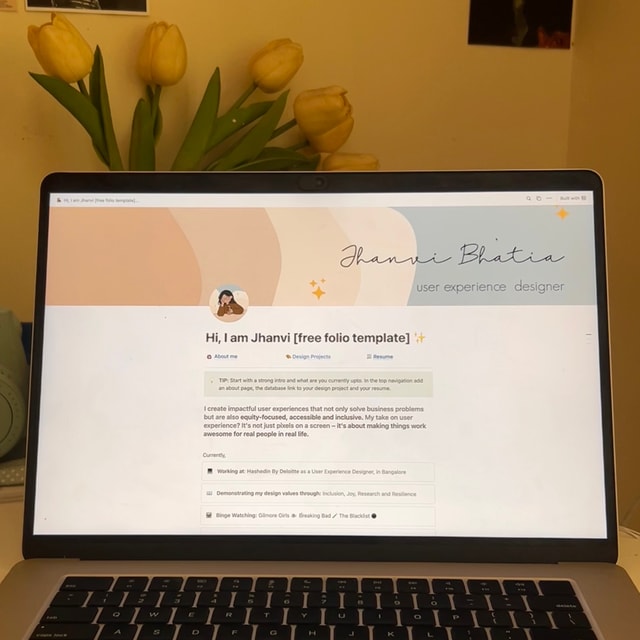
UX notion portfolio & case study template w/ tips
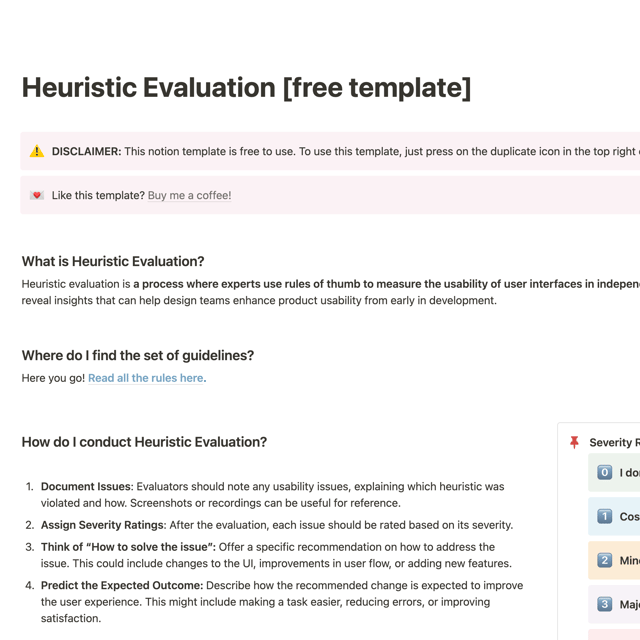
Heuristic Evaluation Template
Urgent DMs
About me
- Ajinkya Vanjari highly recommends Jhanvi for her exceptional skills and contributions in UX and UI design. He highlights her pivotal role in revamping client Aviso's web interaction designs, improving device adaptability, accessibility, and streamlining sales processes. Ajinkya credits Jhanvi's strategic vision for directly contributing to Aviso's remarkable growth, making her an invaluable asset to any team.AI-generated from recommendations on

Frequently asked questions
How to become a UI UX designer without a design degree?
Focus on skills, not certificates. Learn design fundamentals like visual hierarchy, typography, and usability principles, get comfortable with Figma, practise by solving real design problems, and build a portfolio of 3–4 solid case studies. Many designers in India, including those from engineering backgrounds, have entered UX without a formal design degree — hiring teams care far more about how you think and present your process than about a diploma.
How to learn UI UX design from scratch as a beginner?
Start with free UX fundamentals, then learn one tool deeply — Figma is the industry standard. Train your eye by studying everyday apps, noting what frustrates you, and redesigning those flows. Join design communities where you can get feedback on your work, read books like The Design of Everyday Things, and practise a little daily. A structured course can help with discipline, but consistent self-learning works just as well in the beginning.
What does a UI UX designer do?
A UI UX designer researches user needs, converts those insights into wireframes and prototypes, designs final screens, and tests whether the product actually works for people. Day to day, that means collaborating with product managers and developers, maintaining design systems, running usability sessions, and ensuring experiences are accessible and inclusive. In India, they are hired by IT services firms, startups, and global product companies alike.
What is the UI UX designer salary in India for freshers and experienced designers?
It varies widely by city, company type, and skill level. Freshers typically start around ₹4–6 LPA, designers with 3–5 years of experience often earn ₹10–20 LPA, and senior designers at product companies can earn significantly more. Product startups and international clients generally pay above service-based firms, and a strong portfolio is the single biggest lever for negotiating a better offer.
Are there UI UX designer jobs in Pune for freshers?
Yes. Pune has a large IT and product ecosystem — from big service companies to startups — that regularly hires junior designers. What freshers need most is proof of work: a portfolio with even 2–3 well-documented projects, internship or freelance experience, and genuine fluency in tools like Figma. Referrals from design communities and LinkedIn networking usually convert better than cold applications.
What is a UI UX portfolio and why do designers need one?
It is a curated collection of work that shows how you think, not just what you can make. Instead of only pretty screens, it walks readers through the problem you tackled, the research and decisions behind your design, and the final outcome. Recruiters in India rely on it far more than a resume to judge design candidates, so it effectively becomes your first impression.
What is a good UX portfolio?
Three or four deep case studies beat ten shallow ones. A good UX portfolio clearly frames the problem, shows your research and iteration process, is honest about constraints, and ends with outcomes or learnings — all presented simply so it is easy to scan. Studying a few strong UX portfolio examples from designers you admire is the fastest way to calibrate what "good" looks like before building your own.
Is it okay to use a UX portfolio template as a beginner?
Yes — a template simply gives you a proven structure so you are not staring at a blank page. What matters is that you customise it with your own projects, story, and voice instead of leaving placeholder content, because hiring managers spot copy-paste work instantly. Using one also saves time, which is better spent strengthening the case studies themselves.
How do I create a UX portfolio website that stands out?
Keep it simple: a short intro about who you are, 3–4 detailed case studies, and a clear way to contact you. Tools like Framer, Webflow, and Notion let you build a clean UX portfolio website without coding, and many designers start on Notion and upgrade later. Prioritise fast loading, mobile-friendliness, and readable text over flashy animations — recruiters spend only a few minutes per portfolio.
What does a UX case study look like?
Typically it includes a clear title and one-line summary, the problem you were solving, your role, the research you conducted, how you moved from insights to wireframes and final designs, key decisions and iterations, and the result or learnings. Visuals support the story but should not carry it alone. Reading a few detailed UX case study examples will quickly show you the depth and tone recruiters expect.
Should I use a UX case study template or structure it myself?
If you are early in your career, a UX case study template is a smart starting point because it ensures you do not skip critical sections like research, process, and impact. Templates are available for Notion, Figma, and Framer, so pick whichever matches how you want to present the work. Just make sure every section genuinely reflects your project — a template organises your thinking, it cannot fake it.
What are some strong UX case study topics for a first portfolio?
Start with problems you personally experience: redesigning a frustrating flow in an app you use daily — splitting bills, booking train tickets, ordering groceries — works well because you already understand the user. You can also do a concept redesign of a popular app, take on an accessibility challenge, or pick up small real projects for local businesses or student organisations. Depth of process matters far more than how famous the app is.
Should I publish my UX case study on Behance or Medium?
Both work, but for different purposes. A UX case study on Behance gets you visual exposure within the design community, while a UX case study on Medium suits long-form, writing-heavy process stories. Many designers host full case studies on their own website and cross-post adapted versions to Behance or Medium for extra reach — choose based on whether your story is more visual or more narrative.
Do I need a UI UX design course to get a job in UX?
No — a course is one route, not a requirement. Employers evaluate your portfolio, your grasp of the design process, and how you talk about your decisions. A structured UI UX design course can speed things up by giving you direction and feedback, but self-learners who practise consistently and document their work well get hired too. Try free resources first to confirm you enjoy the field before investing money.
What is a heuristic evaluation in UX design?
It is an expert review where a designer inspects an interface against established usability principles — such as Nielsen's 10 heuristics — to catch issues like confusing navigation, unclear labels, or inconsistent feedback without needing user testing. Teams use it early or when time and budget are tight because it surfaces quick, actionable improvements. Freshers can practise it on any app to sharpen their design critique, and experienced designers often offer it as a focused audit service.