Services
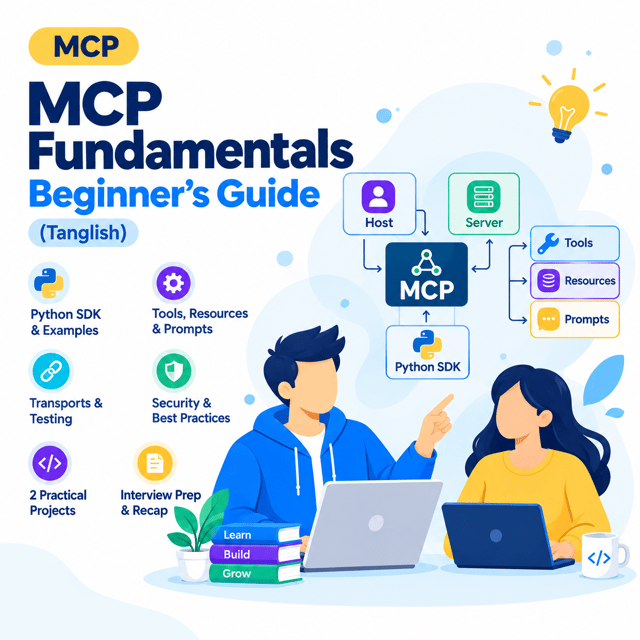
MCP Fundamentals – Beginner's Guide (Tanglish)
Ask Me Anything: Career, AI & Backend
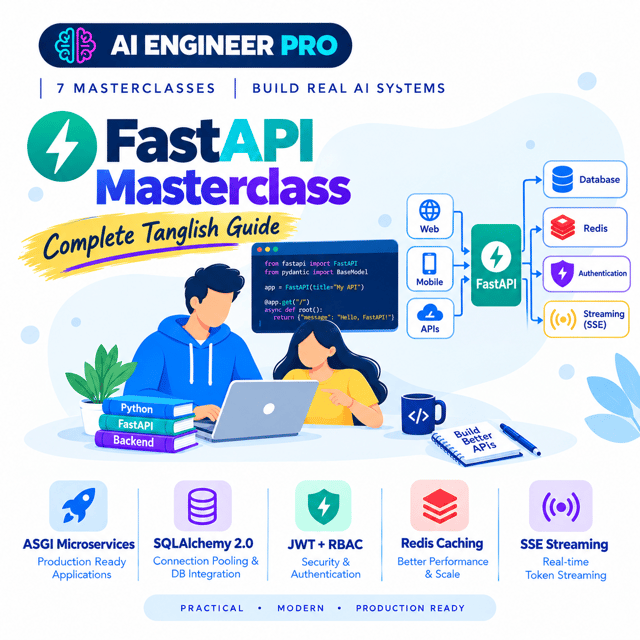
FastAPI Masterclass: Complete Tanglish Guide
AI Engineer Career Guidance
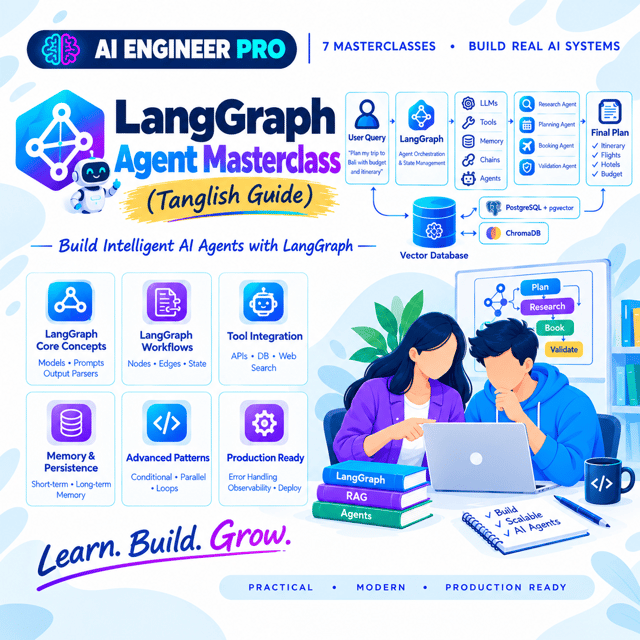
LangGraph Agent Masterclass (Tanglish Guide)
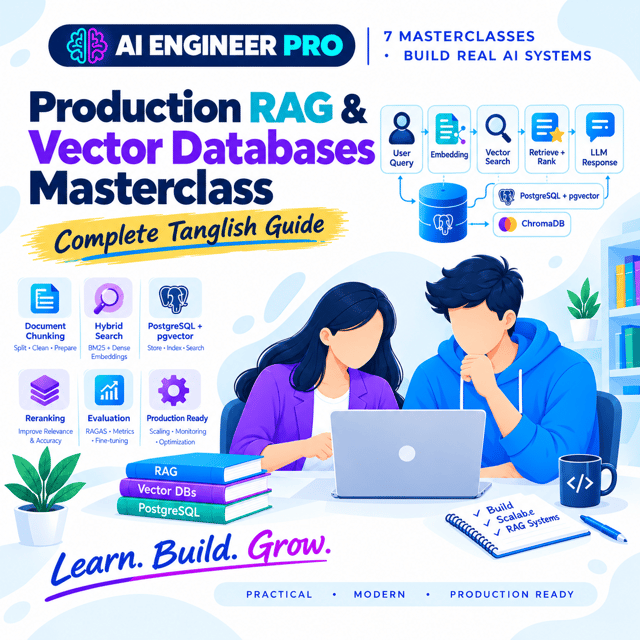
Production RAG & Vector Databases Masterclass
Python Crash Course (Tanglish): Zero to Hero
Python for AI Engineers: Complete Tanglish Guide
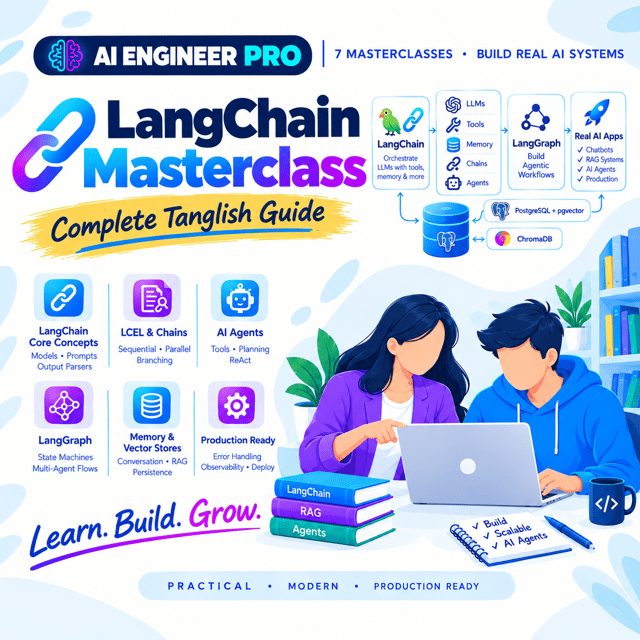
LangChain Masterclass: Complete Tanglish Guide
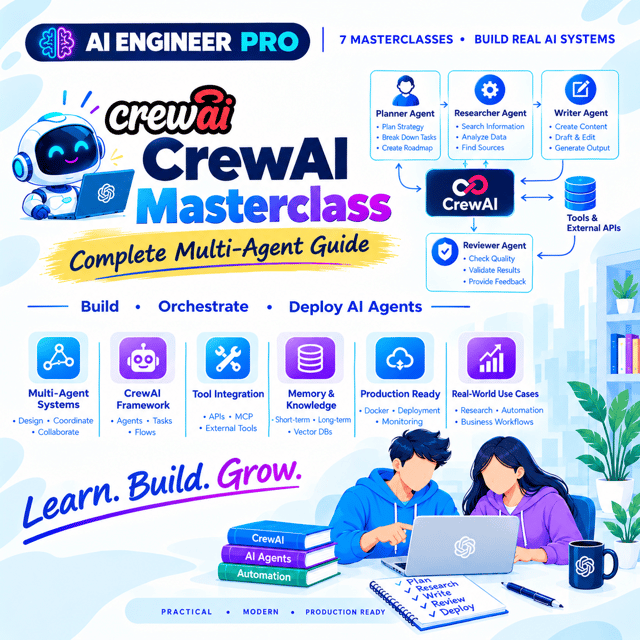
CrewAI Masterclass: Complete Multi-Agent Guide
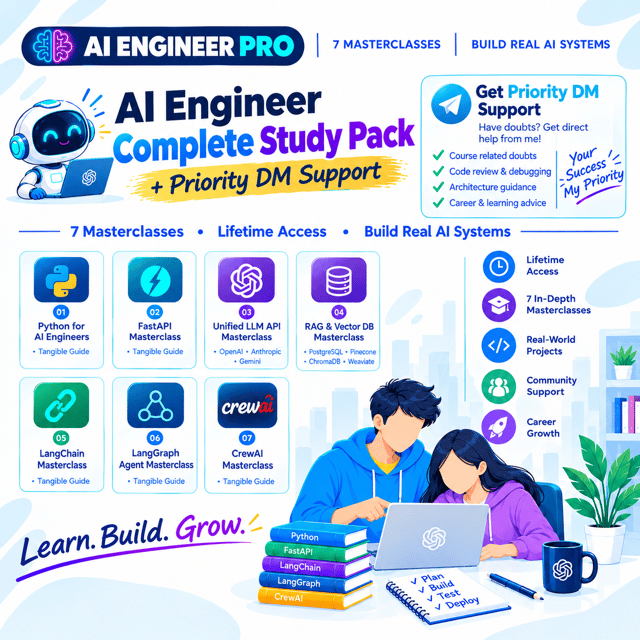
AI Engineer Complete Study Pack + Priority DM
About me
- Pledging 10% to support cancer-affected children & education for underprivileged youth via church.

- Praveen Kumar Moses – Your AI Teacherhttps://www.youtube.com/@its_pkm

- 60% OFF — Hurry!! Coupon Code: AIPROSL60D

- AI Engineer Pro — WhatsApp Channelhttps://whatsapp.com/channel/0029Vb8sQMs1dAwCO0VQeB0Y
Frequently asked questions
What is the difference between an AI Engineer and a traditional Data Scientist?
Data Scientists primarily focus on statistical modeling, data exploration, and training models in research notebooks. An AI Engineer focuses on production: taking pre-trained foundation models (LLMs, vision models) and integrating them into robust software systems. AI Engineers build resilient API wrappers (like FastAPI), implement RAG pipelines, manage vector databases, optimize token latency, and deploy scalable microservices that end users can interact with reliably.
Can I transition into AI Engineering without a PhD or heavy math background?
Yes. You do not need deep mathematical proofs or a PhD to be an effective AI Engineer. The modern AI stack prioritizes strong software engineering fundamentals: Python proficiency, asynchronous backend architecture (FastAPI/ASGI), API integration, orchestration frameworks (LangChain, LlamaIndex), and prompt engineering. If you know how to write clean code, handle concurrency, and structure databases, you can transition into building AI applications.
What programming languages and core tools should I master first?
Core Language: Python is non-negotiable for AI engineering. Backend Framework: FastAPI for high-performance, asynchronous REST APIs. Data & AI Tooling: Pydantic for validation, OpenAI / Claude / open-source model APIs (via Ollama/HuggingFace), and LangChain or LlamaIndex. Databases: Vector databases such as ChromaDB, Pinecone, or PostgreSQL with the pgvector extension. Deployment: Docker containerization and cloud hosting for production readiness.
Are the resources and mentorship sessions conducted in Tamil or English?
Both. All study materials, cheat sheets, and code syntax are presented in clean, standard English, while explanations, concepts, and 1:1 mentorship calls can be conducted in Tamil, English, or Tanglish—whichever language helps you grasp complex architectural concepts most comfortably.
What kind of projects should I build to get hired as an AI Engineer?
Avoid basic tutorial clones like generic PDF chat apps. Production hiring managers look for: Production RAG Systems: Retrieval-Augmented Generation with hybrid search (dense + sparse), re-ranking, and metadata filtering. Agentic Workflows: Autonomous agents capable of multi-step tool use, function calling, and structured error handling. Cost & Latency Optimized Microservices: AI backends implemented in FastAPI with semantic caching (Redis), rate-limiting, and streaming responses (StreamingResponse).