Testimonials
Services

OCT-ALIGN SHIFT

Root to Rise - The Inner Self
About me
Frequently asked questions
What is a mental health counsellor?
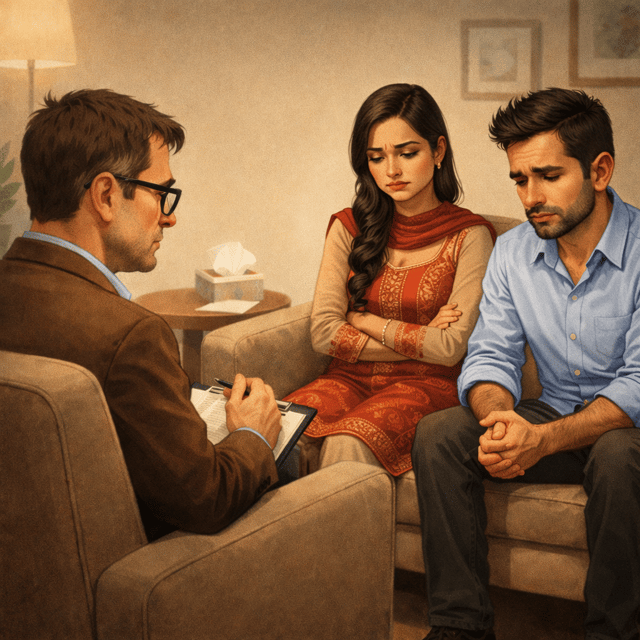
A mental health counsellor is a trained professional who helps you work through emotional and psychological challenges such as anxiety, addiction, trauma, grief, and relationship conflicts in a structured, confidential setting. Counsellors use talk-based methods to help you understand your patterns, regulate emotions, and build healthier coping skills. They do not prescribe medication — that is the role of a psychiatrist.
What is mental health therapy?
Mental health therapy is a structured, confidential process where a trained professional helps you understand and change unhelpful thought patterns, emotions, and behaviours. It includes talk-based approaches such as REBT, CBT, and EFT tapping, and is used for concerns ranging from anxiety and addiction to grief and relationship issues. Unlike advice from friends or family, therapy works on root patterns rather than one-off problems.
Is mental health counselling online as effective as in-person sessions?
For most common concerns — anxiety, stress, low mood, relationship conflicts, and addiction support — mental health counselling online works as well as face-to-face therapy. Online sessions also add privacy, save travel time, and let you choose a counsellor with the right specialisation instead of whoever happens to be nearby. Just verify the counsellor's qualifications, read client feedback, and confirm the sessions are confidential.
How can I find free mental health counselling in India?
If budget is a barrier, start with the government's free Tele-MANAS helpline (14416), which offers counselling in multiple Indian languages. Several NGOs and mental-health nonprofits also provide free or low-cost sessions, and some private counsellors keep sliding-scale slots for students and those facing financial difficulty. Free mental health counselling is a genuine first step — and once you are stable, regular 1:1 sessions usually allow deeper, more consistent work.
Can I get mental health counselling in Hindi?
Yes. Many counsellors across India offer mental health counselling in Hindi, and national helplines also support Hindi along with regional languages. Expressing yourself in the language you think and feel in often makes therapy more effective, so it is completely reasonable to ask a counsellor which languages they work in before booking a session.
How do I find genuine mental health counselling near me?
Searching for mental health counselling near me is a good start, but fit matters more than distance. Check the counsellor's qualifications, the issues they specialise in (anxiety, addiction, trauma, relationships), their therapy approach, and client reviews — then use a short call to see whether you feel safe and unjudged with them. If good options are limited in your city, online sessions with a qualified counsellor are an equally valid alternative.
How to recover from addiction?
Recovery begins with honestly acknowledging the problem and telling at least one trusted person. Heavy alcohol or drug dependence should first be assessed by a doctor because withdrawal can be medically risky; beyond that, counselling, identifying your triggers, building a structured routine, and having a support system are what make recovery last. Professional guidance matters because addiction is usually connected to deeper stress, trauma, or emotional pain — not just willpower.
What are the addiction recovery stages?
The addiction recovery stages most commonly described are precontemplation, contemplation, preparation, action, and maintenance. Early on, a person may be in denial or weighing the decision; the action stage involves actively quitting and starting counselling or support; maintenance focuses on preventing relapse long term. If a relapse happens, it is treated as a signal to strengthen support — not as proof of failure.
How to journal for addiction recovery?
Keep it simple and consistent: start with a daily check-in covering your mood, cravings, and triggers, then note what happened right before each craving so patterns emerge. Prompt-based entries work far better than vague free writing — for example, "what was I feeling before the urge?", "what does using cost me?", and "what support do I need tomorrow?". Bring these insights into your counselling sessions, as they give concrete material to work through.
How do I choose an addiction recovery center near me?
When evaluating an addiction recovery center near me, check whether it is properly licensed, has qualified doctors and trained counsellors (not just supervised confinement), and offers individual counselling, family involvement, and relapse-prevention planning. Ask about aftercare, because support after discharge is where most relapses are actually prevented. Also know that for mild to moderate dependence, structured outpatient counselling can be an effective first step before considering residential care.
Can anxiety be cured completely?
Anxiety disorders are among the most treatable mental health conditions, but anyone searching for how to cure anxiety should know that treatment usually means lasting relief rather than an overnight switch. Therapy approaches like REBT and CBT work directly on the thought patterns that keep anxiety alive, and many people reach a point where anxiety no longer controls their daily life. With consistent therapy, better sleep, and lifestyle changes, long-term recovery is a realistic goal.
What should I do during an anxiety attack?
In the moment, slow your exhale — breathe in for four counts and out for six to eight — and ground yourself by naming five things you can see, four you can touch, three you can hear, and so on. Remind yourself that the attack peaks within minutes and passes, and you are not in danger. Long-term anxiety attack treatment means working with a counsellor on the underlying triggers, rather than only coping episode by episode.
What does social anxiety treatment involve?
Social anxiety treatment usually begins with therapy rather than medication. Approaches like CBT and REBT help you challenge the fear of being judged, while gradual exposure — deliberately practising small, manageable social situations — retrains the fear response over time. If social fear is affecting your work, studies, or relationships, that is the point where self-help alone is no longer enough and structured counselling makes a real difference.
Do I need anxiety treatment medicine, or can anxiety improve without it?
Whether you need anxiety treatment medicine depends on severity — only a psychiatrist can prescribe it, and it is usually reserved for moderate to severe symptoms or when daily functioning is badly affected. For mild to moderate anxiety, anxiety treatment without medication often works well, especially REBT- or CBT-based counselling combined with better sleep, exercise, and reduced caffeine. Medicine and therapy are not rivals — the combined approach is common — and any medication should only ever be taken under a psychiatrist's supervision.
What can I do for anxiety treatment at home?
Anxiety treatment at home works best as support alongside professional care, not a replacement for it. The habits with the strongest impact are regular exercise, consistent sleep, cutting back caffeine and alcohol, slow-breathing or mindfulness practice, and journaling your triggers. If anxiety persists most days, disturbs your sleep, or brings physical symptoms like palpitations, that is the signal to involve a counsellor instead of relying on home strategies alone.