Testimonials
Services
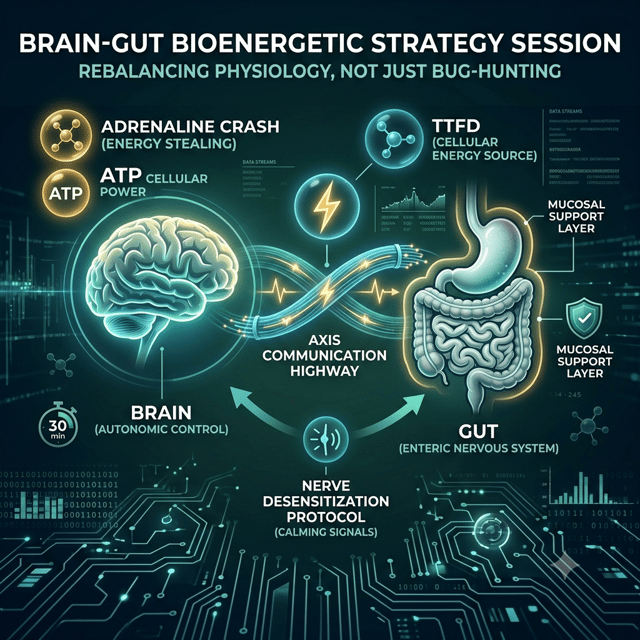
40-Minute Brain-Gut Strategy Session 🧠
About me
Frequently asked questions
What is gut health?
Gut health describes how well your entire digestive system — from stomach to colon — digests food, absorbs nutrients, keeps the microbiome balanced, and communicates with your brain and immune system. When gut health is good, digestion feels quiet and effortless: regular bowel movements, minimal gas, and steady energy. When it's off, you get bloating, cramping, unpredictable stools, and that heavy, sluggish feeling after meals.
How can I improve gut health?
Most advice on how to improve gut health centers on fiber, fermented foods, hydration, sleep, and stress management — and those fundamentals matter. But if you've already cleaned up your diet and you're still bloated every day, the missing piece is usually the brain gut axis. A hyper-stressed nervous system diverts energy away from digestion, so no diet will fully work until the gut and brain are communicating properly again.
What are the best gut healthy foods?
The most reliable gut healthy foods feed your microbiome without irritating your gut: cooked vegetables, oats, rice, bananas, yogurt or kefir (if you tolerate dairy), olive oil, and lean proteins. A smart gut health diet also adds new foods gradually — piling into raw salads, beans, and high-fiber "superfoods" all at once is one of the fastest ways to trigger bloating in a sensitive gut.
Do gut health supplements really work?
Gut health supplements can genuinely help, but only when they're targeted at your actual problem. The bigger issue is the shotgun approach — a shelf full of random probiotics, enzymes, and powders taken in the hope that something sticks. Supplements work best as support while you fix the foundations: regular meals, a calm nervous system, and consistent sleep. Used that way, they accelerate progress; used alone, they mostly drain your wallet.
Do gut health probiotics help with bloating?
They can, but they're not a cure-all. Certain probiotic strains reduce gas and improve transit for some people, while others do nothing — or temporarily increase bloating. And if your daily bloating is driven by a stressed brain gut axis rather than a bacterial imbalance, gut health probiotics alone won't end it, which is exactly why so many people hop from one product to the next without lasting relief.
Is a gut health test worth it?
It depends on what you'll do with the result. Breath tests for SIBO and comprehensive stool tests can uncover real issues worth treating. But many people with chronic bloating get stuck in a testing loop — re-testing, chasing positive results, and hunting for "bugs" while the real driver, a dysregulated brain gut axis, goes untouched. If your tests keep coming back normal and you still feel bloated every day, more testing is rarely the answer.
What is the brain gut axis?
The brain gut axis is the two-way communication network linking your brain and your digestive tract through nerves (especially the vagus nerve), hormones, and the immune system. Your brain constantly signals the gut about stress and safety, and the gut reports back. When that highway is healthy, digestion runs smoothly in the background; when stress keeps the alarms switched on, motility slows and bloating ramps up.
What is gut brain axis dysfunction?
Gut brain axis dysfunction is when the communication lines between your brain and digestive tract misfire — the brain stays in "threat" mode, digestion gets deprioritized, and gut nerves become hypersensitive. The most common brain gut axis symptoms are chronic bloating with no clear food trigger, normal digestion feeling painful or extreme, stress-triggered flare-ups, constipation or erratic motility, and gut anxiety — constantly checking your stomach and bracing for discomfort.
How do you heal the brain gut axis?
Learning how to heal the brain gut axis starts with calming the nervous system, not adding another elimination diet. That means consistent sleep, regular meals, daily movement, and breaking the hypervigilance habit — endlessly checking your belly, googling symptoms, and bracing for bloating keeps the alarm wired on. Targeted gut-lining and nervous-system support can help, but the real goal is teaching your body it's safe enough to digest again.
Are IBS and the brain gut axis connected?
Yes — the link between the brain gut axis and IBS is so central that IBS is now classified as a disorder of gut-brain interaction. In plain terms, IBS flare-ups are often less about "bad bacteria" and more about a gut that's wired too loud: stress amplifies normal digestive signals into pain, urgency, and bloating. That's why IBS commonly flares during high-stress periods even when your diet hasn't changed at all.
How do I fix chronic bloating?
Almost every guide on how to fix chronic bloating targets the gut alone — more restrictions, more cleanses, more tests. A real fix usually has three layers: rule out medical issues with a doctor, support digestion directly (regular meals, slower eating, motility support), and calm the nervous system amplifying every sensation. If your bloating shows up with stress and quiets down when you're absorbed in work or genuinely enjoying yourself, the brain gut axis is the piece you've been missing.
What is chronic bloating a sign of?
Chronic bloating can be a sign of SIBO, constipation and slow motility, food intolerances, hormonal fluctuations, or — very commonly — a hypersensitive brain gut axis, where the gut fires alarm signals far louder than the situation calls for. It can also signal something needing medical care, so see a doctor if you have unexplained weight loss, blood in your stool, severe pain, or vomiting. But if tests keep coming back clear and the bloating tracks with stress, the wiring — not a disease — is usually the culprit.
Why do I get chronic bloating after eating?
Chronic bloating after eating usually comes down to two things: how much work the meal demands and how sensitive your gut nerves currently are. Some post-meal expansion is normal digestive physics — food, gas, and blood flow literally add volume. The "balloon" feeling many people dread is that normal distension amplified by stressed-out gut nerves, so your belly feels dramatically worse than it actually is. Eating slower, keeping meals regular, and lowering nervous system load between meals tends to shrink the reaction far more than cutting more foods does.
What causes chronic bloating and constipation together?
Chronic bloating and constipation almost always travel together because slow motility gives gut bacteria extra time to ferment, producing more gas that then gets trapped behind sluggish stools. Stress makes both worse, since a threatened nervous system slows the very muscle contractions that move things along. Hydration, gradually increased fiber, magnesium, and gentle daily movement all help, but lasting relief comes from restoring motility while calming the stress loop that's slowing your gut in the first place.
What causes chronic bloating in women?
Chronic bloating in women is more common because of hormonal cycles (progesterone slows digestion, especially in the phase before a period), a more reactive visceral nervous system, and gut symptoms that are strongly influenced by stress and anxiety. Tracking symptoms against your cycle is genuinely useful — if bloating spikes at the same point every month, hormones are the bigger lever; if it tracks with work stress instead, the brain gut axis is where to focus.