Testimonials
Services
Career Guidance


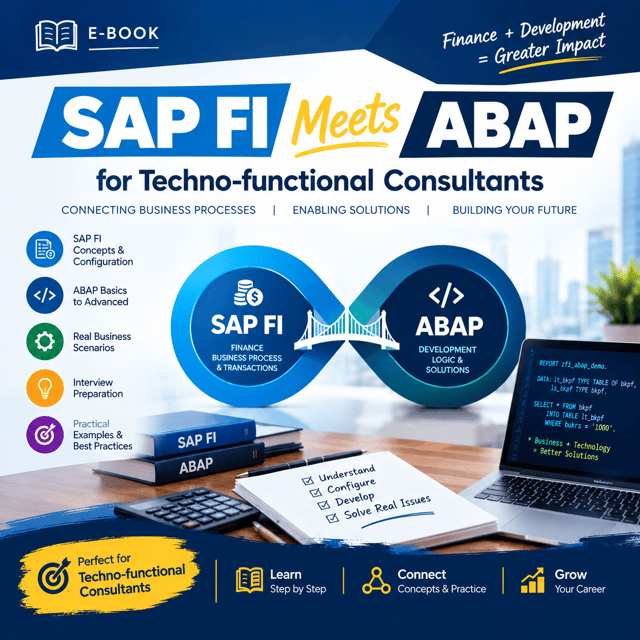
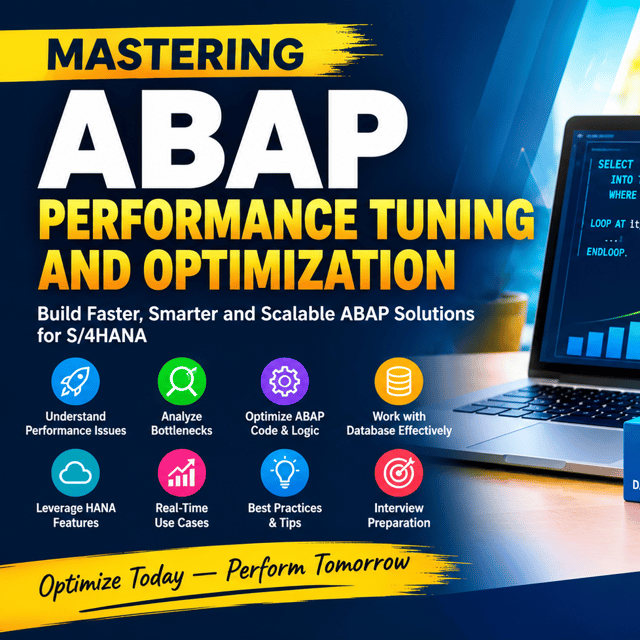
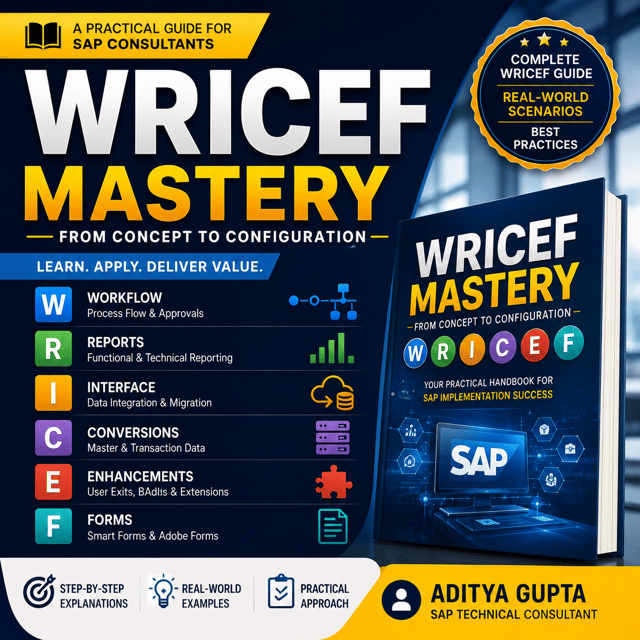
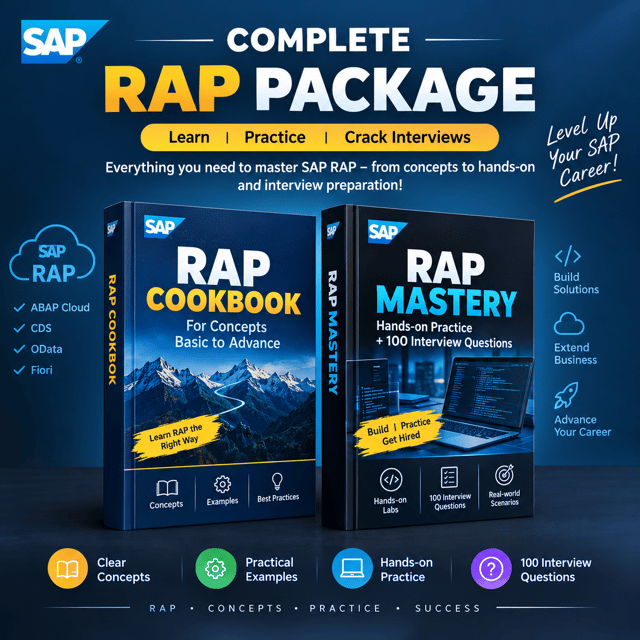
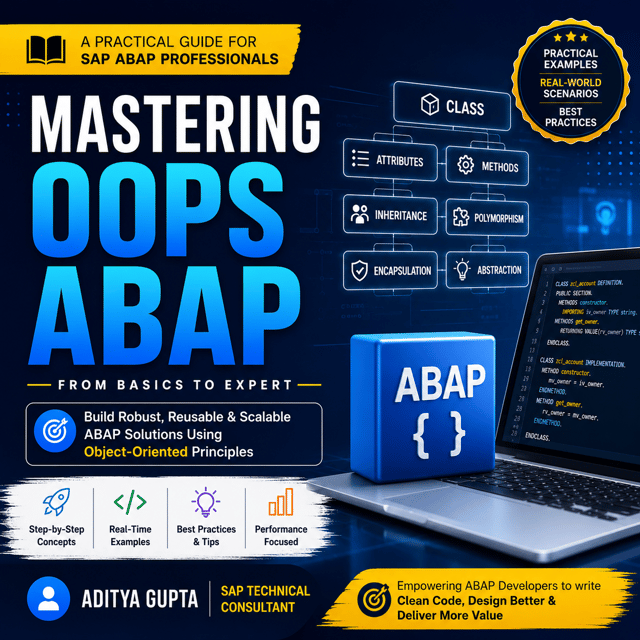
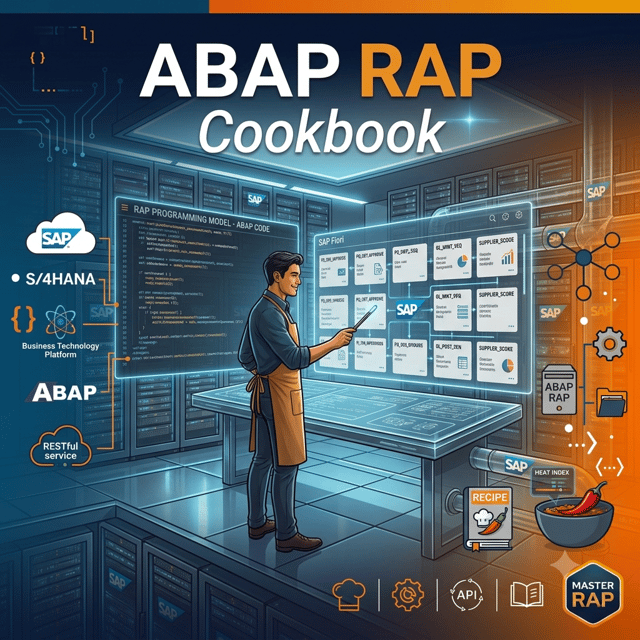
RAP Complete Package

The Ultimate ABAP & S/4HANA Interview Handbook

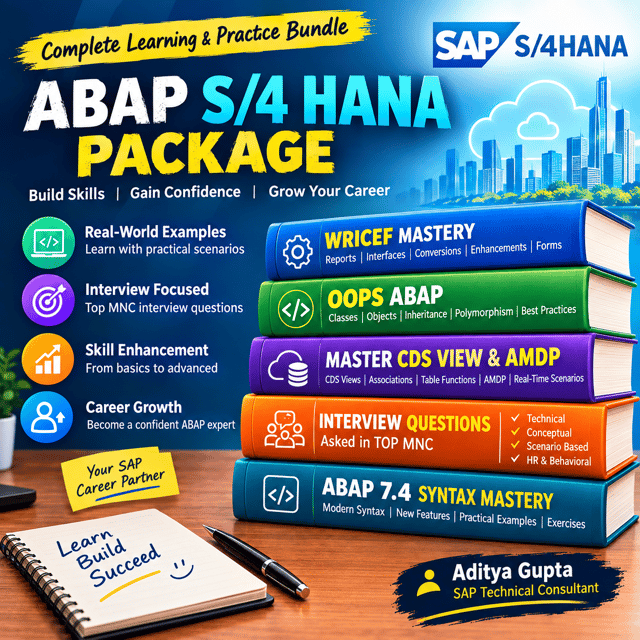
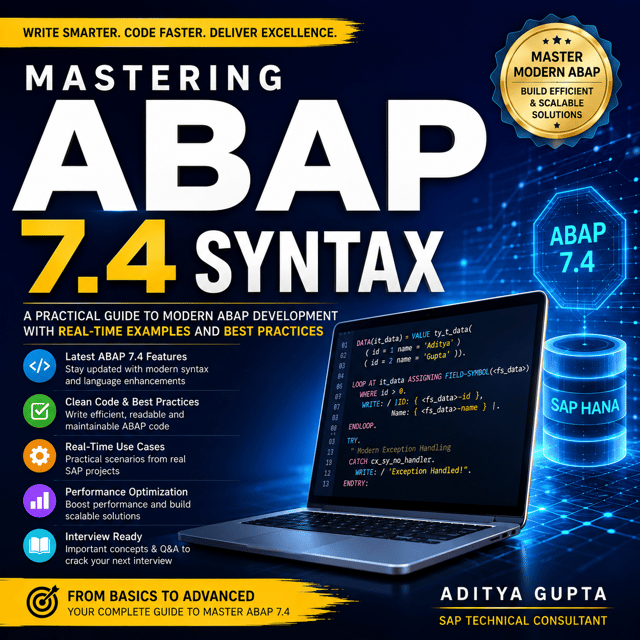
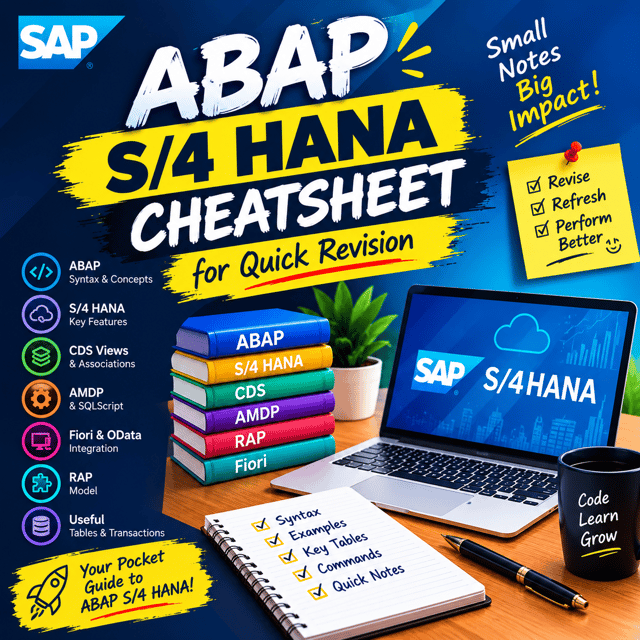
ABAP S/4 HANA Complete package
About me
Frequently asked questions
What is the SAP ABAP full form?
The SAP ABAP full form is Advanced Business Application Programming. It is SAP's proprietary programming language used to build custom reports, interfaces, enhancements, forms, and workflows inside SAP systems like SAP ERP and S/4HANA. Almost every custom development requirement in an SAP project is delivered in ABAP, which is why it remains one of the most in-demand SAP skills.
How to learn SAP ABAP?
Start with ABAP syntax, data types, internal tables, and the ABAP Workbench, then move to the data dictionary, reports, modularization, and OOPS ABAP. After that, learn enhancement techniques like BADIs and user exits (WRICEF objects), followed by CDS views for ABAP on HANA. Consistent hands-on practice on a real or trial SAP system matters far more than watching tutorials — most learners need around 3–6 months of regular practice to become interview-ready.
What is a SAP ABAP developer?
A SAP ABAP developer designs, codes, and maintains custom logic on SAP systems — reports, interfaces with other applications, data conversions, enhancements to standard functionality, forms, and workflow extensions, together known as RICEFW objects. They work closely with functional consultants to convert business requirements into technical solutions. In most Indian companies, the titles SAP ABAP developer and SAP ABAP consultant are used interchangeably.
What is SAP ABAP on HANA?
SAP ABAP on HANA refers to ABAP development optimized for the in-memory SAP HANA database. Instead of pulling large volumes of data to the application layer, operations like filters and aggregations are pushed down to the database using CDS views, AMDP, and modern Open SQL. Since S/4HANA runs on HANA, companies actively look for consultants with these skills, which is why certifications such as SAP Certified ABAP on HANA are valued in the hiring market.
What are the most asked SAP ABAP interview questions?
The most common SAP ABAP interview questions cover internal tables and joins, OOPS ABAP concepts like inheritance and interfaces, the difference between BADI and user exit, CDS views, performance tuning, and debugging. For experienced roles, expect real-time scenario questions — walking through a RICEFW object you built end to end, or how you handled a requirement where standard SAP functionality had to be extended. Interviewers also test how you describe a challenging project, so prepare one or two detailed project stories.
What are the common ABAP interview questions for freshers?
ABAP interview questions for freshers usually stay close to fundamentals: syntax, internal tables, modularization (subroutines vs function modules), data dictionary objects, basic reports, and simple OOPS concepts, along with a few logical scenario questions. Expectations change sharply with experience — ABAP interview questions for 5 years experience drill into performance tuning, enhancement framework decisions, CDS views, and end-to-end ownership of RICEFW objects, so your preparation should deepen at every level.
What are the common ABAP interview questions on CDS views?
Expect questions on why CDS views replaced classic DDIC views, how annotations work, the difference between associations and joins, parameters in CDS views, and how CDS enables code pushdown to the HANA database. Interviewers often ask how you have consumed CDS views in practice — for example, in OData services for Fiori apps or in embedded analytics — so keep at least one real use case ready from your work or practice projects.
What is the difference between BADI and user exit in SAP?
Both let you add custom logic to standard SAP code, but they work differently. User exits (including function-module-based customer exits) are the older, procedural technique — they exist only at predefined points in the standard code and allow a single implementation. BADIs are the newer, object-oriented approach: defined in SE18 and implemented in SE19, they support multiple active implementations and filter-based logic. This comparison is almost guaranteed in interviews, so be ready to explain which one you would choose and why.
When should you use a BADI, BAPI, or user exit in SAP?
The confusion of BADI vs BAPI vs user exit exists because they solve different problems. BADIs and user exits are enhancement techniques used to add custom logic inside standard SAP processes. A BAPI is not an enhancement at all — it is a standardized, externally callable method used to read or post SAP data from other systems or programs. So to extend standard behaviour, choose a BADI or user exit; to exchange data with an external system, use the relevant BAPI.
How to concatenate in SAP ABAP?
Use the CONCATENATE statement — for example, CONCATENATE lv_first lv_second INTO lv_result SEPARATED BY space. In modern ABAP, string templates are preferred: lv_result = |{ lv_first } { lv_second }|, and you can also join values with the && operator. For internal tables, CONCATENATE LINES OF merges every row into a single string. New code should favour string templates because they handle type conversions more cleanly.
How to trace in SAP ABAP?
For database-level tracing, use transaction ST05 — switch on the SQL trace, reproduce the issue, switch it off, and analyse which tables and statements were hit. For runtime performance of ABAP code, use SAT (the successor of SE30) to measure where a program spends most of its time. Developers typically rely on these traces to find slow SELECT loops, missing indexes, or unnecessary database calls during performance tuning.
How do I find SAP ABAP jobs for freshers?
Make your resume skill-specific — ABAP basics, OOPS, any practice projects or internship work, and a certification if you have one. Most SAP ABAP jobs for freshers come through service-based IT companies that hire in volume and train on the job, so apply via job portals, off-campus drives, and referrals. If you are targeting SAP ABAP jobs in Pune, Bengaluru, or Hyderabad, set daily alerts with the "0–2 years" filter — Pune alone has a large cluster of SAP-focused companies in its IT parks. A small portfolio of end-to-end practice scenarios helps a fresher resume stand out.
Is it worth joining an SAP ABAP course, or can I learn on my own?
Self-learning works if you are disciplined — free documentation, videos, and system access can cover the basics. A structured SAP ABAP course mainly adds value through real-time scenarios, guided practice, and doubt-solving, which is exactly what interviews test. Whichever route you pick, judge the content on three things: practical WRICEF-style development instead of pure theory, coverage of OOPS ABAP and CDS views for HANA, and whether someone actually reviews your code or answers your questions.
What are RICEFW objects in SAP, and how do you explain them in an interview?
RICEFW stands for Reports, Interfaces, Conversions, Enhancements, Forms, and Workflows — the standard categories of custom development objects in an SAP project. In an interview, answer with one concrete example: the business requirement, the object type you chose, your technical approach, the challenges you faced, and how you tested it. This structure shows interviewers you have handled real project scenarios rather than just theory.
Is SAP ABAP a good career for freshers in India?
Yes — ABAP remains the core custom-development language across SAP ECC and S/4HANA, and the ongoing wave of S/4HANA migrations keeps generating demand for developers who also know CDS views and ABAP on HANA. The fresher segment is competitive, though: recruiters shortlist candidates who can demonstrate practical project exposure, not just course completion. Building a few end-to-end practice scenarios and preparing for real-time interview questions is what separates selected candidates from rejected ones.