Testimonials
Services
Daily Hot jobs for QA + Monthly Seminar by HR
Daily Hot Testing and Devops jobs
Learn Automation Concepts+ Support for HR mail id
About me
- Sneh provides knowledgeable, clear guidance, boosting confidence and offering valuable insights.
 AI-generated based on testimonials
Frequently asked questions
What is an automation testing job?
An automation testing job involves writing test scripts and using tools like Selenium, Playwright, or Cypress to verify software automatically instead of manually checking every feature. Automation testers build and maintain test frameworks, run regression suites, log defects, and integrate tests into CI/CD pipelines so releases ship faster with fewer bugs. In India, these roles are usually titled Automation Test Engineer, QA Automation Engineer, or SDET, and they typically pay more than manual testing roles because coding is involved.
How to get an automation testing job without experience?
Replace "experience" with proof of skill: learn one programming language (Java or Python), get hands-on with Selenium or Playwright, and publish two or three small frameworks as GitHub projects. Add API testing with Postman and basic SQL, then apply to service companies and startups that hire freshers into QA roles. Most importantly, get your resume reviewed by someone already working in automation and apply through referrals or HR connections — referred profiles get callbacks far more often than cold portal applications.
How to start a career in automation testing?
Begin with manual testing fundamentals — SDLC, writing test cases, and the bug life cycle — then pick Java or Python and move to Selenium WebDriver, locators, waits, and framework design with TestNG or PyTest. Next, learn API testing (Postman or RestAssured), Git, and Jenkins basics, and build one end-to-end framework as a portfolio project. Start applying only after you can confidently explain your framework in an interview, because most freshers who apply too early get filtered out in tool rounds.
Is automation testing a good career?
Yes, especially if you are comfortable learning some coding — it is one of the most practical entry points into the software industry. The entry barrier is lower than development, demand exists across IT services, GCCs, and product startups, and the progression from Automation Tester to Senior QA, SDET, or Test Architect raises pay sharply once you master framework design and CI/CD. The only caution is that pure manual testing careers are shrinking, so treat automation as your base skill and keep adding API, performance, and DevOps skills on top.
Is automation testing in demand in India?
Yes — agile teams release every few weeks, and automated regression testing is what makes that possible, so demand spans IT services majors, GCCs, fintech, and product startups. Hiring is heaviest in Bangalore, Hyderabad, Chennai, Pune, and NCR, and candidates with hybrid skills — automation plus API testing plus basic DevOps — receive the most interview calls. The demand is clearly shifting toward testers who can code, which is why manual testers across India are upskilling into automation.
What does automation testing career growth look like in India?
A typical path runs from Automation Test Engineer (0–2 years) to Senior QA Engineer or SDET (2–5 years), and then to QA Lead, Test Architect, or a sideways move into DevOps or development. Growth is fastest for testers who go beyond record-and-playback into framework design, API and performance testing, and CI/CD ownership. Those who add cloud and strong scripting skills often transition into SDET or developer-adjacent roles where pay scales close to development careers.
Which cities have the most automation testing jobs in India?
Automation testing jobs in Bangalore lead the country in volume, driven by product companies, GCCs, and startups hiring for Selenium, Playwright, and SDET roles. Automation testing jobs in Chennai and Hyderabad are concentrated in large IT services delivery centres and product engineering firms, while Pune and NCR see strong demand from fintech, ecommerce, and BFSI. Applying across two or three of these hubs — preferably through referrals — significantly increases your interview volume compared to applying in one city only.
Why am I not getting calls from companies even after applying to so many jobs?
It usually comes down to one of four things: a resume that is not ATS-friendly or not keyword-matched to the job description, applying only on portals where hundreds of candidates compete per posting, a profile that does not show the exact tools the role demands, or salary and notice-period filters. Fix your resume for each specific role, push for employee referrals, and reach out directly to HR contacts and job-opening groups. If calls still don't come, get your resume and positioning reviewed by someone working in the industry — one round of correction often changes the callback rate completely.
What are the best interview preparation tips for freshers?
Prepare in three layers: know every line of your resume (especially your projects), revise fundamentals like OOPs, SQL, and the tools you claim, and practise speaking your answers out loud in a structured way. Write and rehearse answers to 8–10 common questions — tell me about yourself, strengths and weaknesses, why this company — and do at least one mock interview with honest feedback. Research the company's product beforehand, keep two or three questions ready to ask them, and join the call early; freshers lose more offers to weak communication than weak knowledge.
How do I use the STAR method for interview preparation?
STAR stands for Situation, Task, Action, Result — frame every behavioural answer as the context in one line, your specific responsibility, the concrete steps you took, and the measurable outcome. For example: our team's project kept missing deadlines (Situation); I took ownership of tracking progress (Task); I introduced daily check-ins and a shared task board (Action); and we delivered on time (Result). Write five or six STAR stories from college projects, internships, or work covering teamwork, failure, conflict, and leadership, then reuse them across different behavioural questions.
How to make a resume for freshers with no experience?
Lead with projects, internships, and certifications instead of work history — build two or three solid projects (an automation framework, a web app, a dashboard) and describe them with action verbs and outcomes rather than duties. Keep it to one page, mirror the skills and keywords from the job description so it clears ATS screening, and add your GitHub and LinkedIn links. Drop photos, personal details, and decorative templates, and get the final version reviewed by someone already working in the field — formatting and keyword gaps are the most common reason fresher resumes get silently rejected.
Which resume format for freshers should I use?
Use a reverse-chronological, single-column format with a strong skills and projects section — education first since it is your strongest credential, followed by projects, skills, certifications, and any internships. Avoid two-column layouts, tables, icons, and graphics because ATS software often fails to read them and your details get scrambled. Stick to standard section headings like "Projects" and "Skills", export as PDF unless the portal asks for Word, and keep fonts and bullet styling consistent throughout.
What is a reference in a resume for freshers?
A reference is a person — usually a professor, project guide, or internship mentor — whom a company can contact to verify your skills, work ethic, and character. As a fresher you can list one or two credible references with their name, designation, and contact details, or simply write "References available on request", which is perfectly acceptable. Always ask the person before listing them, and choose professors or internship supervisors over friends and relatives, since their word carries far more weight with recruiters.
How do I get a referral for a software job in India?
Referrals come through genuine connections, so start with alumni, LinkedIn employees at your target companies, and testing or HR communities where working professionals post live openings. Send a short, specific ask — the role ID, a two-line summary of why you fit, and your resume attached — instead of a blank "please refer me" message. Join active job-referral groups where daily openings are shared, and always update and thank the referrer; a referred profile goes directly to the hiring team, which is why it converts far better than a portal application.
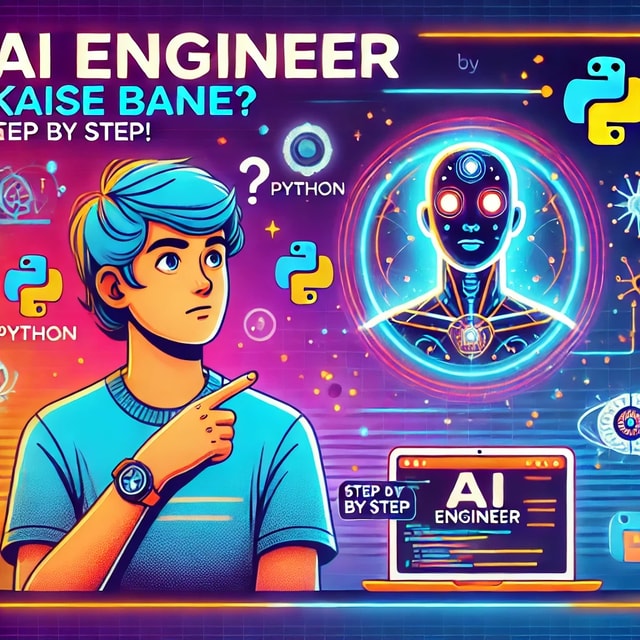
How to become an AI engineer as a fresher?
Follow a fixed sequence: Python first, then the maths that matters (statistics and linear algebra), then machine learning fundamentals, and finally deep learning with TensorFlow or PyTorch — proved through two or three deployed projects on GitHub, not just notebooks. Add GenAI skills such as working with LLM APIs, prompt engineering, and RAG pipelines, because startups in India are hiring aggressively for AI-adjacent roles under titles like AI Engineer, ML Engineer, and GenAI Developer. A structured roadmap with mentor feedback, combined with a project-heavy resume shared through referrals, is what converts learning into an actual offer.