Testimonials
Services
Frequently asked questions
How to move on after a breakup?
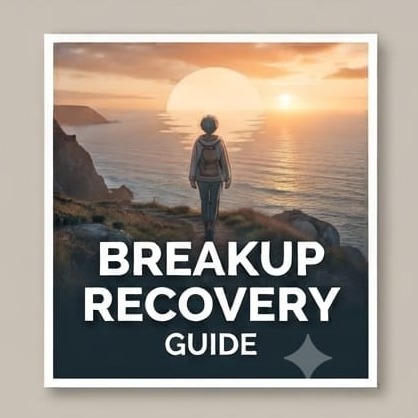
Moving on becomes possible when you replace passive waiting with deliberate steps: go no-contact for at least a few weeks, remove reminders like chats, photos, and gifts, rebuild a fixed sleep and exercise routine, and consciously refill the time you used to give the relationship with work, fitness, friends, or a new skill. Expect bad days — the goal is to make them fewer, not to feel nothing immediately. A structured day-wise plan, such as a 30-day guide, works better than vague advice because it tells you exactly what to do on the days motivation is zero.
What is a realistic breakup recovery timeline?
It varies, but for most people the intense pain eases within the first few weeks, and a realistic breakup recovery timeline to feel genuinely stable is around two to three months — longer if the relationship was long or ended badly. There is no single formula for how to recover after a breakup; your daily actions decide the speed far more than time does. Strict no-contact, zero social-media stalking, and a solid support system can compress the timeline dramatically, while rebounding and repeatedly checking their profile usually stretch it for months.
How to speed up breakup recovery?
Treat recovery like a project, not a mood. The biggest accelerators are: complete no-contact for 30 days, unfollow or mute your ex everywhere, exercise daily to burn off stress, journal instead of replaying old arguments in your head, and keep your calendar full for the first few weekends. The two habits that slow people down the most are re-reading old chats and checking the ex's social media — cut just those two and you will feel the difference within weeks.
How to heal yourself after a breakup?
Healing yourself after a breakup means rebuilding, not just distracting. Protect the basics first — sleep, food, daily movement — then work on the deeper layer: write down what you actually feel, spend time with people who genuinely listen, and reconnect with the version of you that existed before the relationship. Avoid the classic traps of instant rebounds, using alcohol to numb the pain, and digital stalking, because all three only postpone the pain. If low mood, sleeplessness, or hopelessness stretch beyond a few weeks, take it seriously and speak to a professional.
How to move on after a breakup as a girl?
The core steps are the same for everyone — no contact, routine, and leaning on your support system — but in India, girls often deal with extra layers: relatives commenting, "log kya kahenge" pressure, or friends rushing you to either patch up or instantly find someone new. Filter all of that out. Don't jump into a rebound just to prove you're fine, don't let anyone shame you for taking time, and rebuild your confidence and independence at your own pace. A small circle of friends who let you vent without lecturing makes a huge difference.
What does moving on after a breakup mean?
Moving on does not mean forgetting the person or pretending the relationship never existed. It means the memories lose their grip — you can think about what happened without anger, longing, or the urge to text them, and your happiness stops depending on whether they come back. In simple words, you stop emotionally living in the past and start being present in your own life again. That is also why moving on is measured by how you feel, not by how many days have passed.
What is considered moving on too fast after a breakup?
Moving on too fast usually means skipping the grieving stage, not literally moving quickly. The signs include getting into a new relationship within days or weeks, loudly claiming you are "totally over it" while secretly checking their profile, and forcing yourself to feel nothing. When pain is suppressed instead of processed, it tends to resurface later — often inside the next relationship. If you genuinely feel light, sleep well, and are not avoiding your feelings, your pace is fine; avoidance, not speed, is the real red flag.
How to overcome relationship anxiety?
Start by catching the pattern: relationship anxiety runs on overthinking, worst-case assumptions, and constant reassurance-seeking. When a trigger hits (a late reply, a changed plan), write down the actual evidence instead of the story in your head, and ask your partner directly rather than assuming. Grounding exercises, journaling, and resisting the urge to seek reassurance every hour all help calm the loop. If the anxiety continues even inside a clearly secure relationship, that is the point where structured help — a therapist or a coach who works on the root cause — makes a real difference.
What are the common relationship anxiety symptoms?
The most common relationship anxiety symptoms are doubting your partner's feelings without real evidence, over-analyzing texts and tone, needing repeated reassurance, assuming the worst from small behavioural changes, feeling physically restless when they seem distant, and mentally rehearsing breakup scenarios. The pattern matters more than any single symptom — the fear keeps returning even when nothing is actually wrong. Occasional insecurity is normal; it becomes relationship anxiety when it is frequent, exhausting, and starts affecting both your peace and the relationship itself.
What is relationship anxiety disorder?
Relationship anxiety is not a separate clinical disorder with its own diagnosis — it is a persistent pattern of fear, doubt, and worry focused specifically on the relationship. It often traces back to attachment style, a past betrayal or breakup, or low self-worth, and it can overlap with general anxiety. You do not need a "disorder" label to take it seriously: if the worry is constant and is harming an otherwise healthy relationship, working on the root cause through self-help, coaching, or therapy is absolutely worth it.
Which relationship anxiety treatment options actually work?
Effective relationship anxiety treatment usually combines three layers: understanding the root cause (attachment style, past hurt, self-esteem), retraining thought patterns through journaling or CBT-style techniques, and communicating openly with your partner instead of silently testing them and mind-reading. Mindfulness and breathing exercises help manage the physical spikes of panic. Mild anxiety often improves with consistent self-work, but long-standing or intense anxiety settles much faster with a therapist or relationship coach guiding the process.
Is there a reliable relationship anxiety test?
There is no single official relationship anxiety test, but a few honest questions work as a practical self-check: Do I doubt my partner's feelings without evidence? Do I replay conversations hunting for hidden meanings? Do I need constant reassurance to feel okay? If most answers are yes and this has been going on for months, the pattern points to relationship anxiety rather than a genuine problem in the relationship. A proper assessment by a professional, or even one focused 1:1 conversation with someone who deals with this regularly, can help you confirm what is really driving the fear.
How do I know if it's relationship anxiety or a gut feeling?
A gut feeling is usually specific and evidence-backed — it keeps pointing to real red flags like dishonesty, disrespect, or inconsistency. Relationship anxiety is vague and recurring: it survives reassurance, attaches to harmless things like a slow reply, and never quite names a concrete problem. A useful filter is to raise the concern once, clearly. If the discomfort settles after honest communication, it was anxiety; if your worry keeps getting confirmed by your partner's actual behaviour, trust your gut and take it seriously.
How do I know if it's relationship anxiety or not in love anymore?
When you are in love but anxious, the dominant emotion is fear of losing them — you imagine them leaving, and the thought of separation feels unbearable. When feelings have genuinely faded, the dominant emotion is indifference: their day stops mattering much, closeness feels like an obligation, and the relationship runs on habit. Anxiety is loud; fading feelings are quiet. Ask yourself honestly whether you want the relationship to work and fear losing it, or whether you are mostly staying out of comfort and fear of being alone — the answer usually tells you which one you are dealing with.