Testimonials
Services
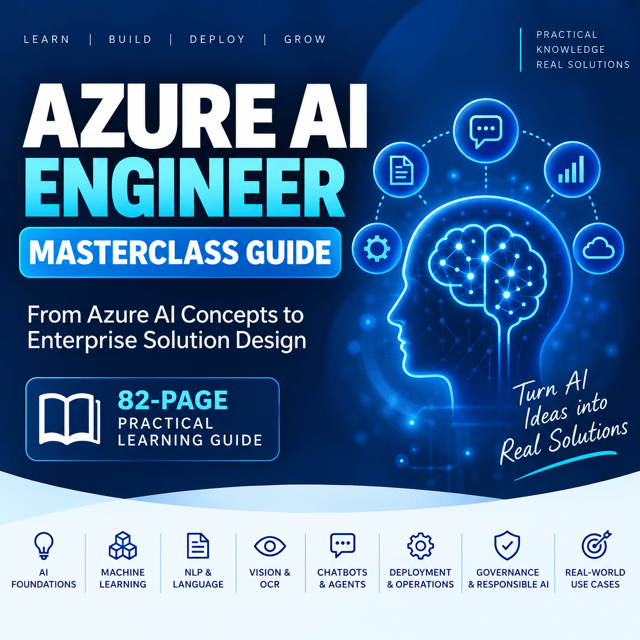
Azure AI Engineer Masterclass Guide
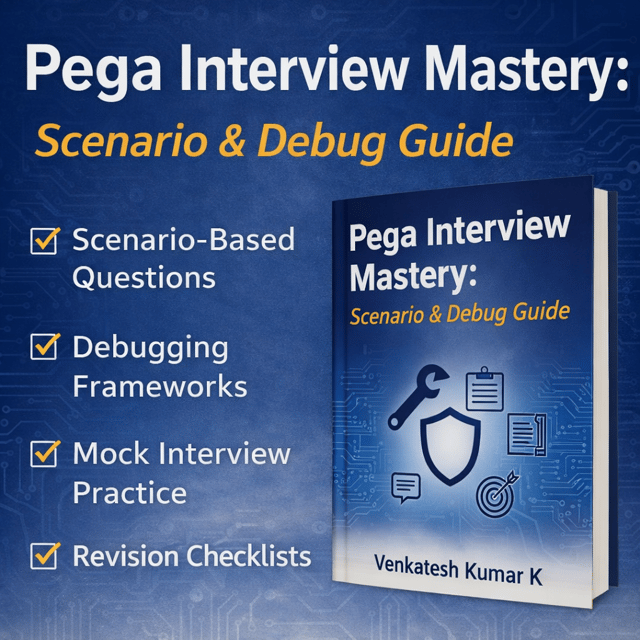
Pega Interview Mastery – Scenario & Debug Guide
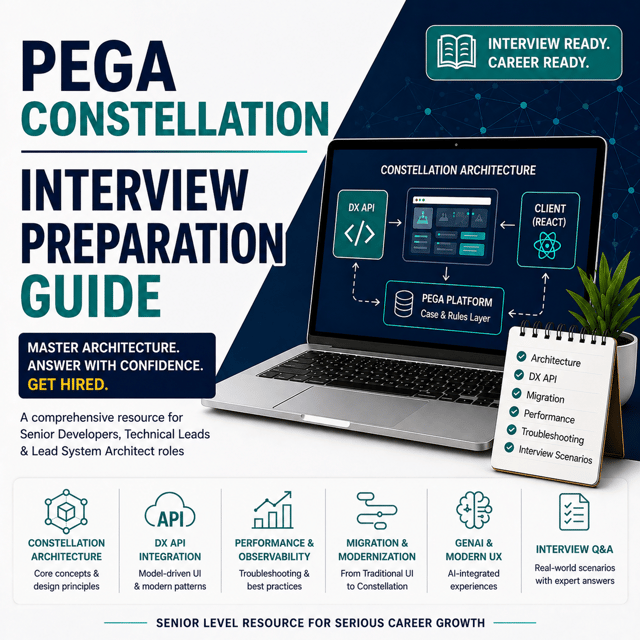
Pega Constellation Interview Preparation Guide
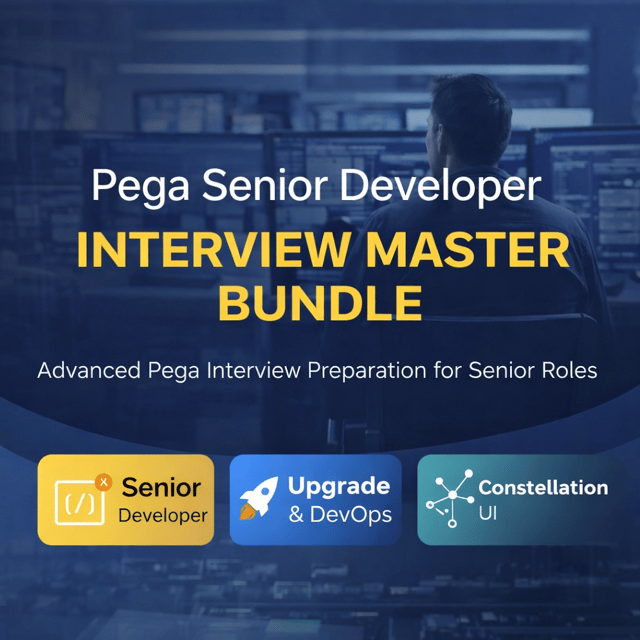
Pega Senior Developer Interview Master Bundle
Pega Interview and Project Delivery Support
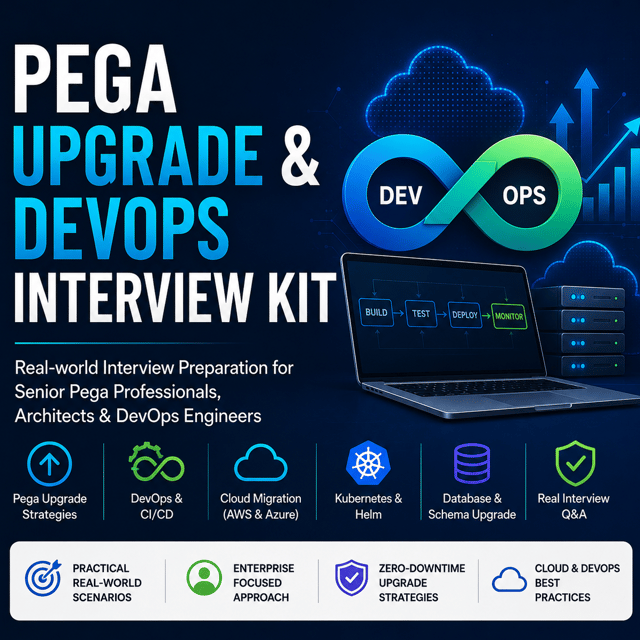
Pega Upgrade & DevOps Interview Kit
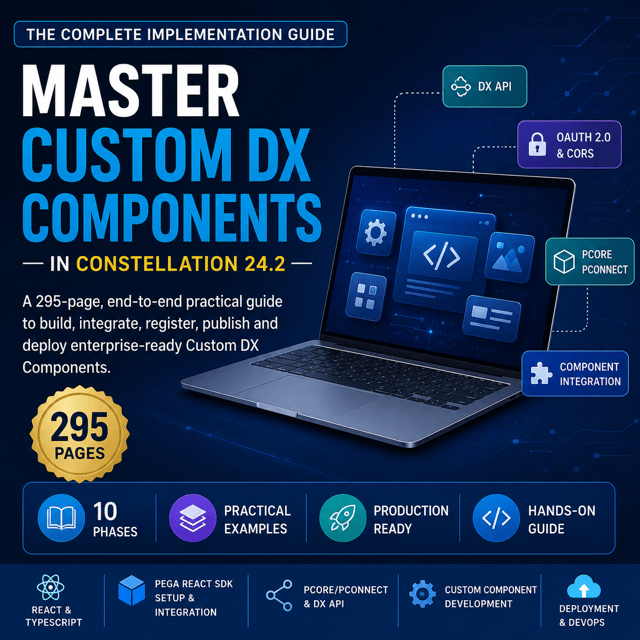
Master Pega Custom DX Components in 24.2
Pega Customer Decision Hub Interview Guide
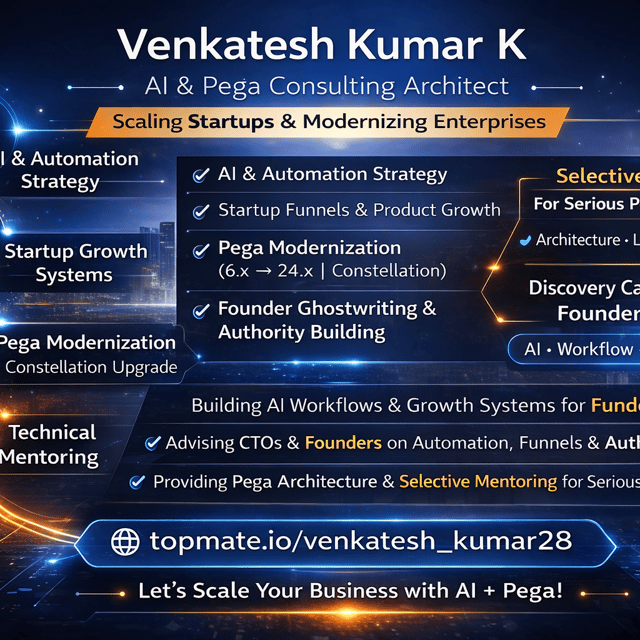
Startup Founder Discovery: AI, Workflow & Growth
About me
- It is definitely worth having a session with him for professionals. I had a session on design approach and Pega upgrade, and his way of designing documentation reflects a highly effective approach.Recommended by Clement V on

- I highly appreciate Mr. Venkatesh for the excellent Pega knowledge documents he shared, which greatly helped in understanding key concepts and practical implementation. He also provided guidance.Recommended by RAVITEJ G on
- Mr. Venkatesh has excellent Pega knowledge which he shares with his peers which greatly helped in understanding key concepts and practical implementation. He utilizes his deep knowledgeRecommended by Rudranil C on
- I really appreciate Venkatesh for his knowledge on pega and his documentations. It was well categorized and structured for anyone to Kickstart their preparation. He has also taken mock interviewRecommended by Nikhila A on
Frequently asked questions
What is a Pega LSA?
A Pega LSA (Lead System Architect) is one of the highest individual-contributor certifications on the Pega platform, sitting above the Senior System Architect (CSSA) level. An LSA is expected to own end-to-end solution design, justify architecture decisions, handle upgrade and integration strategy, and guide delivery teams on complex enterprise programs. In India, LSA-level roles are among the most sought-after and well-paid positions in the Pega job market.
What is the Pega LSA certification process and how much does it cost?
The Pega LSA certification process typically builds on CSSA-level knowledge: you complete the Lead System Architect track on Pega Academy and clear a scenario-driven exam that evaluates how you justify architecture decisions, not just tool syntax. The Pega LSA certification cost is set by Pegasystems and varies by region and exam format, so check the current fee on Pega Academy before planning your budget, and factor in time for hands-on practice since many candidates underestimate how much the exam leans on real project design experience.
What is Pega Constellation architecture?
Pega Constellation architecture is Pega's modern application design approach where the UI layer is decoupled from the backend and communicates through APIs using a React-based design system. If you sketch a Pega Constellation architecture diagram, it typically shows the Constellation UI consuming API-driven data from the Pega engine, with reusable DX components handling presentation instead of traditional sections. This separation is what makes Constellation apps faster to build, easier to scale, and more consistent across channels.
How does Pega Constellation work?
Under Constellation, the server no longer sends fully rendered screens; instead, the UI engine requests data and metadata through APIs and renders views using standardized components. Business logic stays on the Pega platform side while presentation is handled by the Constellation design system, with custom functionality added through DX components. For experienced developers, the real shift is from building sections and harnesses to thinking in terms of APIs, components, and view composition.
What is the Pega Constellation UI?
The Pega Constellation UI is the next-generation interface framework that replaces the traditional section-and-harness based portal UI with a modern, React-based design system. It delivers a consistent, responsive experience across devices and is the default for new applications on recent Pega versions. Interviewers at senior levels increasingly ask you to compare the Constellation UI with traditional UI and explain when an enterprise should migrate.
How to learn Pega Constellation step by step?
The most effective path is to start with the Constellation missions on Pega Academy, then build a small application hands-on on a Pega instance running 23.x or 24.x. Practice creating and wiring DX components, consuming APIs, and debugging the UI layer, because these are the areas where interviews probe depth. A structured Pega Constellation course or mentor-led prep can shorten the curve, but self-built projects are what make the concepts stick.
What is Pega Constellation certification?
As of now, Pega does not offer a standalone certification only for Constellation; Constellation topics are tested within the latest versions of the core Pega certification exams, and hands-on Constellation ability is validated in interviews rather than through a separate credential. If a job posting asks for Constellation skills, hiring managers typically want proof that you have built or migrated applications on the Constellation architecture, so focus on demonstrable project work alongside any certification.
How to debug Pega Constellation applications?
Debugging in Constellation starts in the browser: use developer tools to inspect the API calls, payloads, and responses between the Constellation UI and the Pega server, since most issues show up as missing or malformed data rather than UI code errors. From there, check DX component logs and versions, review view and component configuration in the case designer, and use Pega's tracing tools on the backend to confirm whether the problem sits in the data layer or the presentation layer.
Where can I find Pega interview questions and answers that actually help?
You will find plenty of Pega interview questions and answers online, but at senior levels memorized lists rarely work because panels evaluate how you reason through design trade-offs. Focus on Pega scenario based interview questions covering design decisions, upgrades, integrations, and debugging, and practice explaining the "why" behind every choice. That is what separates candidates who clear senior and architect rounds from those who only recite definitions.
What are the common Pega interview questions for 5 years of experience?
Pega interview questions for 5 years of experience usually move beyond syntax into scenario design: how you would structure a case lifecycle, handle delegation, tune performance, design integrations, and troubleshoot production issues. Panels at this level also check whether you can mentor junior developers and own a module end to end. Prepare by walking through your own projects and being able to defend every major design decision you made.
How do I prepare for Pega interview questions for 10 years of experience and LSA-level roles?
Pega interview questions for 10 years of experience are LSA-level: expect to justify upgrade strategies across Pega versions, explain DevOps and CI/CD maturity, discuss AI-driven decisioning and GenAI use cases, and defend architecture trade-offs in front of business and technical stakeholders. Instead of revising definitions, prepare detailed narratives from your real projects — the problem, the options you considered, the trade-off you chose, and the outcome. Panels at this level hire for judgment, not recall.
What are the most common Pega Constellation interview questions?
Common Pega Constellation interview questions include how Constellation differs from traditional UI, how the API-driven architecture works, when an enterprise should adopt Constellation, where DX components fit in, and how to debug a Constellation application. Interviewers use these to check whether your Constellation knowledge is hands-on or theoretical, so prepare short, project-based examples for each.
What is the Pega CSSA certification and how much does it cost?
The Pega CSSA certification (Certified Senior System Architect) validates senior developer-level skills on the Pega platform and is the standard stepping stone toward Lead System Architect roles. The Pega CSSA certification cost is published on Pega Academy and varies by region and exam format, so verify the current fee before booking. Most experienced developers pair the certification with real project work, since interviews test practical depth far more than the credential itself.
Is the Pega CLSA certification the same as the Pega LSA?
Yes — the Pega CLSA certification (Certified Lead System Architect) is the earlier name for what is now referred to as the Lead System Architect (LSA) credential. The skills tested are the same architecture-level capabilities: solution design, upgrade strategy, integrations, and platform governance. If you see CLSA in older job postings or resumes, treat it as LSA-equivalent, and in interviews pair it with your version-specific experience so panels can see how current your skills are.
Why is Pega Constellation adoption increasing among enterprises?
Pega Constellation adoption is growing because it decouples the UI from the backend, which makes applications faster to build, easier to upgrade across Pega versions, and more consistent for users across channels. It also positions enterprises better for AI-driven workflows, since a clean API and component layer is easier to extend with GenAI capabilities. For professionals, this is exactly why Constellation experience now appears in senior job descriptions and interview panels.