Testimonials
Services
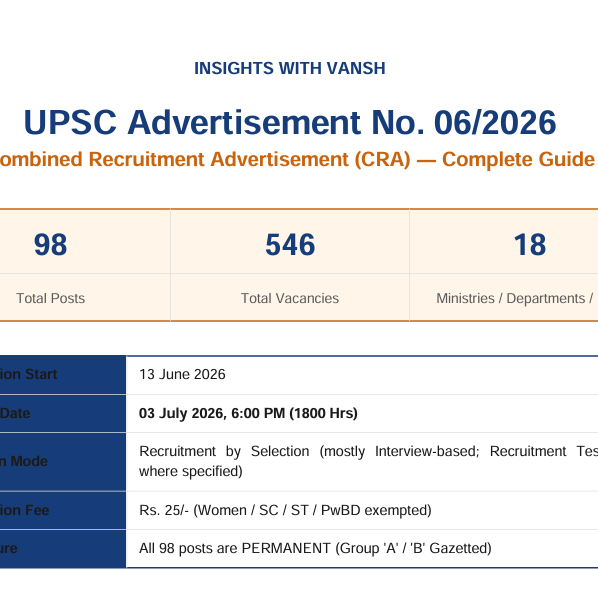
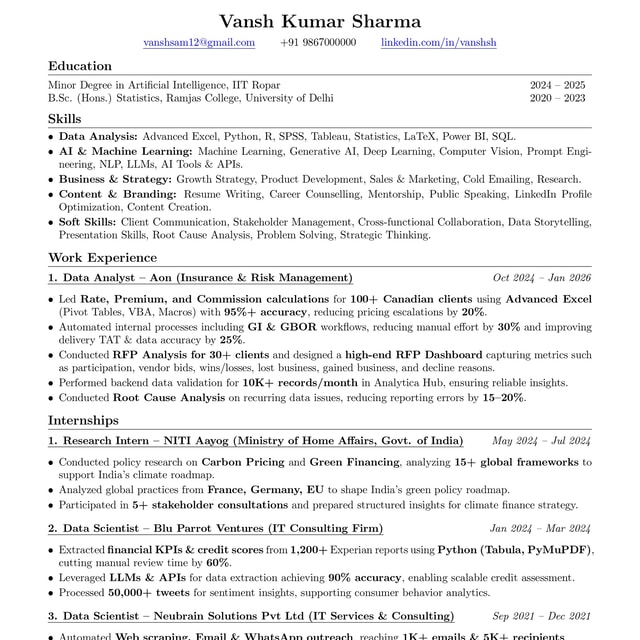
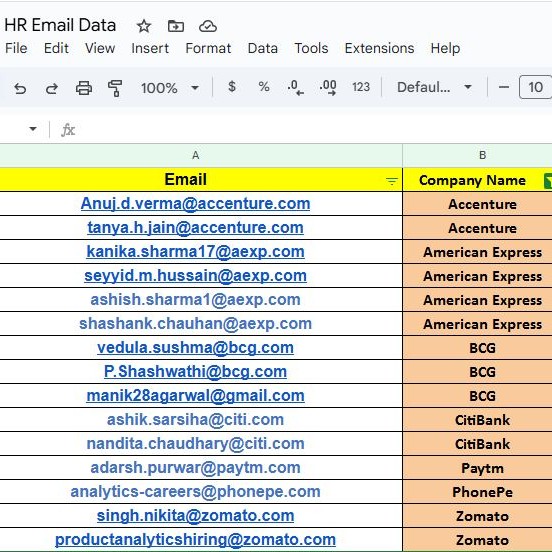
150+ HR Email IDs 🔥 from Top MNC
About me
Frequently asked questions
How to make a resume for freshers with no experience?
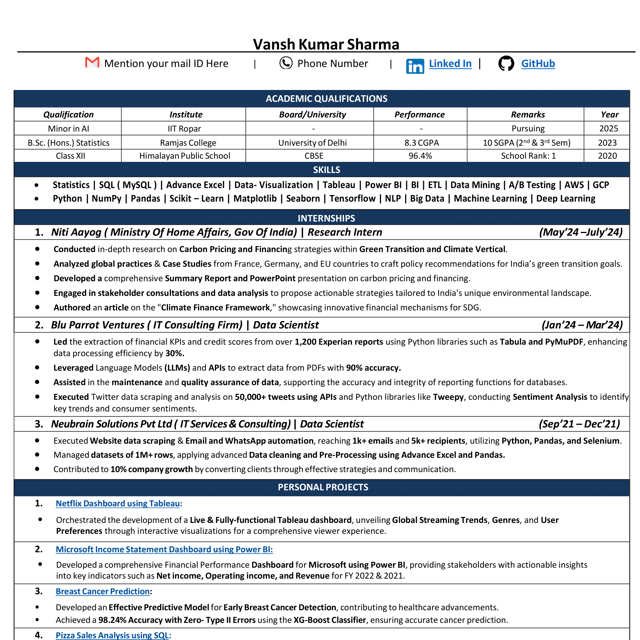
Start with a clean one-page format: name, contact details, and LinkedIn URL at the top, followed by education, internships, projects, skills, and certifications. Since freshers don't have long work histories, projects and internships do the heavy lifting — describe them with measurable outcomes instead of job duties. Use simple fonts, consistent formatting, and keywords from the job description so the resume passes ATS screening. Save it as a PDF unless the recruiter asks otherwise, and get it reviewed by a senior or mentor before applying.
Which resume building tools should freshers use?
Most resume building tools work the same way — pick a template, fill in your details, and export a clean PDF — so the tool matters less than the content you put in. Resume building for free is completely realistic for students using standard document editors with a professional template. Avoid over-designed templates with tables, graphics, or multiple columns, as these often break ATS parsing. What actually makes the difference is tailoring your summary, skills, and project bullets to each job description rather than the tool itself.
What is CV building and is a CV different from a resume?
CV building is the process of creating a detailed document covering your education, projects, internships, skills, and achievements over time, while a resume is a shorter, targeted summary prepared for a specific job. In India the terms are often used interchangeably, and most private-sector fresher hiring expects a one-page resume in resume format. For research roles, higher studies applications, and some academic positions, a longer CV is the norm. Maintain a master copy of everything you have done, then trim it into a tailored resume for each application.
What is LinkedIn profile optimization and how do you optimize your LinkedIn profile?
LinkedIn profile optimization means improving every section of your profile so recruiters searching for your skills can find you and instantly understand your value. To optimize your profile, start with a headline that mentions your target role instead of just "Student", write an About section covering your skills, projects, and goals, use a professional photo, and add detailed experience entries with keywords recruiters search for. Turn on the right "Open to work" settings, request recommendations from professors or internship mentors, and stay active by posting or commenting in your domain so the algorithm shows your profile more often.
How to check LinkedIn profile optimization for free?
There is no official free LinkedIn profile optimization tool that gives a complete score, but you can audit your profile with a simple checklist: a headline with your target role, a complete About section, skills added and endorsed, a custom URL, keyword-rich experience entries, and at least a few recommendations. LinkedIn's own profile strength meter shows how complete your profile is, and searching your target role on LinkedIn to see which profiles rank above yours shows you what recruiters see. If your profile doesn't appear for searches of your target role, your keywords need work.
Does a LinkedIn profile optimization prompt for ChatGPT or Claude really work?
A LinkedIn profile optimization prompt can genuinely help you draft a headline, rewrite your About section, or sharpen bullet points faster, especially if you give the AI your resume, target role, and examples. The limitation is that AI output tends to sound generic, and recruiters see templated profiles every day, so treat the prompt as a first draft, not a finished profile. Add your real projects, numbers, and voice to whatever the tool produces, and ideally have a human review the result before you publish it.
What is a LinkedIn Open Profile and should I enable it?
A LinkedIn Open Profile is a feature that lets anyone on LinkedIn, including people outside your network, message you for free without needing InMail credits. It is mainly useful for job seekers, freelancers, and creators who want recruiters and hiring managers to reach them easily, since normally only first-degree connections can message you freely. If you are a fresher actively hunting for opportunities, enabling it lowers the barrier for recruiters to contact you, though be prepared for more outreach messages, including sales pitches, as a trade-off.
How much to charge for LinkedIn profile optimization as a freelancer?
Freelancers in India typically charge anywhere from a few hundred rupees for a basic profile makeover to several thousand rupees for end-to-end optimization that includes a rewritten headline, About section, experience section, and keyword strategy. As a beginner, price at the lower end of the market, deliver a few strong before-and-after results, collect testimonials, and raise your rates as your portfolio grows. Charge based on the outcome you deliver — better recruiter visibility and interview calls — rather than just the hours spent editing the profile.
How to get off campus placement with no experience?
Focus on three things: a shortlist of target companies, a resume that uses projects and internships in place of work experience, and consistent applications. Apply through company career pages, off campus drive announcements, and job portals, and pair every application with a referral or a direct message to a recruiter on LinkedIn, since referred profiles get far more responses. Prepare for aptitude tests and interviews in parallel, because off campus processes move fast and you often get only a few days' notice between rounds. Expect it to take months and hundreds of applications, so track everything and keep improving after every rejection.
Where can I find off campus placements for freshers in 2026?
Follow the career pages of IT services companies, banks, startups, and MNCs, since most of them run dedicated fresher hiring or off campus drives that are announced there first. Job portals, recruiter posts on LinkedIn, and Telegram or WhatsApp groups that share daily drive updates are also worth following regularly. Placement cells of other institutions sometimes allow outside students into pool campus drives, and employee referrals remain the most reliable route, so build connections with alumni and employees at your target companies well before you need them.
What is the meaning of off campus placement?
The meaning of off campus placement is getting recruited by a company through your own efforts instead of through your college's placement cell — you apply directly to drives, job portals, company websites, or via referrals. It gives you access to far more companies than the few that visit your campus, and it is not restricted to final-year students, so you can start early. The trade-off is that you compete with students from every college, so your resume, referral network, and interview preparation have to do the work your college's brand would normally do.
What is an off campus drive and how does it work?
An off campus drive is a recruitment event a company organizes outside college campuses, open to eligible graduates and final-year students from any institution. The company announces the drive with eligibility criteria, registration dates, and the test or interview format; you register directly, and if shortlisted, you go through aptitude tests, technical rounds, and HR interviews, usually online or at a common venue. Because thousands of candidates register, clearing the screening or aptitude round is the toughest filter, so preparing for that specific company's test pattern beforehand makes a big difference.
What is on campus placement and how is it different from off campus placement?
On campus placement is when companies visit your college to hire students through a structured process coordinated by your placement cell, with limited seats, eligibility cutoffs, and a fixed hiring season. In off campus placements, you apply to companies yourself without college involvement, which means more opportunities and freedom to choose companies, but also more competition and self-driven preparation. On campus offers depend on which companies visit your college, while off campus lets you target any company in the country, so the smartest students use on campus as a base while actively building an off campus pipeline alongside it.
How do I prepare for a job interview as a fresher?
Prepare in three layers: your resume, the company, and the interview format. Know every line of your resume — expect deep questions on your projects and internships — research the company's products and recent updates, and practice standard fresher questions like "tell me about yourself" out loud until they sound natural. For technical roles, revise core subjects and practice explaining the decisions behind your projects, not just the code. Doing a mock interview with a senior or mentor and recording yourself is the fastest way to improve, since most freshers lose offers to communication and structure rather than lack of knowledge.
How do I start a career in data science as a fresher in India?
Start with one programming language (Python), statistics fundamentals, and SQL, because these form the base for every data role, then move into data analysis and a few machine learning basics. Build two or three portfolio projects on real datasets that solve a business problem and publish them with clear explanations, since projects replace the work experience freshers don't have. Choose your track early — data analyst, data scientist, or data engineer — because entry requirements differ, with analyst roles usually being the fastest entry point. A structured roadmap, consistent practice, and referrals from people already working in data roles matter more than collecting certificates.