Testimonials
Services
About me
- Portfoliohttps://utsav.pro
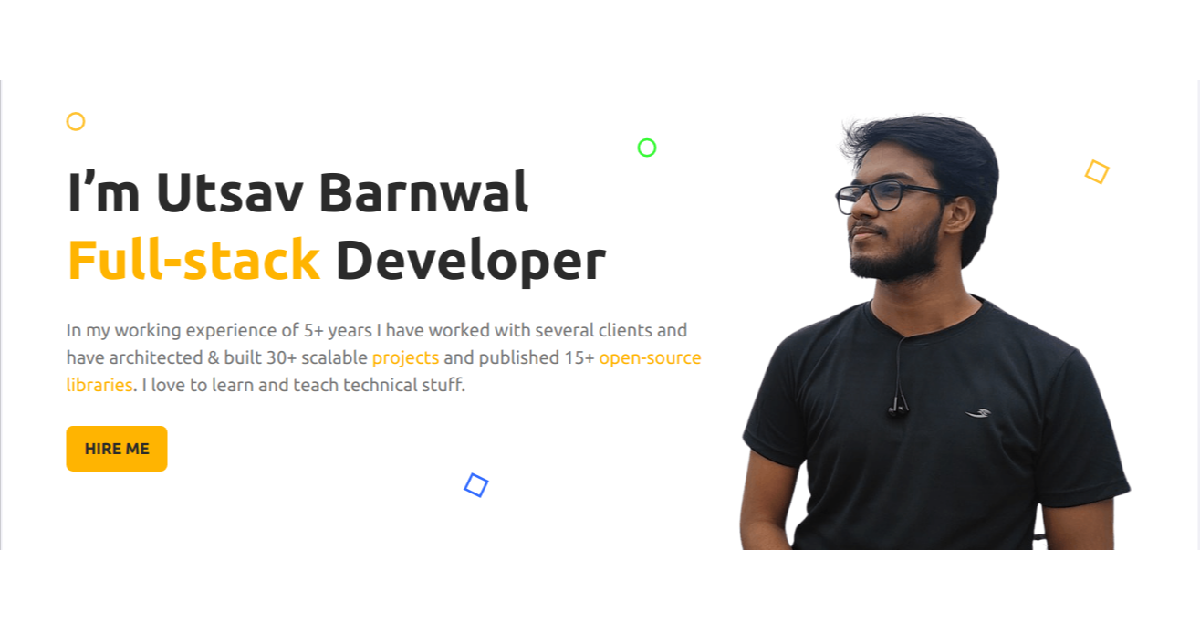
- Utsav is a knowledgeable and passionate tech expert. Praised for motivating, clear advice, and addressing doubts effectively. Admired for his courtesy and professionalism.
 AI-generated based on testimonials
Frequently asked questions
What is cross platform mobile app development?
Cross platform mobile app development is the practice of building a single mobile application that works on both Android and iOS using one codebase, instead of writing separate native apps for each platform. Popular stacks include Ionic + Capacitor, Flutter, and React Native, and it is a great choice for startups and developers who want to ship faster with less code.
How to develop a cross platform app as a beginner?
Start by learning one web fundamentals stack (HTML, CSS, JavaScript/TypeScript), then pick a cross platform framework like Ionic + Capacitor, Flutter, or React Native. Build small projects first, learn how plugins and native device APIs work, and gradually move to publishing apps on both the Play Store and App Store.
What are the best cross platform app development frameworks in 2026?
The most widely used cross platform app development frameworks are Flutter, React Native, and Ionic + Capacitor. Flutter is strong for pixel-perfect UI, React Native is great if you know React, and Ionic + Capacitor is ideal if you come from a web development background and want to reuse web skills across Web, Android, and iOS.
What is a good cross platform app development roadmap?
A practical cross platform app development roadmap is: master JavaScript/TypeScript and web basics → learn a framework like Ionic + Capacitor or Flutter → understand native build tools (Gradle, Xcode) → learn plugins and native device APIs → build and publish 2–3 real apps → then learn architecture, state management, and performance optimization for scalable projects.
How much does cross platform app development cost?
The cost of cross platform app development depends on the app's complexity, features, and the developer's rates. A simple app can cost a few thousand dollars, while complex apps with backend integrations, payments, and native features cost significantly more. Cross platform development generally reduces cost because one codebase targets both Android and iOS.
What is Ionic Capacitor?
Ionic Capacitor is a runtime layer that lets you turn any web app (built with Ionic, React, Angular, or Vue) into a native mobile app for Android and iOS. It provides access to native device features like the camera, geolocation, and storage through plugins, making it a popular choice for developers who want to reuse their web code on mobile.
What is the difference between Ionic and Capacitor?
Ionic is a UI framework that provides pre-built mobile-friendly components and styling, while Capacitor is the bridge that packages your web app into native mobile apps and gives access to device APIs. They work together — Ionic handles the look and feel, Capacitor handles the native layer for Android and iOS builds.
How to build an Ionic Capacitor app for Android and iOS?
To build an Ionic Capacitor app, you create your app with the Ionic CLI, add Capacitor to the project, then run commands to add the Android and iOS platforms. After that, you sync your web build into the native projects and build them using Android Studio and Xcode respectively. This workflow lets a single web codebase ship to both stores.
Ionic Capacitor vs React Native — which one should I choose?
Choose Ionic Capacitor if you are already a web developer and want maximum code reuse between web and mobile with standard web technologies. Choose React Native if you want truly native UI components and come from a React background. Both are solid cross platform options — the right one depends on your existing skills and the type of app you're building.
Flutter vs React Native — which is better?
Neither is universally better — it depends on your use case. Flutter offers excellent performance and consistent UI across platforms with its own rendering engine, while React Native benefits from a huge JavaScript ecosystem and native-like components. If you know JavaScript/React, React Native feels easier; if you want one UI codebase with high performance, Flutter is often preferred.
What is easier to learn — Flutter or React Native?
React Native is easier if you already know JavaScript and React, since you use the same language and mental model. Flutter is easier if you're starting fresh from web development or prefer a single framework with strong documentation, though it requires learning Dart. For most web developers, React Native has a slightly gentler learning curve.
What does the Flutter vs React Native job market look like in India?
Both Flutter and React Native have strong demand in India's job market, with Flutter currently seeing rapid adoption among startups and product companies, while React Native remains dominant in companies with existing JavaScript/React teams. Learning one deeply plus understanding mobile fundamentals matters more than the specific framework for getting hired.
Flutter vs React Native vs Kotlin — which one should I learn for a career?
Kotlin is the right choice if you want to be a native Android developer at product companies, while Flutter and React Native are better for cross platform roles where you ship to both Android and iOS with one codebase. If you want maximum job flexibility in cross platform development, Flutter or React Native is the way to go; if you're targeting deep Android specialization, learn Kotlin.
Is a cross platform app development course worth it?
A cross platform app development course is worth it if it teaches you real project building — not just syntax. Look for courses that cover one framework in depth (Ionic + Capacitor, Flutter, or React Native), include native builds and deployment to app stores, and make you build publishable projects, since that's what employers and clients actually evaluate.
How useful is a resume review for software developers applying to product companies?
A resume review for software developers is extremely useful because most developer resumes fail to highlight scalable projects, tech stack impact, and measurable outcomes. Getting an experienced developer to review your resume helps you fix formatting, quantify achievements, tailor it for ATS systems, and stand out when applying to product-based companies.