Testimonials
Services
Python Interview Cheat Sheet (0 to Advanced)
Resume review
Gen AI Mock interview
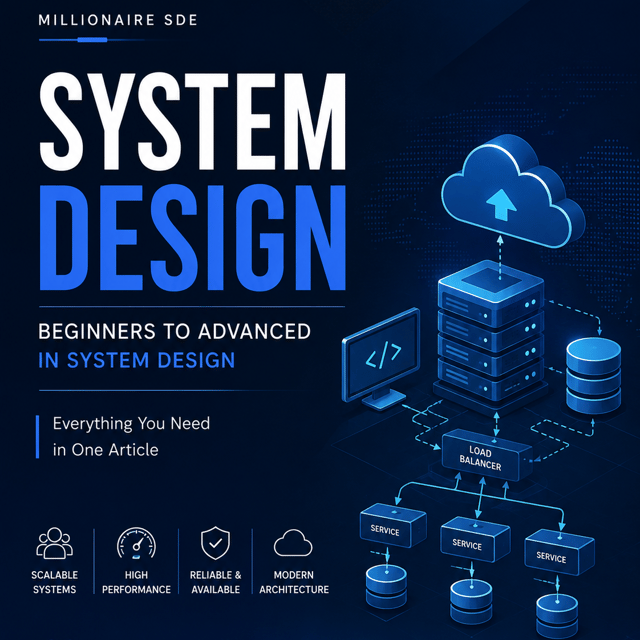
System Design (0 to Advanced)
Gen AI Interview Cheat Sheet (0 to Advanced)
1:1 Mentorship
About me
Frequently asked questions
How to create an AI roadmap when you are starting from scratch?
Start by picking the role you're targeting — AI engineer, Gen AI engineer, or ML engineer — then audit what you already know and sequence the gaps. A practical Gen AI roadmap for beginners roughly runs: Python → math and ML fundamentals → deep learning basics → LLM fundamentals (transformers, tokens, prompt engineering) → RAG → agents → evaluation and deployment, with one hands-on project attached to every stage. Give each stage a deadline and a build output instead of only tutorials, and revisit the plan every few months — heading into 2026, the emphasis is shifting toward agentic AI and evaluation skills. A mentor who works in Gen AI can compress this by tailoring the sequence to your background.
Is Gen AI a good career in India?
Yes, it is currently one of the strongest tech career bets in India. IT services firms, GCCs, banks, and startups are all building Gen AI teams, and compensation for hands-on Gen AI engineers is running ahead of traditional software roles at the same experience level. The bar has also risen: employers now shortlist candidates who have actually built LLM applications — RAG systems, agents, evaluation pipelines — not just watched courses. Freshers with a solid portfolio project and working professionals pivoting from backend or data roles are finding the entry points fastest.
How do I switch from software development to Gen AI?
Build on what transfers — APIs, databases, backend architecture, and deployment — and layer Gen AI-specific skills on top: prompt engineering, RAG, vector databases, agent frameworks, and LLM evaluation. Build two or three portfolio projects that look production-grade (for example, a RAG chatbot with retrieval evaluation), then rewrite your resume so those projects lead, using terms like RAG, LangChain, and vector search that recruiters in India actually filter on. Hybrid roles such as AI platform engineer or backend engineer working on LLM features are often the fastest bridge. A mentorship session with someone already working as a Gen AI engineer can help you map the shortest path for your specific stack.
What are the most common Gen AI interview questions and answers?
Most rounds cluster around a few themes: LLM fundamentals (transformers, attention, tokens, temperature and top-p), prompt engineering, RAG (chunking, embeddings, vector databases, reranking), fine-tuning versus prompting, agents and tool calling, handling hallucinations, and deployment and cost basics. The strongest answers are short, structured, and anchored to an example — for instance, explain RAG by walking through a chatbot you built and the failure modes you fixed. Preparing a compiled set of Gen AI interview questions and answers by topic and rehearsing aloud is far more effective than reading scattered posts.
What are the common Gen AI interview questions for freshers?
Freshers are usually tested on fundamentals: what a transformer is, how tokenization and embeddings work, how LLMs differ from traditional ML, prompt engineering basics, RAG at a conceptual level, vector databases, and how to reduce hallucinations. Expect Python coding too, since Gen AI engineering is Python-first. Interviewers also weigh one real project heavily — a small but well-explained RAG chatbot or agent with a clear write-up generally beats a list of certificates, so be ready to defend every design choice in it.
How are Gen AI interview questions for experienced candidates different?
Gen AI interview questions for experienced engineers shift from definitions to decisions: when to use RAG versus fine-tuning, how to control cost and latency in production, how to design evaluation pipelines, where guardrails fit, and how to scale LLM applications reliably. You will also face deeper system design around LLM apps — caching, streaming, fallbacks, and failure handling. Interviewers expect metrics-backed stories from systems you have actually shipped, so prepare quantified examples rather than textbook answers.
Where can I find a good Gen AI interview questions PDF for revision?
Plenty of free PDFs float around, but most are unorganized, outdated, or copied from one another. A better option is a curated Gen AI interview questions PDF or cheat sheet organized topic-wise — LLM basics, prompt engineering, RAG, agents, evaluation, deployment — ideally prepared by someone who actually conducts Gen AI interviews, so the answers match what is being asked today. Use it for spaced revision in the final week rather than as your only preparation.
How to practice a system design interview without a partner?
If you are working out how to practice a system design interview alone, run timed self-mocks: pick one problem, set a 35–40 minute timer, and speak your design aloud while recording yourself — requirements, estimates, high-level design, deep dives, trade-offs. Review the recording for missed non-functional requirements and hand-wavy sections, then repeat. For Gen AI rounds, rehearse prompts like "design a RAG pipeline" or "design an agent workflow" the same way. Self-practice builds structure, but one 1:1 mock interview with someone who conducts these rounds will surface blind spots you cannot see yourself.
How to prepare for a system design interview?
Plan for four to six weeks. First, learn the building blocks — load balancing, caching, SQL vs NoSQL, indexing, message queues, sharding, consistency, and back-of-envelope estimation. Second, study 10–12 classic designs (URL shortener, chat app, news feed, ride sharing) and note the trade-offs in each. Third, practice 15–20 problems by designing out loud against a timer, since communication is scored as heavily as architecture. Finish with at least one mock interview for honest feedback before the real one.
How to approach a system design interview problem in the actual round?
Follow a fixed framework so nerves don't derail you: clarify functional and non-functional requirements, do quick capacity estimates, define the API, sketch the data model, draw the high-level design, then deep-dive into the two or three components the interviewer probes. Keep narrating trade-offs — every choice (database type, cache strategy, sync vs async) should come with a why. Close by discussing bottlenecks and how you would scale further. Interviewers care less about a "correct" answer and more about whether your reasoning is structured and defensible.
What are the most common system design interview questions?
The classics keep repeating: design a URL shortener, a chat app like WhatsApp, a news feed like Instagram's, a ride-sharing service like Uber, a rate limiter, a notification system, a web crawler, and a video platform. LLM-flavored variants are increasingly common too, such as designing a document Q&A system or an AI customer-support bot. For each one, interviewers evaluate requirement clarification, estimation, data modeling, scalability choices, and how clearly you articulate trade-offs — so practice them in the spoken format, not just by reading solutions.
Which is the best system design interview book for preparation?
For interview prep specifically, the System Design Interview by Alex Xu (Volumes 1 and 2) is the most widely recommended starting point — it is diagram-heavy and closely mapped to real interview prompts. If you have more time, add Designing Data-Intensive Applications for depth on databases and distributed systems. Whichever system design interview book you pick, reading alone won't get you through: you need to practice speaking through designs under time pressure, ideally with feedback from mocks.
Is the System Design Interview book PDF by Alex Xu available for free?
No official free PDF exists — the System Design Interview books are sold as paperbacks and ebooks through legitimate stores, and the "free PDF" copies circulating online are pirated, frequently incomplete, or outdated. Volume 1 covers the fundamentals and classic designs, while Volume 2 adds newer case studies, so most serious candidates eventually read both. If budget is the constraint, combine a few quality free articles with structured practice or mentor-guided prep instead of chasing unreliable PDFs.
What is Grokking the System Design Interview and is it worth it?
Grokking the System Design Interview is a popular interactive, text-based course that teaches design through reusable patterns and classic case studies such as the URL shortener, rate limiter, and chat system. It is genuinely useful for building a repeatable framework quickly, especially from zero. Its limitation is that the pattern-first approach can feel template-like, while current interviews push you on open-ended trade-offs beyond the standard examples. Most candidates do well pairing it with Alex Xu's books and, more importantly, live practice through mock interviews.
Which Python topics should I revise for a software or Gen AI interview?
Cover the standard core first: data types, list and dict comprehensions, OOP, exception handling, decorators, generators, iterators, and common data structures. For Gen AI and AI-adjacent roles, add working with REST APIs, virtual environments, NumPy/Pandas basics, and writing clean, modular, testable code — interviewers notice code quality as much as correctness. A one-page Python interview cheat sheet is the most efficient way to revise these in the last day or two before the interview.