Testimonials
Services
Interview Pitfalls: The $200K Mistakes
AI Strategy Deep Dive: LLMs, Agents & Next-Gen AI
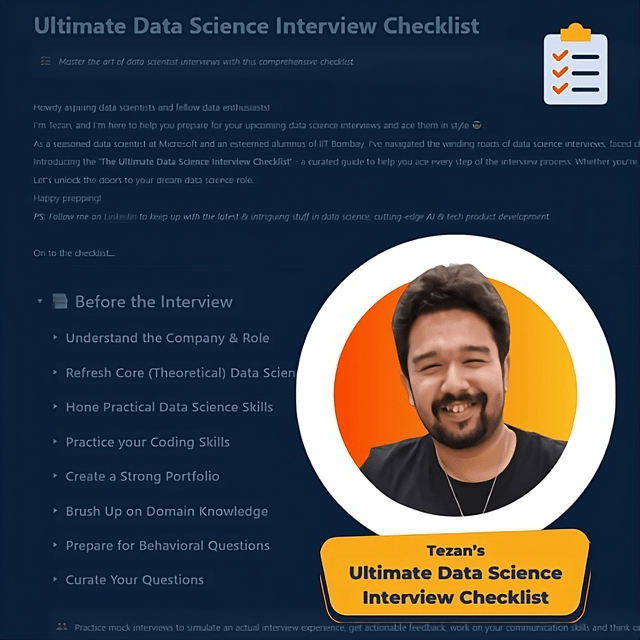
Ultimate Data Science Interview Checklist
Mock Interview (Data Science Role)
AI for Productivity (1:1 Mentorship)
Data Science Mentorship Package
Resume Review
Data Science Interview Prep & Tips
Resume Review | Offline
FAANG Data Science Interview Playbook
Crack the Data Science Interview
Discovery Call
Customized Career Guidance (Data Science)
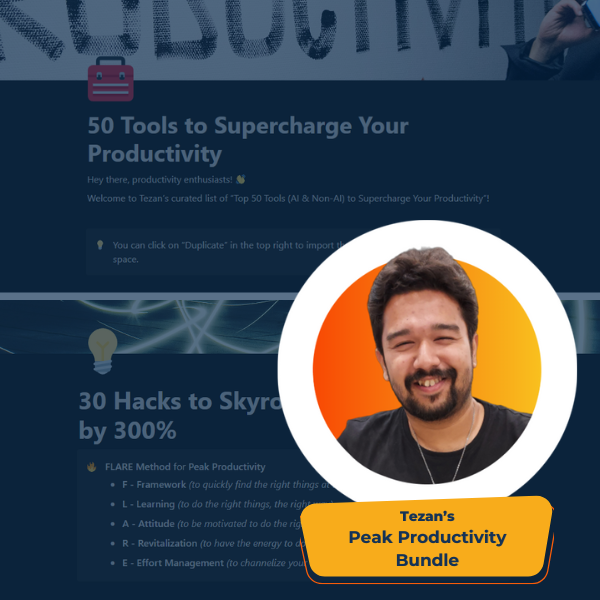
Ace the Data Science Career | 1:1 Mentoring
LinkedIn Profile Review
Have a Question?
LinkedIn Profile Review | Offline
About me
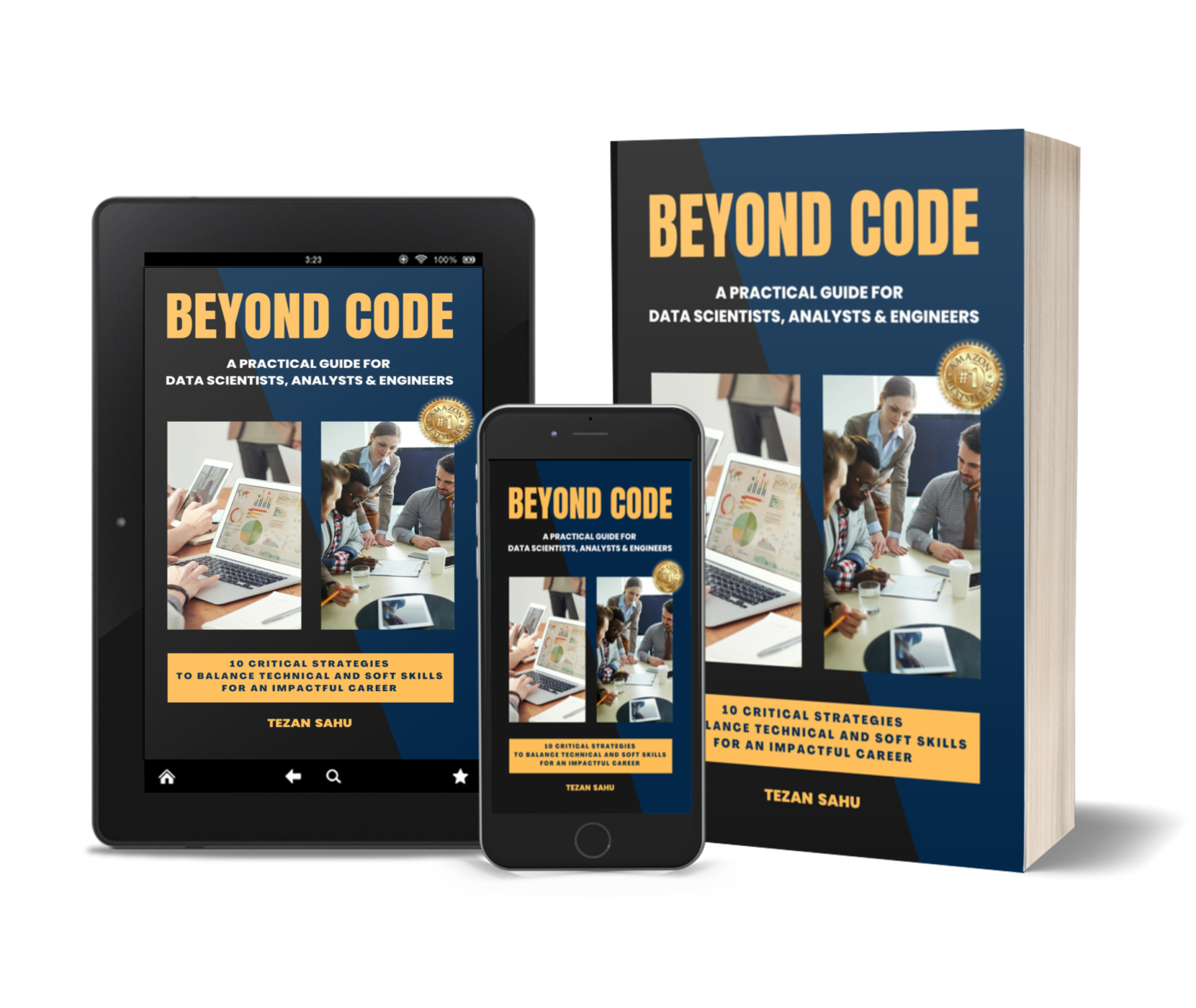
- Beyond Code: A Practical Guide for Data Scientists | Tezan Sahuhttps://www.tezansahu.com/beyond-code
- DATA SCIENCE ROADMAP🔥| Data Science Interview at Microsoft! @BosscoderAcademyhttps://youtu.be/-zowlwWrGR4?si=iECy2C-a48Kmq7WT

- Tezan Sahu offers insightful, detailed sessions with expert guidance in tech and strategy, providing invaluable feedback and practical tips.
 AI-generated based on testimonials
 - AI Tools to Supercharge Your Workflow | Live Walkthroughs | D'Industryhttps://youtu.be/oQou1LL3jgI?si=Knt1zpmhsZKXTYSa

Frequently asked questions
What are the most common data science interview questions?
Most data science interview questions revolve around five areas: statistics and probability, machine learning fundamentals, SQL and coding, data wrangling with Python or R, and business case studies. Expect questions on bias-variance tradeoff, p-values, overfitting, A/B testing, and writing SQL joins and window functions. Many data analytics interview questions overlap here as well, though data science roles go deeper into modelling. The best preparation is to collect questions from interviews at your target companies and practise explaining your answers aloud, not just reading solutions.
What is asked in a data science interview?
A typical data science interview has four to five stages: an online assessment or recruiter screening, one or two technical rounds covering statistics, SQL and machine learning, a case study or guesstimate round, and an HR or hiring-manager round. Senior roles may also include ML system design, where you are asked to design a recommendation or forecasting system end to end. Interviewers evaluate not just your answers but how you structure your thinking, so narrate your approach out loud as you solve.
Which data science interview questions for freshers come up most often?
For freshers, interviewers test fundamentals over deep experience: descriptive vs inferential statistics, basic algorithms like linear and logistic regression, SQL queries, and Python pandas questions. You will almost certainly be asked to walk through your academic projects or internships, so be ready to explain the business problem, your approach and the measurable impact. Freshers are also probed on handling missing data, outliers and imbalanced datasets — small details that separate trained candidates from tutorial-only learners.
How to crack a data science interview?
To crack a data science interview, build three layers: strong fundamentals in statistics and ML, hands-on projects you can defend in detail, and repeated practice under realistic conditions. Study the job description, prepare stories in the STAR format, and do at least a few mock interviews with an experienced mentor before the real day — feedback from someone who has sat on hiring panels exposes gaps you cannot spot on your own. In the final week, revise your notes and SQL patterns instead of starting new topics.
How long does data science interview preparation take?
For someone with a coding or quantitative background, focused data science interview preparation usually takes 8–12 weeks at 2–3 hours a day. Complete beginners may need 5–6 months since they must first build foundations in Python, statistics and SQL. Split your time roughly as 40% concepts, 30% hands-on practice and SQL, and 30% mock tests and mock interviews — a structured timeline with weekly targets prevents the endless "one more course" trap.
Which data science interview books and PDFs are actually worth using?
Well-known data science interview books are useful for theory revision, especially statistics, SQL patterns and ML concepts, but they will not keep you current on case-study style questions. A curated data science interview questions pdf or a structured checklist works better in the final 2–3 weeks because it compresses revision into what actually gets asked. Use books to learn and checklists or playbooks to revise, and pair both with practice interviews — passive reading alone rarely converts into offers.
How to start a data science career in India?
To start a data science career in India, begin with Python, statistics and SQL, then add machine learning and build two or three portfolio projects on real, messy datasets rather than clean, tutorial-style ones. Most data science careers for freshers actually begin through data analyst, business analyst or data engineering roles before transitioning into core data science, so do not hold out only for the "data scientist" title. Get your resume and LinkedIn profile reviewed by someone experienced, apply consistently, and actively seek referrals from your college and professional network.
What does a typical data science career path look like?
A realistic data science career path in India usually starts as a data analyst or junior data scientist, moves to data scientist within 2–4 years, and then branches into senior data scientist, ML engineer or data science manager tracks. A practical data science career roadmap: in years 0–1 master SQL, Python and statistics; in years 1–3 own end-to-end projects with measurable business impact; in years 3–5 specialise in LLMs, ML systems or leadership. Growth accelerates once you can connect models to revenue or cost outcomes, not just build them.
What are the best data science career options in India?
Popular data science career options include data scientist, data analyst, machine learning engineer, data engineer, AI/LLM engineer and business intelligence analyst, with newer roles like GenAI specialist growing fast. Product companies and global capability centres in Bengaluru, Hyderabad, Pune and Gurugram hire in the largest numbers. Choose based on your strengths: ML engineering if you love building systems, analytics if you enjoy business storytelling, and research-heavy data science if you have strong maths.
How much can you earn in a data science career in India?
Data science career salary in India varies widely by company type, city and skill depth. Service-based and analytics firms typically pay less than product companies, and candidates with strong ML, LLM or GenAI skills command a clear premium over those with only reporting and dashboard skills. Rather than fixating on starting pay, optimise for roles where you ship real models — significant salary jumps while switching are common once you have 2–3 years of demonstrable impact.
Is a data science career in the future still worth pursuing as AI gets stronger?
Yes — a data science career in the future is evolving rather than disappearing. AI tools now automate routine coding and reporting, which raises the value of people who can frame business problems, evaluate model outputs, design evals and take responsibility for decisions AI cannot own. The role is shifting from writing every line of code to orchestrating AI systems with judgement, so invest in LLMs, agents and evaluation skills on top of classical statistics and ML. That combination is exactly what companies are hiring for right now.
How to review a resume before applying for jobs?
A proper resume review starts with three checks: relevance, evidence and readability. Relevance — mirror the keywords in the job description so you clear ATS filters; evidence — replace duties with quantified achievements ("improved forecast accuracy by 12%" beats "worked on forecasting"); readability — one page for under a decade of experience and clean, simple formatting. After your own pass, get at least one external review, because you read your own resume the way you wrote it, not the way a recruiter will.
How to review a resume with ChatGPT?
Paste the job description along with your resume, then use a specific resume review prompt rather than a vague "improve my resume" — for example, ask it to score your resume against the JD, flag missing keywords, rewrite bullets in the action-impact-metric format, and simulate an ATS screen. You can run similar prompts across ChatGPT or Claude for multiple passes. Remember that AI polish cannot invent real impact, so verify every metric and get a final human review from a mentor in your target role, since AI does not know what interviewers at product companies actually shortlist for.
How to review a resume on LinkedIn?
On LinkedIn you have a few routes: use LinkedIn's own resume and profile tools, ask connections or communities for feedback, or book a dedicated review with a mentor who does this professionally. A LinkedIn-focused resume review should also check whether your headline, About section and experience keywords align with your resume, because recruiters cross-check both before shortlisting. A detailed offline review is often more useful than quick chat feedback, since the reviewer can mark up your document line by line.
Is a free resume review enough, or should I pay for a professional resume review service?
A free resume review — from an AI tool, a friend or an online checker — is a good first filter for formatting issues and obvious keyword gaps. However, free feedback is usually generic, while a paid resume review service gives you role-specific, line-by-line input from someone who has actually hired or been hired in your field, including how to position your projects for the roles you want. A practical approach: do the free pass yourself, then invest in one expert review before a major application push — the cost is small compared to months of missed interviews.