Testimonials
Services
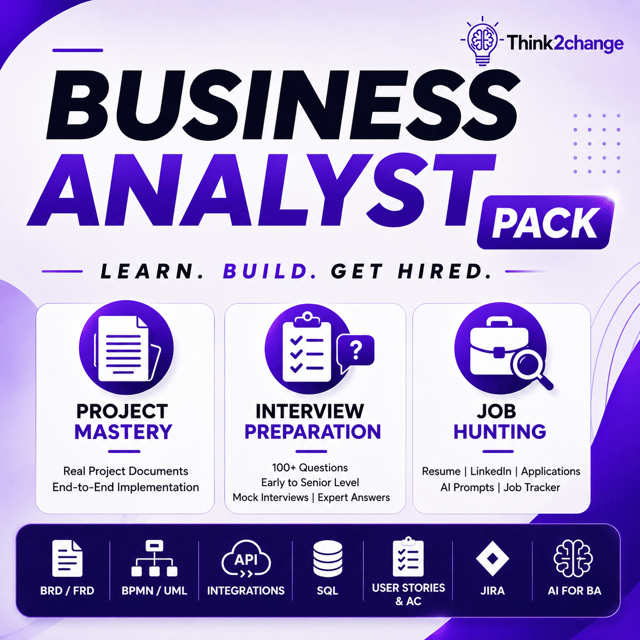

Business Analyst Masterclass: Zero to Job-Ready

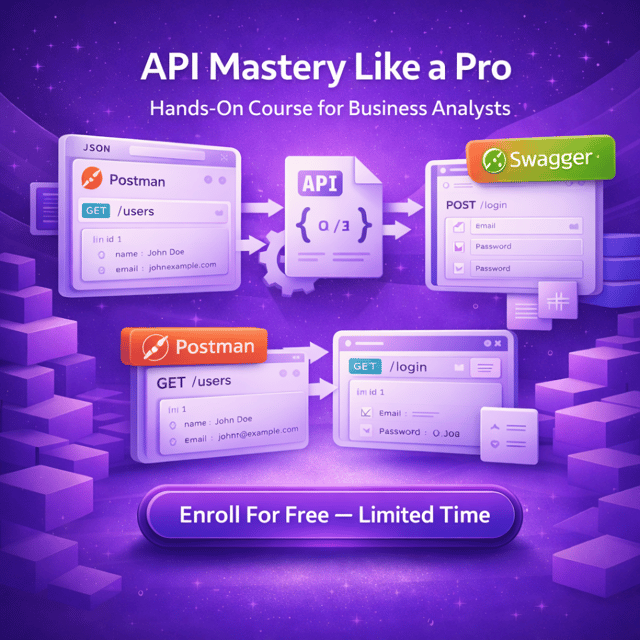
Complete API Training for Modern Business Analysts
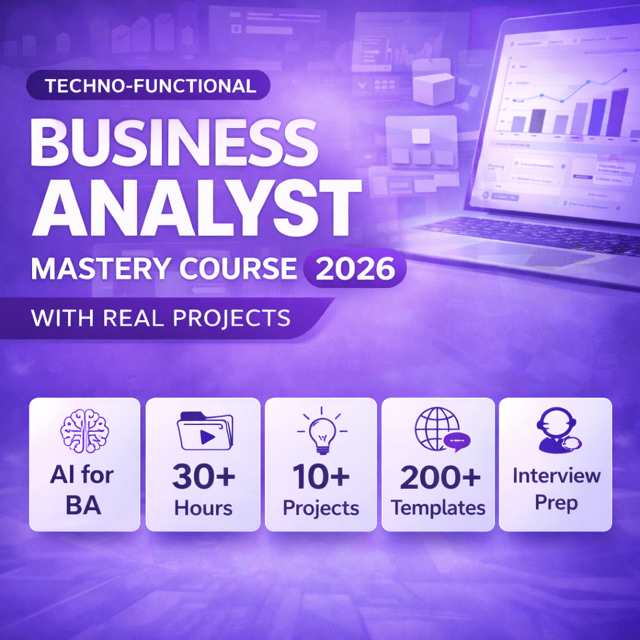
Business Analyst Mastery Program 2026.
Speaker Invitation

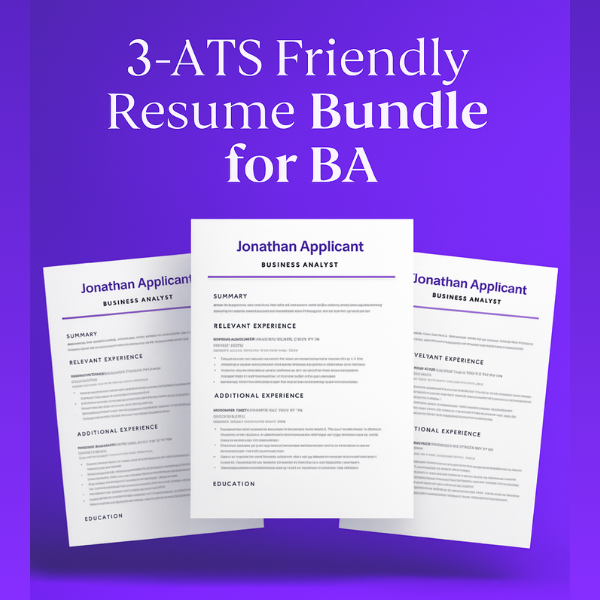
3- ATS Friendly Resume Bundle for BA
The Ultimate Guide to Becoming a Business Analyst
Build BPMN & DFD Like a Pro | Workshop for BA
2026 BA Essential: Resumes, Roadmap & 1:1 Call
Influencer Collaboration
About me
- Tejas Bhale is a dedicated mentor, known for his insightful guidance, practical advice, and supportive approach, greatly impacting those pursuing a career in Business Analysis.
 AI-generated based on testimonials
 - Whatsapp BA Community Think2change.aihttps://chat.whatsapp.com/JxGyZhiCavjCu0Mw86M548

Frequently asked questions
Is business analyst a good career in India?
Yes — business analysis is one of the more stable and accessible tech-adjacent careers in India. Demand spans BFSI, IT services, e-commerce, consulting, and product companies, the entry barrier is lower than for core engineering roles, and the skills transfer across industries. It suits freshers from any stream and professionals switching from testing, operations, support, or sales — provided you build the practical skills recruiters actually test, like requirements work, process modelling, SQL basics, and clear communication.
What is a business analyst job, and what does the role involve day to day?
A business analyst acts as the bridge between business stakeholders and technical teams. On a typical day, that means eliciting and documenting requirements (BRD/FRD), writing user stories, mapping process flows, coordinating UAT, and keeping stakeholders aligned so the delivered solution matches the actual business need. In India, BAs are hired across BFSI, supply chain, IT services, and product companies, often supporting platforms like Salesforce.
How to start a business analyst career if I come from a non-IT background?
Start with the core BA toolkit rather than an IT degree: requirements documentation (BRD/FRD), user stories, process mapping (BPMN, flowcharts, DFD), SQL basics, and how APIs work. Then convert your existing domain experience — banking, operations, retail, support — into one or two BA-style projects you can present confidently. Most successful switchers follow a focused 6–8 week roadmap covering fundamentals, one hands-on project, an ATS-friendly resume, and mock interviews before applying.
What is the business analyst career path and salary progression in India?
The standard ladder is Junior/Associate BA → Business Analyst → Senior Business Analyst → Lead BA or Product Owner → Business Analysis Manager or Principal Consultant, and from there into product or delivery leadership. Salary typically moves from ₹4–8 LPA at entry level to ₹9–18 LPA with 3–5 years of experience, and ₹18–30+ LPA at senior or lead levels, depending on city, domain, and company. Depth in a domain like BFSI or supply chain, plus tools like Salesforce, SQL, and Jira, speeds up both progression and pay.
How to crack a business analyst interview?
Prepare in three layers. First, concepts — SDLC, Agile, requirements artefacts (BRD, FRD, user stories), UAT, and basic SQL. Second, application — be ready to walk through one project end to end: the business problem, the requirements you gathered, the process flow you designed, and the outcome. Third, delivery — structured answers, domain research on the company, and at least two mock interviews. Most candidates lose offers on weak application and structure, not on theory.
How to answer business analyst interview questions without memorising answers?
Use a repeatable frame instead of scripts: restate the problem, explain your approach step by step, mention the trade-offs, and close with the business impact. Answer behavioural questions in STAR format (Situation, Task, Action, Result), and for scenario questions, think aloud — interviewers judge how you think, not whether you recite a perfect answer. Rehearsing business analyst interview questions and answers out loud with your own examples works far better than reading them silently.
What is asked in a business analyst interview?
Most business analyst interview questions fall into five buckets: requirements elicitation and documentation (BRD/FRD, user stories, acceptance criteria), process modelling (flowcharts, BPMN, DFD), SQL and data basics, domain knowledge (payments, lending, or logistics, depending on the role), and stakeholder management scenarios. Expect at least one live exercise — writing a user story, drawing a process flow, or critiquing a requirement — plus questions on handling conflicting stakeholders and changing requirements.
Which business analyst interview questions for freshers should I prepare first?
Freshers are most commonly asked what a BA does, the difference between BRD and FRD, the format of a user story, SDLC vs Agile, simple SQL joins, and "explain a college or internship project the way a BA would." Prepare one strong project story in STAR format, revise basic SQL, and practise explaining a process flow on paper — fresher rounds test clarity and fundamentals far more than experience.
Are business analyst interview questions for 3 years experience different from fresher questions?
Yes. At around three years, interviewers skip most definitions and probe depth: requirements you owned end to end, trade-offs you made, how you ran UAT, a stakeholder conflict you resolved, and domain-specific scenarios — chargebacks or KYC in BFSI, warehouse and order flows in supply chain. Prepare three or four detailed project narratives with measurable outcomes; that is what separates genuine experienced candidates from people who crammed theory.
Is preparing from a business analyst interview questions and answers PDF enough to clear the interview?
Treat a PDF as a checklist, not a strategy. It helps you shortlist likely topics during business analyst interview preparation, but interviewers spot rehearsed, generic answers within minutes. Use the PDF to organise your topics, then build your own examples for each, practise scenario answers out loud, and do at least one mock interview — depth on a few projects beats surface coverage of a hundred questions.
How to make a business analyst resume that gets shortlisted?
Lead with a 2–3 line summary naming the BA role and domain you are targeting, then prove every skill with a bullet: requirements documented, user stories written, processes improved, tools used (SQL, Jira, Salesforce, Excel, Visio or Lucidchart), and measurable outcomes. Keep it to 1–2 pages, single-column, and mirror the exact keywords from each job description so it clears ATS filters. Close with certifications and at least one hands-on project.
What should a business analyst resume look like?
Clean and simple: an ATS-friendly, single-column layout with a role-focused summary at the top, a key skills section (requirements gathering, BRD/FRD, user stories, UAT, SQL, Jira, process modelling), experience or projects written as achievement bullets, then education and certifications. Indian recruiters spend under a minute on the first scan, so your strongest BA evidence should sit in the top half of page one — avoid photos, heavy graphics, and two-column templates that confuse ATS parsers.
How do I write a business analyst resume for freshers with no experience?
Lean on projects instead of employment history. Build one or two BA-style projects — a BRD, a process flow (BPMN or DFD), and a set of user stories for a well-known app or a domain you understand, like banking or logistics — and place a Projects section above experience. Add internships or volunteer work reframed in BA language, list only tools you can actually demonstrate (Excel, SQL basics, Jira, Visio or Figma), and keep the summary honest about being an aspiring BA with strong domain exposure.
Should I customize a business analyst resume template for every job application?
Yes — keep one master template, but edit the summary, skill keywords, and bullet order for every application to match that specific job description. Sending the same generic resume everywhere is the most common reason BAs apply widely and hear nothing: ATS filters match on exact keywords, and recruiters look for the domain signals the posting names, such as UAT and payments for a BFSI BA role or backlog and user stories for a product-side role. A two-minute tailoring pass per application noticeably improves shortlist rates.
Will AI replace business analysts?
No, but it is reshaping the role. AI already drafts documents, summarises stakeholder inputs, and produces first-cut user stories, so pure documentation work is shrinking. BAs who pair core skills — requirements elicitation, process design, stakeholder alignment — with GenAI and agentic AI workflows are becoming more valuable, because someone still has to ask the right questions, validate what AI produces, and own judgement calls and domain context. The real risk is not AI replacing BAs; it is BAs who ignore AI being outpaced by BAs who use it.