Testimonials
Services
The Data Analyst 60 Day Roadmap (Full Job System)
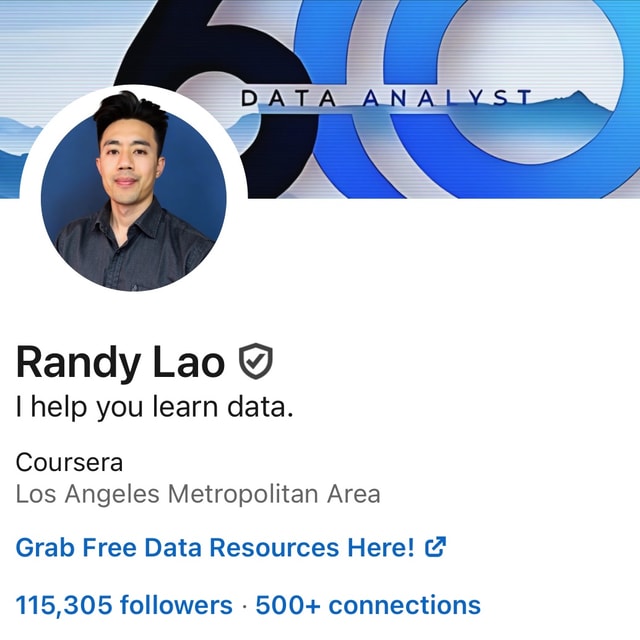
📦LinkedIn Profile Blueprint for Data Analytics
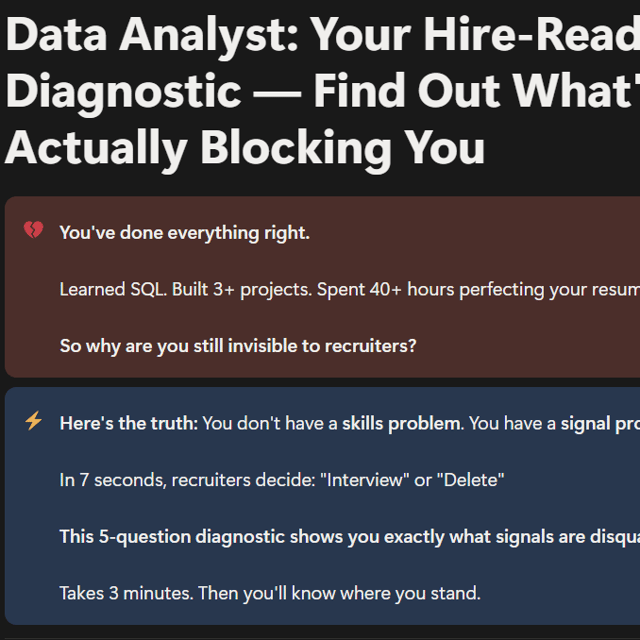
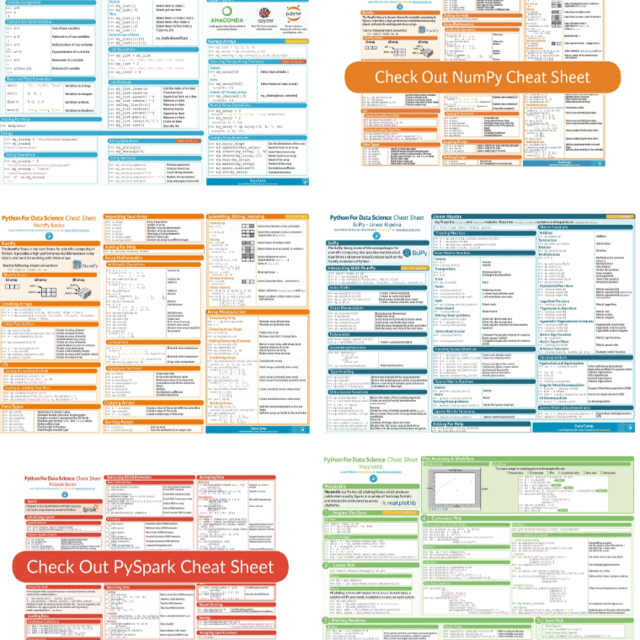
Mini SQL Project Kit: Flight Delay Analysis
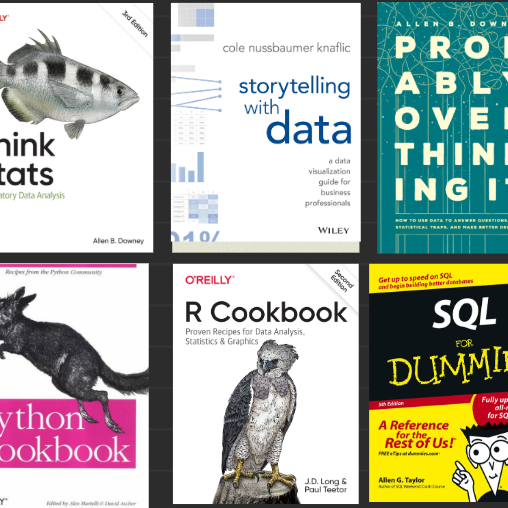
📚Must-Read Books for Data Analysts/Scientists
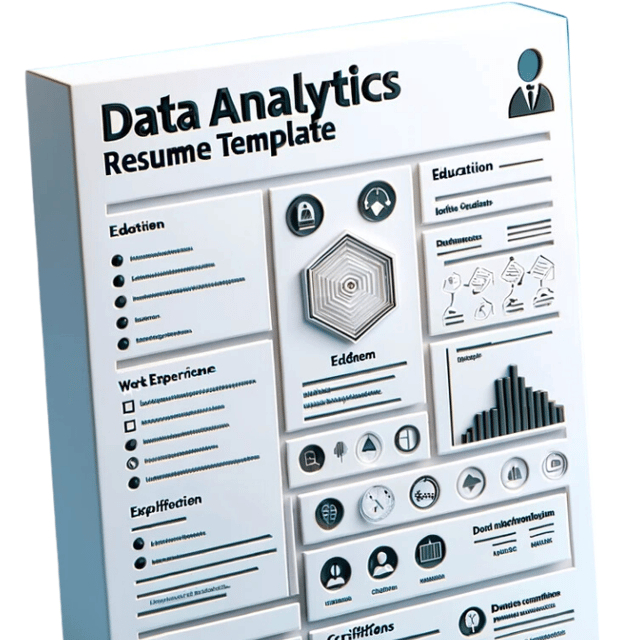
💰 6-Figure Resume Template
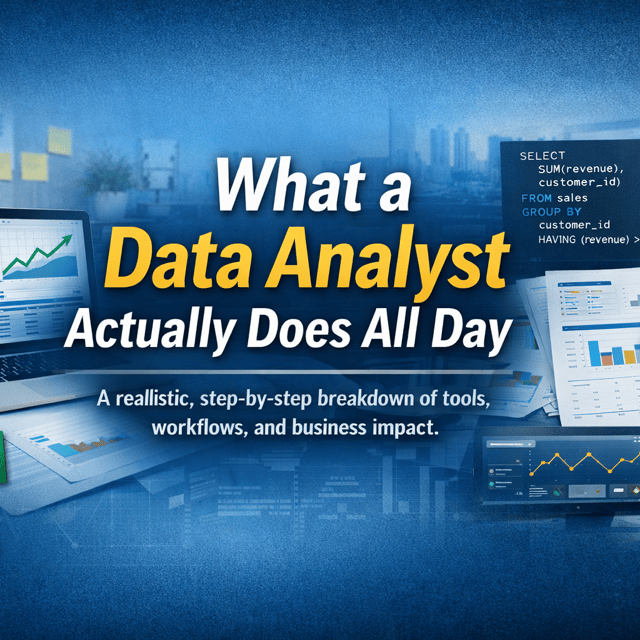
About me
- Randy Lao's Data Analysis Roadmap is widely praised for its clarity, structure, and supportive guidance, helping many beginners confidently navigate their learning journey.
 AI-generated based on testimonials
Frequently asked questions
How to start a data analyst career?
Learning how to start a data analyst career is more straightforward than most beginners expect: build the core toolkit (SQL, Excel, and one BI tool like Power BI or Tableau), then prove your skills with two or three portfolio projects on real, messy datasets. For each project, write up the business impact in plain language, because hiring managers care about what you found, not just what you built. From there, apply to entry-level and analyst-adjacent roles, tailor your resume to each posting, and keep practicing SQL weekly. A structured, week-by-week roadmap helps beginners avoid the biggest time-waster: hopping between random tutorials.
What is a data analytics career?
A data analytics career is, at its core, a job built on turning raw data into decisions. Day to day, analysts pull and clean data with SQL, build dashboards in tools like Power BI or Tableau, analyze trends, and present recommendations teams can act on. It's one of the most accessible entry points into tech because ability is proven through projects rather than pedigree, and it opens several growth paths — senior analyst, data science, analytics engineering, or analytics management. If you enjoy problem-solving with numbers and explaining what the numbers mean, it's a strong fit.
What is the data analyst career path?
The standard data analyst career path begins with an entry-level or junior analyst role focused on SQL queries, dashboards, and data cleaning. From there, most people progress to data analyst and then senior data analyst, where the job shifts from producing reports to influencing decisions and mentoring others. Beyond senior level, the path usually branches: you can specialize technically in analytics engineering or data science, or move into people management as an analytics manager or director. Each step rewards a slightly different skill mix, but SQL, data storytelling, and business sense compound in value the whole way.
What is the data analyst career outlook?
The data analyst career outlook remains positive because nearly every industry — finance, healthcare, retail, tech, and government — now needs people who can turn data into decisions. What's changing is the bar: employers increasingly expect SQL fluency, comfort with a BI tool like Power BI or Tableau, and the ability to automate repetitive work rather than only build charts. Remote-friendly openings have also widened the market well beyond your local area. For anyone entering now, the most durable advantage is pairing technical skills with clear business communication, since that combination is harder to hire for.
How do I find remote data analyst careers?
Landing remote data analyst careers takes a more targeted approach than applying everywhere. Filter job boards for remote-first companies, confirm the role is open in your location, and prioritize postings that match your exact toolkit. Because remote recruiters can't watch you work, your public proof matters most: a portfolio of dashboards, short write-ups of your projects, and a results-focused resume. Referrals and direct outreach to hiring managers consistently outperform mass applications for remote roles, and interviews typically include a technical screen plus a case study or take-home exercise, so prepare for both.
How to start a data scientist career?
Working out how to start a data scientist career begins with understanding the difference between the two roles: data science leans much harder on statistics, Python, and machine learning than data analytics does. A realistic route is to get solid with SQL and analytics first, then layer on Python, statistics, and machine learning fundamentals through end-to-end projects you can clearly explain — problem, approach, result. In this field, a portfolio beats certificates. Many people also break in by transitioning internally from an analyst role, which is usually easier than landing a data scientist title as your very first job.
What are the most common data analyst interview questions?
Most data analyst interview questions cluster into five areas: SQL (joins, aggregations, window functions), statistics and metrics (mean vs. median, how you'd measure success), Excel or BI tool tasks, business cases ("sales dropped 10% — how would you investigate?"), and behavioral questions about past projects. Interviewers pay close attention to how you handled messy data, tight deadlines, or conflicting stakeholder requests. Prepare four or five project stories in a situation–action–result format, and practice explaining your SQL logic out loud, since clear reasoning often matters as much as the correct answer.
How to pass a data analyst interview?
The most reliable way to learn how to pass a data analyst interview is to rehearse under realistic conditions. Drill SQL and case questions out loud with a timer, study the company's product so your answers reference its actual metrics, and map one of your project stories to each requirement in the job description. Then run at least one mock interview with a mentor or experienced peer — most candidates only discover their weak spots (rambling, over-explaining, freezing on live SQL) when someone is watching. Treat every interview as feedback for the next one; iteration is what turns finalists into hires.
What does the data analyst interview process look like?
The typical data analyst interview process runs three to four stages over two to four weeks: a recruiter screen, a technical round (live SQL, Excel, or a take-home assignment), a case-study round where you analyze a scenario and present recommendations, and a final conversation with the hiring manager about communication and team fit. Some companies also ask for a portfolio walkthrough. Ask your recruiter about each stage's format early, prepare a two-minute project story you can reuse anywhere, and practice presenting findings simply — that's the skill every round keeps testing.
How to write a data analyst resume with no experience?
The key to how to write a data analyst resume with no experience is letting projects substitute for job history. Add a Projects section near the top with two or three entries that name the tools, the dataset size, and the outcome — for example, "Built a Power BI dashboard over 100,000 rows of sales data to identify the fastest-growing regions." Then reframe previous jobs around transferable work like reporting, Excel analysis, and process improvement. Keep it to one page, quantify every bullet, and mirror the exact keywords from each job posting so applicant tracking systems rank you higher.
What should I look for in a data analytics resume template?
The right data analytics resume template is built for both impact and applicant tracking systems. Look for a clean, single-column layout that ATS software can parse, a concise summary targeting the role you want, a skills line naming the specific tools (SQL, Excel, Power BI, Python), and bullet prompts that push you to quantify results. If you're entry-level, it should include a dedicated projects section. Skip graphics-heavy designs, photos, and unusual fonts, since they often break ATS parsing — and choose a format you can quickly tailor for each application instead of sending one generic version everywhere.
Should my data analytics resume and LinkedIn profile match?
Yes — your data analytics resume and LinkedIn profile should tell one consistent story, because recruiters compare the two before reaching out. Keep job titles, employers, and dates identical on both. Use LinkedIn for the fuller version: a headline that names your target role and tools (for example, "Data Analyst | SQL • Power BI • Excel"), an About section written for the job you want rather than the one you have, and featured posts or project links that back up your resume claims. Consistency also improves how often you surface in recruiter keyword searches on LinkedIn.