Testimonials
Services
Full-Stack: Vibe Coding to Prod-Ready Template

40 Days of JavaScript - Progress Tracker
Interview preparation & Tips
Have a question?
15 Days of React Design Patterns[Template]
React Design Patterns Member Only Videos
Career, Let's Build
The 15 mins Mind Chat
About me
- Educator at tapaScripthttps://tapasadhikary.com
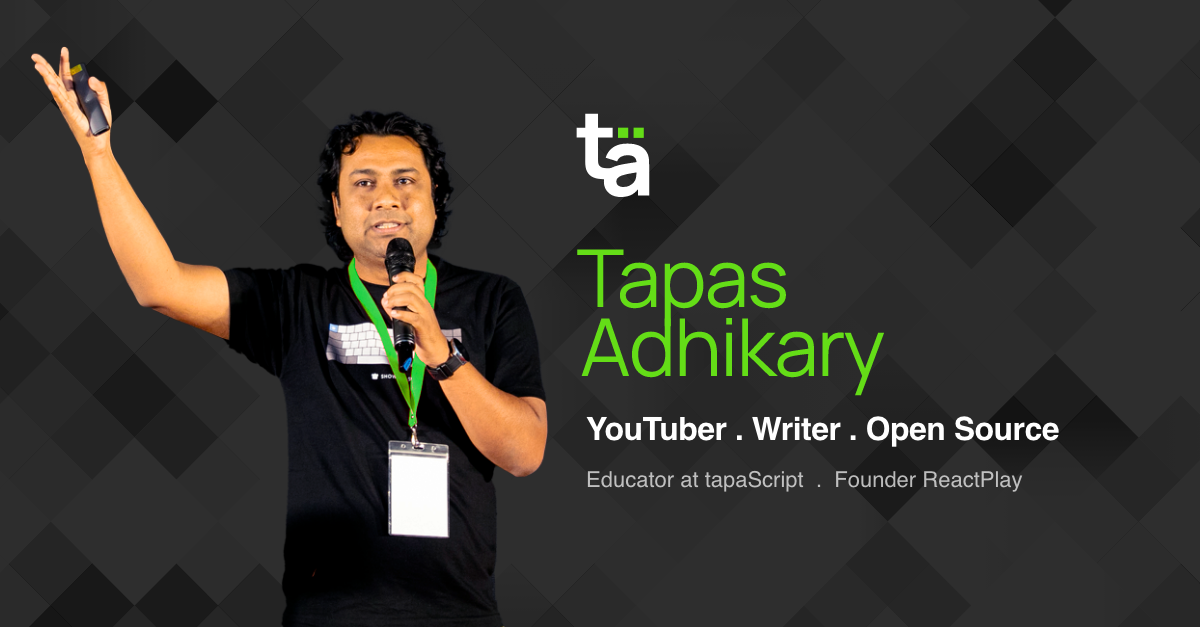
- tapaScript by Tapas Adhikaryhttps://youtube.com/@tapasadhikary

Frequently asked questions
What are React patterns and why should I learn them?
React patterns are proven, reusable approaches for structuring components, managing state, and sharing logic in React applications. Learning them helps you write cleaner, more maintainable code, avoid common mistakes, and build scalable applications — which is exactly what interviewers and senior developers look for.
What are the most important React design patterns and best practices to follow?
Key React design patterns include the container-presentational pattern, higher-order components, custom hooks, compound components, render props, and the provider pattern. Best practices involve keeping components small and focused, lifting state only when necessary, avoiding prop drilling, and separating concerns between UI and logic. Studying these patterns with real project examples is the most effective way to master them.
How should I do JavaScript interview preparation from scratch?
Start with core fundamentals — closures, hoisting, the event loop, promises and async/await, prototypes, and the `this` keyword. Then practice writing code by hand, solve common problems like debouncing and array manipulation, and review frequently asked JavaScript interview questions. Building small projects and explaining concepts out loud will make your preparation much stronger before interviews.
What are the most common JavaScript basic interview questions?
Frequently asked JavaScript basic interview questions cover the difference between `var`, `let`, and `const`, `==` vs `===`, null vs undefined, hoisting, closures, event bubbling, arrow functions vs regular functions, and how promises work. Being able to explain these clearly with small code examples is essential for both fresher and mid-level roles.
How do I start open source contribution as a complete beginner?
To start open source contribution as a beginner, begin by exploring repositories tagged "good first issue" on GitHub, read the project's contributing guidelines, and start with small changes like fixing documentation, typos, or minor bugs. Join the project's community channels to ask questions, and gradually work your way up to larger issues as you get comfortable with the codebase and workflow.
How do I do open source contribution on GitHub step by step?
The typical workflow is: fork the repository, clone it locally, create a new branch for your change, make and commit your updates, push the branch to your fork, and open a pull request describing your change. Maintainers will review it and suggest modifications if needed. Learning Git and GitHub fundamentals well makes this process smooth and helps you contribute confidently.
What is open source contribution on GitHub and why does it matter?
Open source contribution on GitHub means voluntarily improving publicly available projects — through code, documentation, bug reports, or design. It matters because it gives you real-world collaboration experience, strengthens your Git skills, builds a visible public portfolio, and helps you grow your network in the developer community, all of which boost your career prospects.
How do I put open source contributions on my resume?
Add a dedicated "Open Source Contributions" section on your resume listing the projects you contributed to, with links to your merged pull requests. Highlight what you fixed or built, the technologies involved, and the impact (bugs resolved, features added). Recruiters value merged PRs in well-known projects far more than a high count of minor edits, so focus on quality contributions you can explain in an interview.
Is a career in web development still worth pursuing in India?
Yes — a career in web development remains one of the most accessible and rewarding paths in tech, especially in India where demand for skilled JavaScript, React, and full-stack developers stays strong. The key is to build deep fundamentals, work on real projects, follow a structured roadmap, and continuously learn frameworks like React and Next.js rather than chasing tutorials superficially.
How long does it take to prepare for a JavaScript interview?
With consistent effort, most candidates need 4–8 weeks of focused JavaScript interview preparation — 1–2 hours daily covering core concepts, practicing coding problems, and doing mock interviews. If you're switching from another language or returning after a break, allow extra time for fundamentals. Structured guidance and regular feedback can significantly shorten this cycle.