Services
Service-Based — 120+ Company-Wise Coding Questions
How To Crack Placements (Complete Guide)
Image Processing and Computer Vision Notes
Database Management System Notes
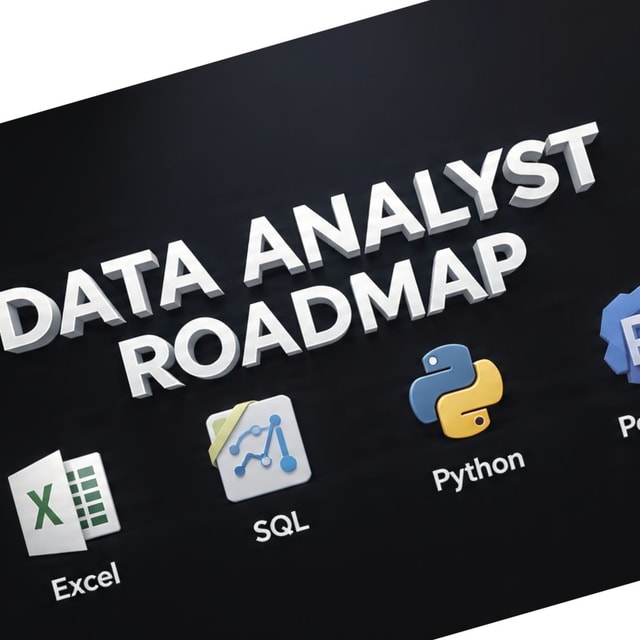
Complete Data Analyst Roadmap in 2026
Data Warehousing and Data Mining Notes
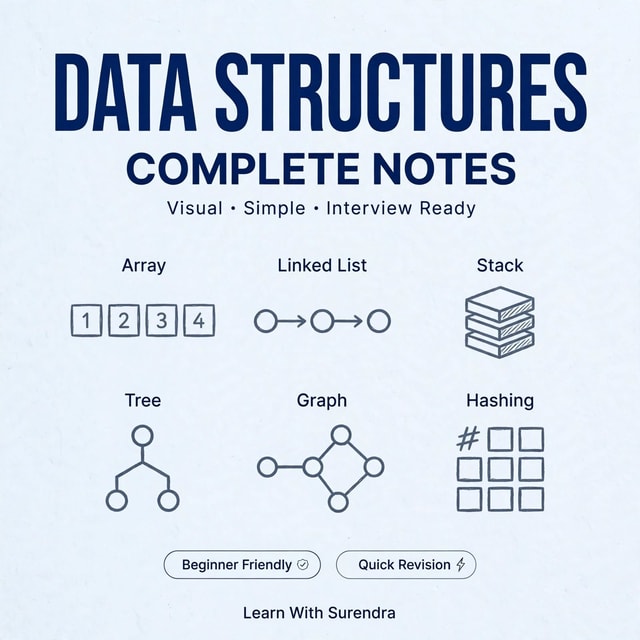
Data Structures Notes - Beginner to Advanced Level
How To Crack Placements , Resources and Web Dev
Quick Notes Of Cryptography

CORBA in Software Architecture
Blockchain Technology Handwritten Notes (Premium)
About me
Frequently asked questions
What is placement preparation and what does it include?
Placement preparation is the process of getting ready for campus or off-campus hiring drives. It usually includes aptitude and reasoning practice, coding and DSA, core computer science subjects like DBMS and operating systems, resume building, and mock interviews. For most B.Tech and MCA students in India, it runs alongside semesters for 6–12 months before the placement season begins.
How to start placement preparation in college?
The smartest way to start placement preparation is from the second or third year of college. Begin with daily aptitude practice, then pick one programming language and build DSA skills, and cover core subjects like DBMS, OS, and networks alongside. Placement preparation for CSE students should also include 2–3 solid resume projects and timed mock tests so the final year feels like revision, not a scramble.
What are placement papers and how do I use them for practice?
Placement papers are previous years' question papers and exam patterns used by companies in their recruitment tests, covering aptitude, reasoning, technical MCQs, and sometimes coding rounds. Use them to understand the question pattern, difficulty level, and time pressure of each company. In the final month before drives, solving full placement papers in timed conditions is one of the best ways to build speed and confidence.
Is joining a placement preparation course worth it, or is self-study enough?
Self-study works well if you are disciplined and have the right resources, but many freshers struggle with planning, consistency, and knowing what companies actually expect. A structured placement preparation course or a mentor-led guide helps by giving you a clear roadmap, doubt-clearing support, and interview practice. Whichever route you choose, consistent daily practice and mock interviews matter more than the format.
How do I choose a good placement preparation website?
A good placement preparation website should offer structured roadmaps, company-wise practice questions, updated content matching current hiring patterns, and beginner-friendly explanations rather than scattered material. Check whether it covers aptitude, coding, and core CS subjects in one place, and whether it has real interview experiences. The same checklist applies to any placement preparation app — avoid hopping between too many platforms and stick to one structured source.
How to take computer science notes effectively?
The best way to take computer science notes is to write concepts in your own words instead of copying slides, use diagrams and flowcharts for processes, and structure every topic as concept → example → real-world use. Keep a one-page summary at the end of each topic for quick revision before exams. Visual, structured notes are far easier to revise than long copied paragraphs.
Where can I get computer science notes PDF for B.Tech and MCA subjects?
Look for subject-wise, syllabus-mapped PDF notes that explain concepts with simple language and practical examples rather than copied slides. Core subjects students commonly need notes for include DBMS, software architecture, big data, cyber security, blockchain technology, image processing, cryptography, and data warehousing. Structured, exam-focused notes in one place save hours compared to collecting scattered material from multiple sources.
What is a database management system in simple terms?
A database management system (DBMS) is software used to store, organize, retrieve, and manage data efficiently — popular examples include MySQL, Oracle, and MongoDB. Instead of storing data in random files, a DBMS organizes it into structured tables and lets you query, update, and secure it easily. It is the backbone of almost every application, which is why DBMS is one of the most important subjects for exams and interviews.
Where can I find DBMS notes PDF that cover the whole syllabus?
Good DBMS notes PDF should cover the full syllabus in a logical order — introduction and database architecture, ER model, relational model, SQL, normalization (1NF to BCNF), transactions, concurrency control, and recovery. A single well-structured PDF is much more effective before exams than jumping between textbooks, random YouTube videos, and half-complete downloads. Check that the notes include solved examples and diagrams, not just definitions.
Are DBMS notes for placement enough, or do I also need practice?
DBMS notes for placement help you revise theory quickly, but placements also test how you apply that theory. Interviewers commonly ask you to write SQL queries on the spot, explain normalization with examples, or solve scenario-based questions on transactions and indexing. The right combination is structured notes for concepts and revision, plus regular practice of frequently asked interview questions and query writing.
What is the complete data analyst roadmap in 2026?
A complete data analyst roadmap in 2026 for beginners looks like this: start with Excel and statistics fundamentals, master SQL, learn Python for data analysis, then move to visualization tools like Power BI or Tableau, and finish with 2–3 real portfolio projects. Add familiarity with AI-assisted analytics tools, since they are now part of most analysts' workflows. With consistent effort, a beginner can become job-ready in around 6–9 months, and a structured roadmap guide makes the journey much clearer.
What is computer science and why is it important for a tech career?
Computer science is the study of computation, data, algorithms, and the design of software and hardware systems. It is important because it powers nearly every industry today — from apps and websites to data, security, and AI — and it builds the problem-solving mindset tech companies test in interviews. Strong fundamentals in core areas like DBMS, software architecture, and data systems directly improve your exam scores, project quality, and placement chances.