Testimonials
Services
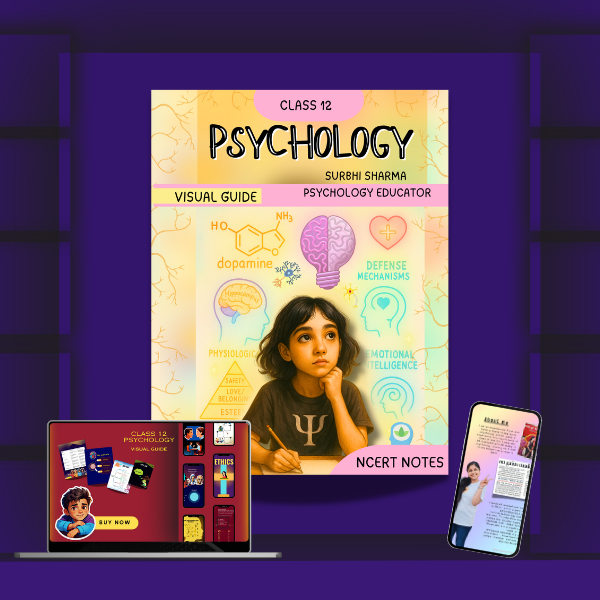
Class 12 Psychology Mindmaps (All Chapters)
Top Channels for Psychology Students 📚
Top Psych Experts to Follow on LinkedIn
100 Psychology Terms Students Always Confuse 🧠
Class 12 Psychology - Theorists & Contributions
Class 12 Psychology – AI Case Studies (Part 1)
Psychology Practice Question Papers (Class 11)
Class 11 Psychology Activity Bundle
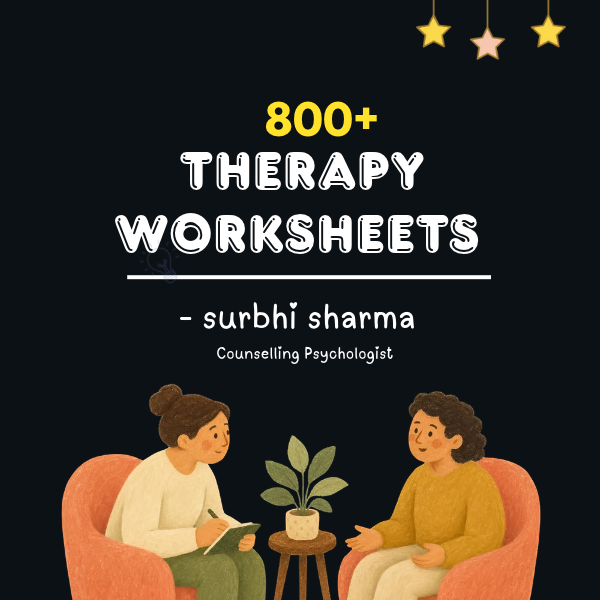
Psychology Class 11 and 12 Queries
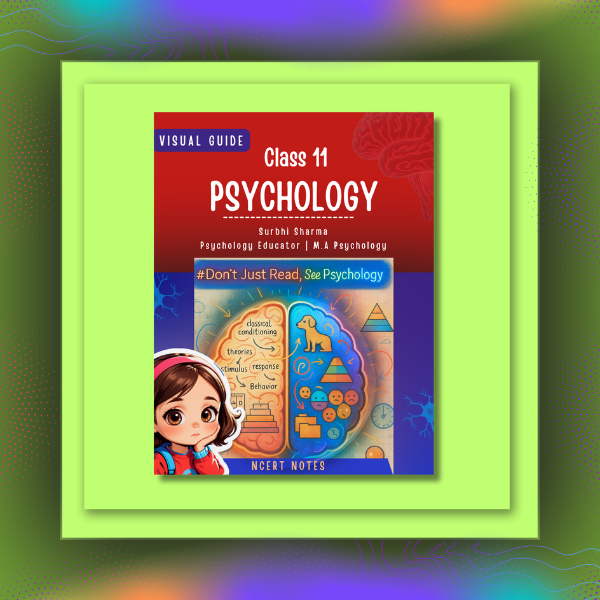
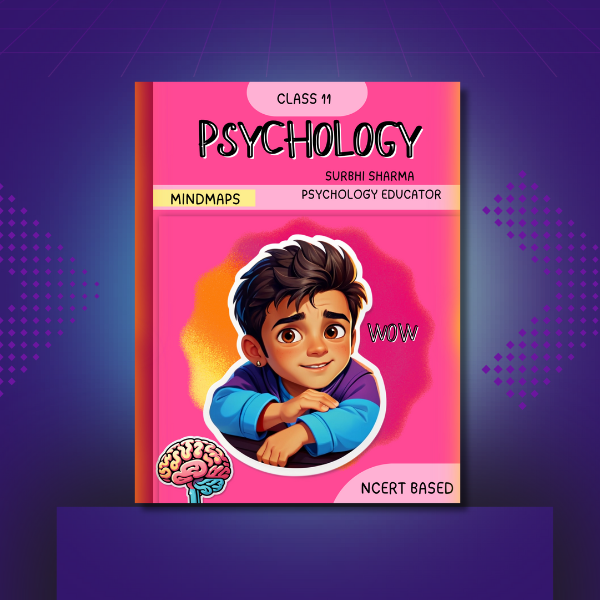
Class 11 Psychology Mindmaps (All Chapters)
All Important Topics - Class 12 Psychology
100 Psychology Terms Students Always Confuse
Class 11 Psychology – AI Case Studies
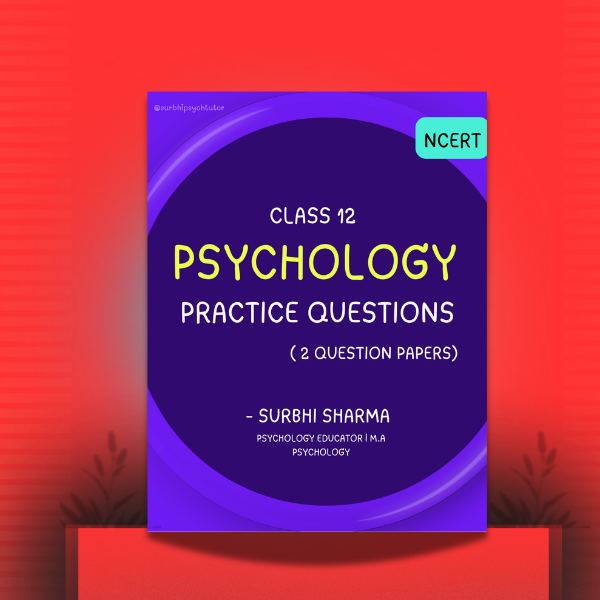
Psychology Practice Question Papers (Class 12)
About me
- Surbhi Sharma | Linktreehttps://linktr.ee/surbhi_psychologytutor

- Class 11–12 & BA Psychology Resources | WhatsApp Channelhttps://whatsapp.com/channel/0029Vb6OhLpFi8xdZXLtnR1r

- Join Whatsapp group (11th & 12th)https://chat.whatsapp.com/FB5G5z7UJRPGemgkyJm81H?s=sh&p=a&ilr=2

Frequently asked questions
How to study Class 11 Psychology if the subject is completely new to me?
Begin with the NCERT textbook since it is the core reference for exams, and read one chapter at a time instead of jumping around. Summarise each chapter into short notes covering key terms, definitions and studies, and revise them weekly. Psychology in Class 11 is concept-based, so linking ideas like attention, memory and emotion to daily life makes them stick. If a topic still feels confusing after self-study, a quick session with a psychology tutor can clear doubts faster than re-reading the chapter repeatedly.
Is Class 11 Psychology easy to study and score well in?
Yes, most students find Class 11 Psychology easier than other theory-heavy subjects because the NCERT language is simple and topics like learning, memory and emotions connect to everyday life. The challenge is the new vocabulary and the research methods chapter, which need regular revision rather than last-minute cramming. With chapter-wise notes and consistent practice of textbook questions, scoring well is very achievable.
What is hypothesis in Class 11 Psychology?
In Class 11 Psychology, a hypothesis is a tentative and testable statement about the relationship between two or more variables, introduced in the chapter on methods of enquiry in psychology. For example, a researcher might hypothesise that reducing screen time improves sleep quality, and then collect data to test it. It gives direction to a study by stating exactly what will be examined, and it is formulated before data collection begins.
What is development in Class 11 Psychology?
In Class 11 Psychology, development refers to the pattern of progressive, orderly and coherent changes that occur throughout a person's life, covered in the chapter on human development. It is a lifelong process that combines growth in some areas and decline in others, and it involves biological, cognitive and socio-emotional processes working together. The chapter also explains the developmental stages from prenatal life to late adulthood.
What is learning in Class 11 Psychology?
In Class 11 Psychology, learning is defined as any relatively permanent change in behaviour or behaviour potential that occurs as a result of experience. Changes caused by maturation, fatigue or instinctive behaviour are not considered learning. The chapter explains major types such as classical conditioning, operant conditioning and observational learning, along with the classic experiments students are often asked about in exams.
Where can I find good Class 11 Psychology Chapter 1 notes?
Look for notes that follow the NCERT chapter "What is Psychology?" closely, covering the evolution of the discipline, popular notions about psychology, and psychology as a science. Good notes should use simple definitions, examples and diagrams rather than long paragraphs. Some educators, like Surbhi Sharma on Topmate, offer a free Class 11 Psychology resource along with visual guides, which students use to revise Chapter 1 quickly.
How to study Class 12 Psychology for board exams?
Start with a line-by-line reading of the NCERT textbook, since board questions often use its exact language and examples. Prepare chapter-wise notes, especially for theory-heavy chapters, and revise theorists and their contributions separately. Practise case-based and application questions, then solve previous years' papers within a time limit. Educators such as Surbhi Sharma also offer Class 12 Psychology notes covering all important topics, which work well for last-minute revision.
What is self in Class 12 Psychology?
In Class 12 Psychology, the self is described as the totality of an individual's conscious experiences, ideas, thoughts and feelings with regard to oneself, introduced in the chapter "Self and Personality". It includes personal identity, which is unique to a person, and social identity, which links a person to a group. The chapter also covers related concepts like self-concept, self-esteem, self-efficacy and techniques of self-regulation.
What is personality in Class 12 Psychology?
In Class 12 Psychology, personality refers to the relatively stable and characteristic ways of thinking, feeling and behaving that make a person unique. The word comes from the Latin "persona", meaning the mask worn by actors. The chapter explains the major approaches to studying personality, including type and trait approaches, the five-factor model, the psychodynamic approach, and behavioural and cultural approaches, along with methods of personality assessment.
What is stress in Class 12 Psychology?
In Class 12 Psychology, stress is the psychological and physical response to demands or challenges that strain a person's coping capacity, covered in the chapter "Meeting Life Challenges". It can be positive in small doses, known as eustress, but becomes harmful as distress when it is intense or prolonged. The chapter discusses sources of stress such as major life events and daily hassles, its effects on health and performance, and coping strategies like problem-focused and emotion-focused coping, relaxation and exercise. When stress feels unmanageable, speaking with a counsellor is a sensible next step.
Where can I find reliable Class 12 Psychology Chapter 1 notes?
Chapter 1 of Class 12 Psychology is "Self and Personality", one of the longest chapters, so good notes should condense the definitions of self, identity and personality along with every major theory and its evaluation points. Look for notes that stay aligned with the NCERT textbook, because examiners expect its definitions and examples. Surbhi Sharma, a psychology educator on Topmate, provides Class 12 Psychology notes covering all important topics, which students use to revise this chapter faster.
Are psychology notes for Class 12 enough to score well in board exams?
Notes alone are not enough, because boards reward answers built on the NCERT textbook's definitions, examples and explanations. The best approach is to read the NCERT chapter first, then use psychology notes for Class 12 to revise key points, theories and terms quickly before exams. Practising full answers in writing and solving previous years' question papers is what converts revision into marks.
How to take psychology notes that actually help during revision?
Structure notes chapter-wise with clear headings, and write every key term with its one-line definition from the textbook. Use tables for theorists and their contributions, flowcharts for processes, and short real-life examples to anchor abstract concepts like conditioning or attitudes. Since psychology is concept-heavy, visual notes with diagrams and colour coding work especially well for revision and save hours compared with re-reading entire chapters.
Where can I download the Class 11 Psychology NCERT PDF and Class 12 Psychology NCERT PDF?
The official NCERT website provides free PDF downloads of all its textbooks, including Class 11 and Class 12 Psychology, and the ePathshala platform also offers them for reading and download. Always use the latest edition so your content and page numbers match what exams follow. Once you have the textbook, pairing it with chapter-wise notes makes revision far more effective.
Does colouring or art therapy actually help with stress and anxiety?
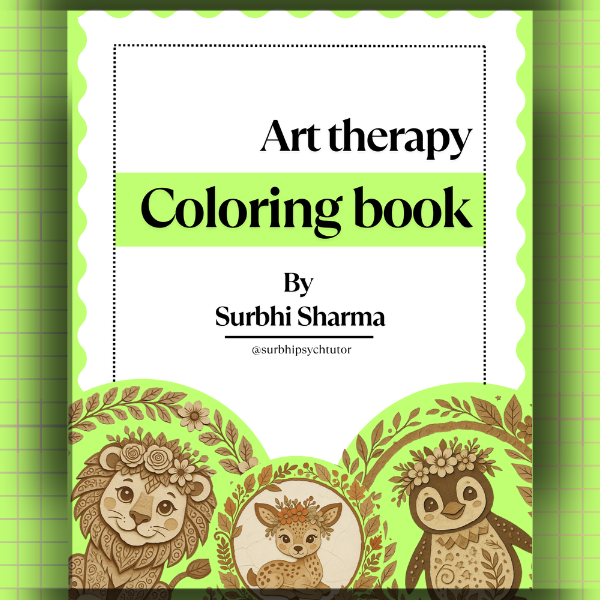
Yes, colouring in structured patterns is widely used as a light form of art therapy because it shifts attention away from worried thoughts and promotes a calm, focused state similar to meditation. Students often use it during exam season to unwind, and resources like art therapy colouring books, such as the one Surbhi Sharma offers on Topmate, are designed exactly for this purpose. It is a helpful self-care habit, though it does not replace professional counselling when anxiety is severe or persistent.