Testimonials
Services
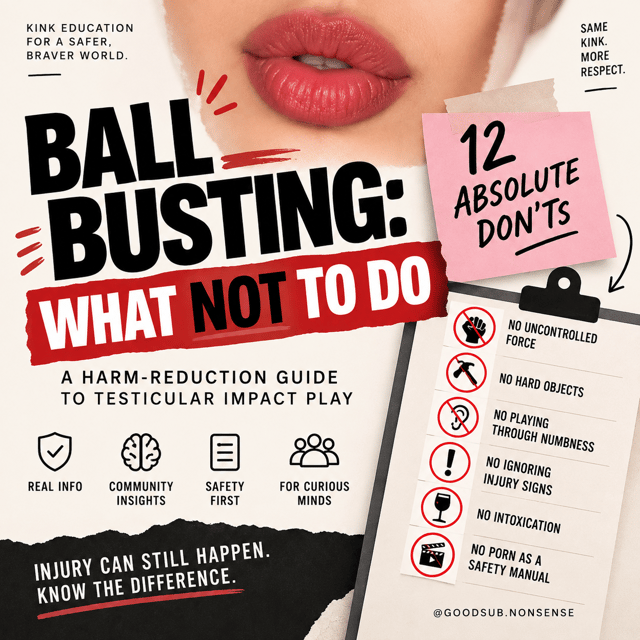
Want to Bust Balls? Start With What NOT to Do

Cuckolding: The Book Nobody Wrote (Ebook)
DON'T WASTE YOUR TIME DM'ING ME, Love.
Self-Assessment Workbook on Cuck Fantasy
About me
Frequently asked questions
What does a dom sub relationship actually mean?
A dom sub (Dominant/submissive) relationship is a consensual arrangement where one person leads and the other willingly follows within limits both have agreed on. The dom sub relationship meaning is often distorted online into commands, pain, and performance — but its real foundation is consent, trust, and communication. The Dominant's authority is given, never taken, and the submissive can withdraw that agreement at any time. It is a structure two people build together, not a script one person performs.
Why do people enjoy being dominant or submissive? What is the psychology behind it?
Dom sub relationship psychology comes down to trust and release. Submissives often describe relief from decision fatigue, the comfort of structure, and the feeling of being wanted enough to be guided; Dominants often describe the fulfilment of being trusted with someone's vulnerability. Neither role is about weakness — submission is an active choice, and dominance is a responsibility. When both people feel safe, the dynamic becomes a space where they can be completely honest.
How to dominate a relationship without becoming controlling or abusive?
Real dominance starts with consent, not control. If you want to learn how to dominate a relationship in a healthy way, begin with an honest conversation about desires, limits, and safewords — then lead through consistency, not demands. A Dominant's job is to carry responsibility: make decisions thoughtfully, check in often, and protect the trust you've been given. The moment your partner's "no" stops being respected, it is no longer dominance — it is abuse.
How to dominate a relationship in daily life?
Daily dominance is built through small, agreed-upon rituals rather than constant commands. Couples who do this well use things like morning check-ins, simple protocols for meals or messages, agreed roles in decision-making, and quiet forms of service woven into their routine. Start with one or two habits, keep them sustainable, and review them regularly so the dynamic serves both of you. In everyday life, dominance should feel like structure and care — not surveillance.
Is it normal to want to be dominated or to submit to someone?
Yes. The desire to surrender control — or to take it — is one of the most common relationship desires there is, and wanting it does not mean something is wrong with you. Even in India, where these conversations mostly happen behind closed doors, curiosity about power exchange is far more widespread than people admit. What separates a healthy dynamic from a harmful one is not the desire itself but how it is expressed: with consent, honesty, and agreed boundaries.
How do I tell my partner I want to try a dom sub dynamic?
Pick a calm, private moment — not in the middle of intimacy — and talk about what you want to feel rather than what you want them to do. Saying something like "I'd love it if you took the lead more" opens a conversation instead of making a demand. Start small, share examples if words feel awkward, ask what they would be comfortable with, and agree to check in after a few weeks. A hesitant partner often warms up once they realise it is about trust, not extremity.
I'm completely new to BDSM — how do I start safely?
Start with knowledge before toys, titles, or roles. Learn the basics of consent — hard limits, soft limits, safewords, and aftercare — and spend time understanding whether you want to lead, serve, or simply explore. The biggest beginner mistake is copying porn, which skips negotiation and aftercare entirely. Go slowly, communicate more than feels necessary, and treat your first steps as conversations, not performances.
What is the difference between healthy dominance and abuse in a relationship?
Consent is the line. In a healthy dom sub relationship, rules are discussed in advance, limits are respected every single time, a safeword stops everything instantly, and agreement is ongoing — never permanent. Abuse ignores limits, punishes disagreement, isolates a partner, or escalates without permission. If you cannot say no without fear of consequences, you are not in a power exchange — you are in danger.
Can a dom sub relationship exist without sex, pain, or toys?
Absolutely. Power exchange is primarily psychological — many dynamics run entirely on service, structure, rituals, and communication rather than anything physical. Some couples never use impact play or gear at all; their dynamic lives in how they speak to each other, make decisions, and care for one another. If whips and collars are not for you, your dynamic is not less real — it is simply built on psychology instead of props.
How do I approach a dominant woman without being disrespectful?
Remember that consent applies to her as well. Don't open with demands, explicit messages, or instant "I belong to you" energy — a Dominant woman is a person first, and unsolicited intensity reads as disrespect. Read whatever she has publicly said about what she expects, greet her with basic courtesy, be honest about your experience level, and accept a "no" gracefully. Showing that you can follow instructions and respect boundaries is the fastest way to be taken seriously.
What is foot worship, and why are so many submissive people drawn to it?
Foot worship is a form of body worship where the submissive expresses reverence through attention, touch, or service — and for most people it is about psychology far more than appearance. It symbolises humility: choosing to place yourself at the lowest point to honour someone above you. It can be sensual, symbolic, or entirely non-sexual depending on the people involved. As with any D/s activity, it only works when the person on the receiving end has clearly welcomed it.