Services
DSA Roadmap
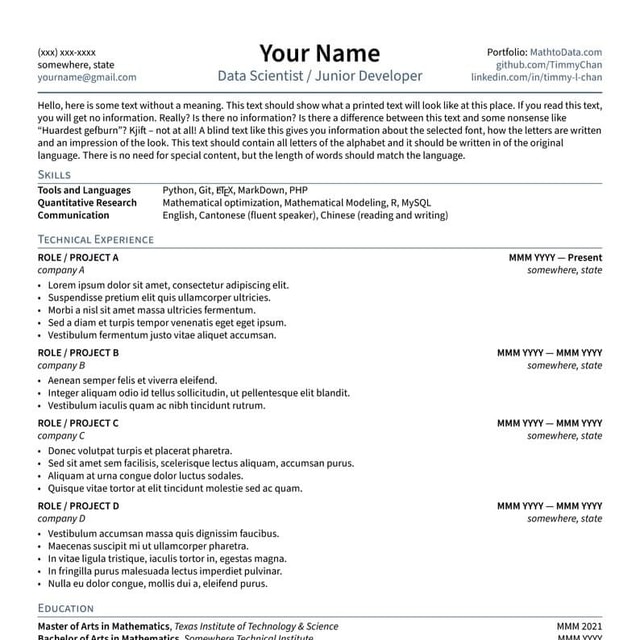
ATS-Friendly Resume Template for Entry-Level Jobs
Frequently asked questions
How do I prepare for a system design interview?
If you are planning how to prepare for a system design interview, give it 6–8 weeks. Build fundamentals first — load balancing, caching, SQL vs NoSQL, sharding, message queues and CAP theorem. Then study 10–15 classic designs such as a URL shortener, rate limiter, chat app and news feed. Practise designing aloud with a diagram in 40–45 minutes, and finish with mock interviews, because product companies judge how you defend trade-offs, not just the final diagram.
How should I approach a system design interview?
Knowing how to approach a system design interview becomes easy with a fixed framework: clarify functional and non-functional requirements, estimate scale (users, requests per second, storage), define the APIs and data model, draw the high-level architecture, deep-dive into one critical component, and close with bottlenecks and trade-offs. Interviewers score your structure, clarifying questions and communication as heavily as the design itself, so narrate your reasoning instead of silently drawing.
What are the most commonly asked system design interview questions?
The system design interview questions repeated most often include: design a URL shortener, design a rate limiter, design WhatsApp, design Instagram's feed, design a food delivery app like Swiggy or Zomato, design BookMyShow ticket booking, design a notification system and design a distributed key-value store. Learn each with capacity estimation, component choices and trade-offs rather than memorised diagrams, since interviewers deliberately add twists to test real understanding.
What is Grokking the System Design Interview?
Grokking the System Design Interview is a popular online course that teaches a repeatable framework for design rounds through classic problems such as the URL shortener, Instagram design and chat systems. It is a good starting point for structure and vocabulary, but product-company interviews in India usually go deeper into scaling, estimation and trade-offs, so treat it as a foundation and pair it with hands-on practice and mock interviews.
Is the System Design Interview book by Alex Xu enough to clear interviews?
The System Design Interview book by Alex Xu (Volumes 1 and 2) is one of the best resources for building fundamentals — back-of-envelope calculations, building blocks and 15+ standard designs explained simply. On its own, though, it is rarely enough for companies like Amazon, Flipkart or Paytm, because interviewers expect you to defend trade-offs live. Use it for concepts, then add mock interviews, open-ended practice and regular design writing.
What is low level design and high level design?
High level design (HLD) describes a system's overall architecture — major components, services, databases, data flow and technology choices. Low level design (LLD) explains how each component works internally — class diagrams, object relationships, design patterns and method-level logic. A simple way to remember the difference: HLD is the building's blueprint, LLD is the detailed wiring of each floor. Product companies typically test HLD for senior roles and LLD or machine coding for SDE-1 and SDE-2 roles.
How do I learn low level design?
Wondering how to learn low level design? Build in layers: revise OOP fundamentals (encapsulation, inheritance, polymorphism, abstraction), then master SOLID principles with short code examples, then learn the most-used design patterns, and finally design real applications such as Splitwise, a parking lot or BookMyShow. Always write working code for every design — most Indian product companies run machine-coding rounds, so diagram-only practice will not be enough.
What are the most frequently asked low level design interview questions?
The low level design interview questions asked most often include designing a parking lot, Splitwise, BookMyShow, an elevator system, a chess or snake-and-ladder game, an LRU cache, a vending machine and a cab booking app like Uber. You are judged on your class diagram, use of SOLID principles, choice of design patterns and how easily your code absorbs new requirements — so practise by coding the complete solution, not just drawing classes.
Which design patterns should I know for low level design interviews?
For low level design patterns, prioritise the ones that map to real interview problems: Singleton for shared resources, Factory Method for object creation, Strategy for interchangeable behaviour such as payment options, Observer for notifications and events, Builder for complex objects, Decorator for optional add-ons, and Adapter or Facade for integrating modules. Learn the problem each pattern solves instead of memorising definitions — interviewers spot forced pattern usage immediately.
What is a good low level design roadmap to prepare for interviews?
A practical low level design roadmap looks like this: Weeks 1–2, strengthen OOP and SOLID with small coding exercises; Weeks 3–4, implement the core design patterns in your primary language; Weeks 5–7, solve 15–20 machine-coding problems such as a parking lot, Splitwise and BookMyShow under timed conditions; from Week 8, take mock interviews and get your code reviewed for extensibility. If you are targeting SDE-2 or above, extend the same plan with HLD topics.
Is a low level design course worth it, or can I prepare on my own?
You can self-study if you are disciplined, but a structured low level design course helps when you need a guided sequence, ready machine-coding problems and honest feedback on your code — feedback is the biggest gap, since most candidates never get their designs reviewed. Whichever route you pick, make sure it covers SOLID principles, design patterns, full machine-coding implementations and mocks, not just theory slides.
How do I prepare for a DSA interview?
If you are wondering how to prepare for a DSA interview, work in this order: pick one language and get fluent in it, revise core data structures (arrays, strings, linked lists, stacks, queues, trees, graphs, heaps), learn recurring patterns like two pointers, sliding window, binary search, recursion and dynamic programming, and then solve 150–250 curated problems on LeetCode or GeeksforGeeks. Maintain an error log of every mistake and finish with timed contests and mock interviews.
How should I answer DSA interview questions?
Here is how to answer DSA interview questions in a structured way: restate the problem and clarify constraints, explain a brute-force solution with its complexity, identify the optimal pattern, code it cleanly with meaningful variable names, dry-run it on edge cases, and state the final time and space complexity. Thinking aloud at every stage matters, because interviewers evaluate your reasoning process as much as the correct output.
What are the most common DSA interview questions and answers for freshers?
Most DSA interview questions and answers for freshers centre on arrays, strings, linked lists, stacks, queues, recursion and basic sorting and searching — for example, reversing a linked list, two-sum, valid parentheses, detecting a loop in a linked list or fibonacci with memoisation. Freshers are not expected to know advanced topics deeply; interviewers check your approach, how you respond to hints, code cleanliness and whether you can analyse time and space complexity.
What is an ATS-friendly resume and why does it matter for freshers?
An ATS-friendly resume is formatted so applicant tracking systems can parse and rank it correctly: single-column layout, standard section headings, simple fonts, no tables, graphics or text inside images, and skills and keywords matched to the job description. Most entry-level applications in India are filtered by ATS software before a recruiter opens the file, so freshers who use a clean, ATS-friendly resume with quantified project bullets get noticeably more shortlists than those with decorative designs.