Testimonials
Services
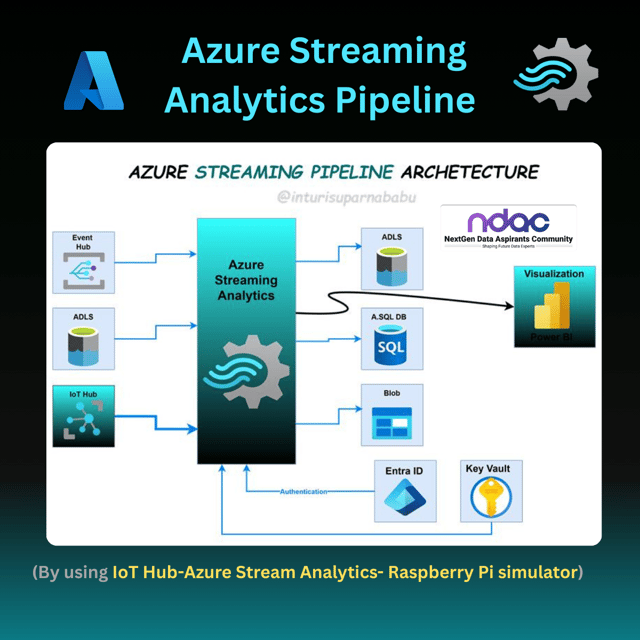
Real-Time Azure Streaming Analytics Pipeline
MICROSOFT FABRIC INTERVIEW QUESTION & ANSWERS
SQL AI Developer Associate (DP - 800) : Resource
MICROSOFT POWER BI INTERVIEW QUESTIONS & ANSWERS
Frequently asked questions
How to prepare for a Power BI interview?
Build your prep around the four areas interviewers actually test: Power Query for data cleaning, data modelling (star schema, relationships, cardinality), DAX (measures vs calculated columns, filter context, time intelligence) and dashboard design. Revise the most commonly asked Power BI interview questions, build two or three portfolio dashboards on real business scenarios like sales or finance, and practise explaining each project aloud. A mock round with a mentor who works in analytics is the fastest way to catch gaps before the actual interview.
How to explain a Power BI project in an interview?
Follow a clear flow: the business problem, the data sources you used, how you cleaned and modelled the data, the key DAX measures or KPIs you built, and the decision your dashboard enabled. Interviewers are far more interested in why you chose a particular KPI or model design than in which visuals you used. Keep a 2-minute summary and a detailed version ready, and expect follow-ups like "why a measure here instead of a calculated column?"
What are the most common Power BI interview questions and answers?
The repeated favourites are: measures vs calculated columns, filter context vs row context, star schema vs snowflake, types of filters and how they interact, handling many-to-many relationships, row-level security, incremental refresh, and improving slow reports. For every topic, pair a one-line definition with a short example from your own project — that is what separates prepared candidates from memorised answers.
Where can I get a good Power BI interview questions and answers PDF?
A well-compiled Power BI interview questions and answers PDF saves you from piecing together dozens of scattered blog posts. Look for sets prepared by Microsoft-certified mentors or working analysts, since these usually include scenario-based questions on DAX, Power Query and modelling rather than only definitions. Whatever source you use, rewrite each answer in your own words and test the DAX live so you can handle follow-up questions.
How are Power BI interviews different for senior candidates?
Power BI interview questions for experienced professionals focus on scenarios instead of definitions — performance tuning slow reports, aggregations, incremental refresh strategy, row-level security design, deployment pipelines, gateway setup, and complex DAX such as virtual tables or time intelligence at scale. You will also be asked to justify architecture decisions from your real projects, so prepare project stories with measurable outcomes, not just theory.
How to practice SQL interview questions?
Practise by writing queries, not reading solutions. Take a focused set of coding questions — joins, GROUP BY vs HAVING, window functions, subqueries, removing duplicates, second-highest salary — and solve them in a live SQL editor under a timer. Record yourself explaining your approach, then do at least one timed mock round with a mentor who takes interviews, because explaining your logic clearly matters as much as producing the right output.
What are the most common SQL interview questions and answers?
Across fresher and experienced rounds, the most repeated SQL interview questions and answers revolve around types of joins with examples, WHERE vs HAVING, primary key vs unique key, deleting duplicate rows, finding the second-highest salary with and without window functions, running totals, and aggregate queries with GROUP BY. Learn each one as a crisp definition plus a working query you can type from memory.
Which SQL interview questions for freshers should I master first?
Start with the fundamentals almost every fresher round begins with: DDL vs DML commands, primary and foreign keys, inner and left joins, WHERE vs HAVING, ORDER BY, and basic aggregate functions. Most freshers lose offers not on advanced topics but on fumbling these basics in live coding, so build speed and accuracy here before moving to window functions.
How are SQL interviews different for experienced candidates?
SQL interview questions for experienced professionals shift from syntax to problem-solving — reading execution plans, indexing strategy, optimising slow queries, CTEs vs temporary tables, window functions for ranking and running totals, transactions and locking, and writing queries that scale to millions of rows. A classic round involves rewriting an inefficient query and explaining exactly why your version performs better.
What is Microsoft Fabric used for?
Microsoft Fabric is Microsoft's unified analytics platform that brings data ingestion (pipelines and Dataflows), storage (OneLake, lakehouse and warehouse), real-time analytics for streaming data, and Power BI reporting into a single SaaS environment. Companies use it to run the entire data journey — from raw source data to business dashboards — without stitching together separate tools, which is why Fabric skills now appear in many data engineering and analytics job descriptions in India.
Is Microsoft Fabric free?
You can learn Microsoft Fabric free through its trial capacity, which is enough to create workspaces, run pipelines, build lakehouses and publish Power BI reports. Real organisational workloads require a paid capacity (F SKU) or pay-as-you-go billing. If your goal is upskilling or interview preparation, the trial combined with Microsoft's free learning paths is more than enough to build hands-on skills.
How to learn Microsoft Fabric?
Learn Fabric by building one end-to-end project: ingest data with a pipeline, store it in a lakehouse, transform it with a notebook or Dataflow, and visualise it in Power BI. Combine that hands-on work with Microsoft Learn's free Fabric paths, and target a certification like DP-600 or DP-700 to validate your skills. Guidance from someone who works with Fabric daily — many community Super Users offer 1:1 sessions — can cut weeks of trial and error.
What is the Microsoft Fabric certification DP-700?
DP-700 is the Fabric Data Engineer Associate certification. It tests practical skills in ingesting and transforming data using pipelines, notebooks and Dataflows, designing lakehouses and warehouses, and orchestrating end-to-end solutions in Fabric. Choose it if you are targeting data engineering roles; if your focus is semantic modelling and analytics engineering, DP-600 is usually the better starting point, and many candidates go on to clear both.
Is taking a mock interview for data analyst roles actually useful?
Yes — most candidates lose data analyst interviews on communication and structure, not on knowledge. A mock interview for data analyst roles simulates real pressure: you solve SQL or case-based questions live, explain a dashboard project, and get honest feedback on where you hesitated or over-explained. One or two rounds with a mentor who actually conducts interviews, ideally in the final week before your interview, usually brings a visible improvement in clarity and confidence.
How do I know if my resume is ready for data analyst roles?
Do a quick self-check: every project should mention the tools you used (SQL, Power BI, Excel), the KPIs you tracked, and the business impact in one line — not just course names. Recruiters spend only seconds per resume, so vague bullets like "worked on dashboards" get skipped. A focused resume review for data analyst roles by someone who has screened resumes or taken interviews can surface framing problems you cannot spot on your own.