Testimonials
Services
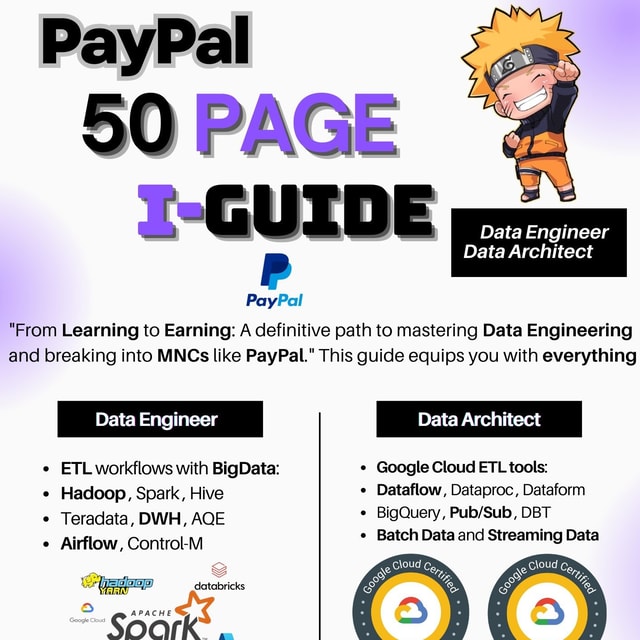
PayPal i-Guide for Data Engineers
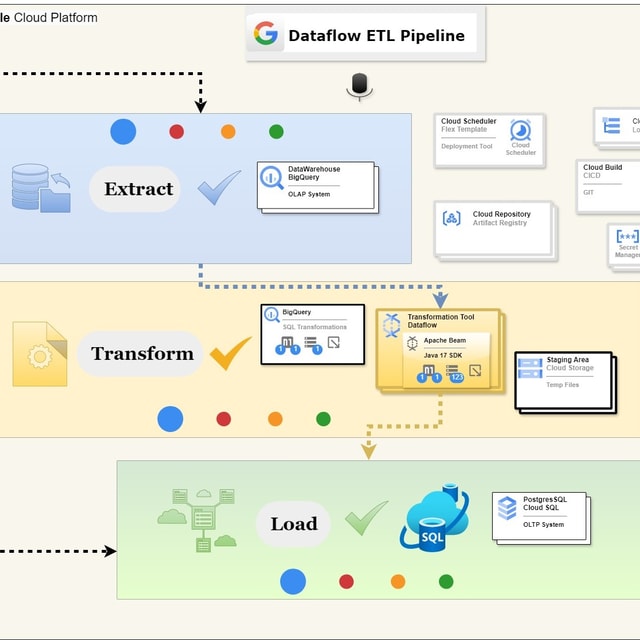
Data Engineering Project helped me with 7 Offers
About me
- Enterhttps://verseai.io

Frequently asked questions
How to clear the GCP Data Engineer certification on the first attempt?
Start with the official exam guide, then build hands-on comfort with BigQuery, Dataflow, Pub/Sub, Cloud Storage, and Composer before touching practice papers. A focused 6–8 week GCP Data Engineer certification preparation window works well if you already work with data; beginners should plan 3–4 months. Give equal weight to pipeline design, data modelling, security, and cost optimization, since the exam tests scenario-based judgment rather than definitions. Finish with two or three timed practice tests and revise only your weak areas before booking the exam.
Is the GCP Data Engineer certification worth it?
Yes, especially in India, where GCP adoption is growing quickly across startups, fintech, and large enterprises, and certified data engineers are actively shortlisted for cloud data roles. The certification validates that you can design and build real data pipelines, which is exactly what hiring managers screen for, and it often strengthens salary negotiations. It delivers the best returns when paired with hands-on projects on your GitHub rather than treated as a standalone badge.
What is the GCP Data Engineer certification cost in India?
The exam fee is US $200 plus applicable taxes, which usually works out to roughly ₹17,000–₹19,000 at checkout in India depending on the exchange rate and taxes applied. The same fee applies if you need a retake, so it makes sense to schedule the exam only after you are consistently scoring well in practice tests. Occasional promotional discounts can bring the price down, so check before paying the full amount.
What is the GCP Data Engineer certification passing score?
Google does not officially publish a minimum passing score, but most candidate reports place it at around 70%. Since the paper is scenario-heavy and roughly two hours long, the safer target is to score 80% or above in timed practice tests before booking the real one. That buffer protects you from tricky case-study questions where two options often look correct.
Are GCP Data Engineer certification dumps enough to pass the exam?
No. Dumps are unreliable, frequently contain wrong answers, and using them violates Google's exam policy. The actual GCP Data Engineer certification questions are scenario-based and test how you would design, secure, and troubleshoot pipelines, so memorized answers rarely match what appears on screen. Candidates who pass on the first attempt typically rely on hands-on practice, official sample questions, and full-length mocks instead.
Is a GCP Data Engineer certification mock test necessary before the exam?
Not mandatory, but strongly recommended. Two or three full-length timed mocks tell you whether you are actually exam-ready, train you to manage the two-hour limit, and expose weak topics such as data modelling, security, or cost optimization. If you are consistently crossing 80% in mocks, you are in a safe zone to schedule the exam.
How to get a GCP Data Engineer certification voucher or discount in India?
Google does not sell open discount vouchers, but cheaper routes do exist. Exam discounts are sometimes offered through Google Cloud events and conferences, the Google Cloud Innovators program, and bundles that combine training subscriptions with an exam attempt. Employers also sometimes sponsor the exam for team members, so it is worth asking internally before paying the full fee yourself.
What are some good data engineering projects for beginners?
Start with small but complete pipelines rather than big unfinished builds. A classic starter is pulling a public dataset into cloud storage, cleaning and transforming it with Python or SQL, loading it into BigQuery, and visualizing it in a dashboard. Other strong options are a scheduled API ingestion pipeline for weather, stock, or sports data, an e-commerce sales analytics pipeline, or a log-processing job. The goal is to practise ingestion, transformation, storage, and orchestration end to end at a small scale.
How to get data engineering projects without work experience?
Build with public datasets from platforms like Kaggle and government open-data portals, replicate production-style pipelines from engineering blogs and then extend them with your own twist, contribute to open-source data tools, or pick up small freelance and volunteer work that involves moving or cleaning data. Two or three well-documented builds make far better data engineering projects for resume shortlisting than a dozen tutorial clones. Ensure every project has a clean repository, an architecture diagram, and a README that explains the problem it solves.
What are end to end data engineering projects, and how do I build one?
These are projects covering the entire data lifecycle instead of a single step: ingestion from a source, raw storage, transformation, loading into a warehouse, orchestration with a scheduler, and finally reporting. A typical example is streaming events through Pub/Sub, processing them with Dataflow, storing them in BigQuery, scheduling quality checks with Composer, and visualizing results in Looker Studio. Recruiters value them because they prove you can own a pipeline the way a working data engineer does.
How to showcase data engineering projects on GitHub?
Treat each repository like a mini product: include a README with the problem statement, architecture diagram, tech stack, setup steps, and sample input-output screenshots. Keep the code modular with a requirements file, use meaningful commit messages, and pin your two or three best repos to the top of your profile. Recruiters rarely read code line by line — they scan the README and folder structure — so clean presentation matters as much as the pipeline itself.
How to write a data engineer resume that passes ATS?
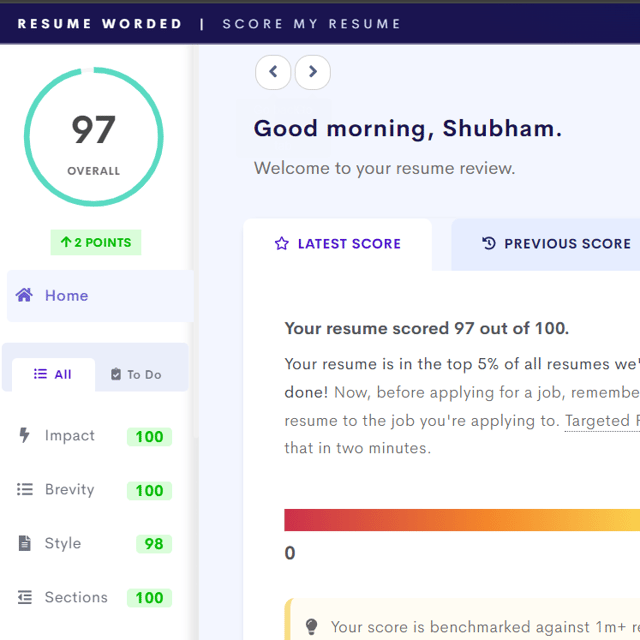
Use a clean, reverse-chronological format with standard section headings, and mirror the exact tool names from the job description — SQL, Python, Spark, Airflow, BigQuery, and similar — since ATS filters match on keywords. Write experience bullets with measurable outcomes, such as pipeline runtimes reduced by a percentage or daily data volumes handled. Avoid tables, graphics, multiple columns, and text in headers or footers, keep it to one or two pages, and tailor the resume to every application instead of sending one generic version.
What should a data engineer resume for freshers include?
A one-page resume built around four things: a short summary, a skills section grouped by languages, tools, and cloud platforms, a projects section with two or three end-to-end builds linking to GitHub, and your certifications and education. Put projects above work experience if you have no full-time roles yet, and add small metrics even to academic or personal projects, such as dataset size or pipeline runtime. A working GitHub link and a relevant cloud certification make a fresher profile stand out immediately.
What should a data engineer resume for 2 years experience highlight?
At this level, your professional experience section should dominate the page. Focus on ownership and scale — pipelines you designed or migrated, data volumes processed, latency or cost improvements, incidents you debugged, and stakeholders you supported. List the tools the target job description asks for, keep only one or two projects that add something your job experience does not already show, and quantify every bullet. Education and certifications move below experience at this stage.
Which data engineer resume template works best for ATS?
The simplest one that wins: a single-column layout with standard fonts, clear headings like Summary, Skills, Experience, Projects, Education, and Certifications, plain bullet points, and no tables, text boxes, icons, or graphics that parsers misread. Save it in the format the job portal specifies, usually PDF or DOCX. Fancy designer templates look good to humans but regularly break ATS parsing, so a clean, simple template consistently outperforms a creative one.