Testimonials
Services
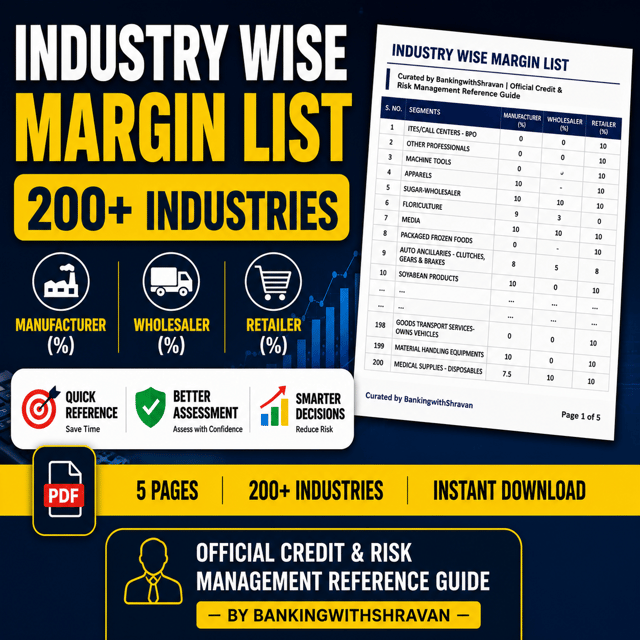
Industry Wise Margin List (200+ Industries)

Credit Manager Resource Kit + Live Class Recording
Ask Me Anything – Credit, HL, LAP, Career & More


50+ Practical Income Sheets for Credit Managers
Write Credit Notes with AI in 5 Mins – Live Call

Updated Affordable Sector PD Toolkit | 50+ Profile
Grow on LinkedIn as a Credit Manager
About me
- Shravan Pandey's toolkit is a must-have for credit managers, praised for its practical insights and impact on professional skills.
 AI-generated based on testimonials
Frequently asked questions
What is credit underwriting in banking?
The meaning of credit underwriting is the evaluation process a bank or NBFC follows to decide whether a loan applicant is creditworthy and on what terms. It involves checking income, repayment capacity, credit score, existing obligations and collateral value before sanction. In housing finance and LAP, it also covers LTV analysis, personal discussion (PD) and end-use verification.
What is the credit underwriting process in banks and NBFCs?
The credit underwriting process usually moves through these stages: loan application and document collection, income assessment for salaried or self-employed applicants, eligibility checks using FOIR and LTV, credit bureau (CIBIL) review, legal and technical valuation for secured loans, a personal discussion to verify income source and end-use, and finally a credit note with an approve, reject or conditional decision. Strong documentation speeds up every stage.
How to do credit underwriting for a loan case?
To do credit underwriting properly, start by verifying KYC and bank statements, then assess income through salary slips, Form 16 or ITRs depending on the applicant profile. Calculate FOIR to check repayment capacity, apply the LTV norm for secured loans, conduct a PD to confirm income source and loan end-use, and flag any deviations. Many credit managers now draft their credit notes with AI tools to cut hours of manual work down to minutes.
How to learn credit underwriting without working in a bank?
Master the core concepts first — income assessment, FOIR, LTV, PD technique and end-use verification — and then practise on sample case files of salaried, self-employed and informal-income customers. Following credit professionals on LinkedIn, attending webinars and taking mentor-led sessions with real underwriting examples helps freshers build job-ready skills faster than theory alone.
Which are the best credit underwriting courses in India for banking careers?
Choose programs that teach practical underwriting rather than only theory — look for live case files, income assessment for informal income, FOIR/LTV calculations, PD training and credit note writing. Options range from banking certifications to mentor-led online classes run by working credit managers, and hands-on practice with real profiles helps the most in interviews.
What is the credit underwriting salary for freshers in India?
Freshers in credit underwriting roles at banks and NBFCs in India typically earn around ₹3–5 LPA, depending on the city, lender type and qualification. With 3–5 years of experience, especially in housing finance, LAP or corporate credit, credit managers earn noticeably more, and specialised skills like informal-income assessment can accelerate salary growth.
How can freshers find credit underwriting jobs in India?
Target entry-level roles such as credit officer, credit trainee or underwriting executive at NBFCs, housing finance companies and small finance banks. Build a LinkedIn profile around credit skills, learn the basics of FOIR, LTV and income assessment, and apply through lender career pages — credit heads actively shortlist candidates who demonstrate practical underwriting knowledge.
Are there good credit underwriting jobs in Pune and Mumbai?
Yes — Mumbai hosts the corporate credit hubs of most banks and large NBFCs, while Pune has a fast-growing base of housing finance companies, NBFCs and bank credit operations teams. Both cities regularly open credit underwriting and appraisal roles for freshers as well as experienced profiles, and LinkedIn is the most effective channel to get noticed by recruiters hiring for credit underwriting jobs in Pune and Mumbai.
How to prepare for a credit manager interview?
Revise the fundamentals — FOIR, LTV, income assessment for salaried and self-employed profiles, PD technique and end-use verification — and be ready to walk the panel through one file you approved and one you rejected, with clear reasons. Research the lender's products such as home loan and LAP, practise deviation-handling case questions, and keep your resume and LinkedIn aligned with the credit work you have actually done.
What are the most common credit manager interview questions?
Expect questions like: How do you calculate FOIR and what cap does your lender follow? How do you assess income for a self-employed or informal-income customer? What is LTV and when do you deviate from it? What do you check in a PD? How do you verify end-use of funds? How do you handle pressure from sales to approve a weak file? Prepare short, file-based answers for each.
How to prepare for a credit officer interview as a fresher?
Focus on basics — types of loans, FOIR, LTV, CIBIL score, key loan documents and the difference between credit and sales roles. Practise explaining how you would assess a simple salaried home loan case, and prepare for situational questions on attention to detail. Freshers who show clarity on FOIR and income assessment usually stand out immediately.
What is the FOIR calculation formula?
FOIR (Fixed Obligation to Income Ratio) = (Total monthly fixed obligations ÷ Gross monthly income) × 100. Fixed obligations include the proposed EMI plus all existing EMIs and mandatory commitments. For example, if an applicant earns ₹80,000 per month with an existing EMI of ₹12,000 and the FOIR calculation for personal loan purposes adds a proposed EMI of ₹18,000, the FOIR works out to (12,000 + 18,000) ÷ 80,000 × 100 = 37.5%. Most Indian lenders keep the FOIR cap between 40% and 55% depending on income level and loan type.
What is the FOIR calculation formula for home loan applications?
The FOIR calculation formula for home loan applicants is the same — (total fixed obligations ÷ gross monthly income) × 100 — but it is applied along with the LTV norm since the property is collateral. The proposed home loan EMI, existing EMIs and other fixed commitments are added together, and housing loans often carry a slightly relaxed FOIR cap compared to unsecured loans. For affordable-segment customers with informal income, lenders assess FOIR using bank statements and verified income proofs.
How is FOIR calculation for business loan cases done for self-employed applicants?
For self-employed applicants, income is established through ITRs, audited financials, GST returns and 6–12 months of bank statements instead of salary slips, and both existing business and personal EMIs are counted as fixed obligations. Lenders also check industry margins and cash flow stability before fixing eligibility. When income is informal or poorly documented, a careful PD and bank statement analysis become the deciding factors.
How can I do FOIR calculation in Excel?
Build a simple sheet with columns for gross monthly income, existing EMIs, proposed EMI and other fixed obligations, then apply =(sum of obligations/income)*100 to get the FOIR percentage, and use conditional formatting to flag cases above your lender's cap. Credit managers who assess many files every month often use ready-made income assessment sheets instead of building one from scratch, which cuts calculation time sharply.