Testimonials
Services
End to End SAAS Project
GenAI Interview Questions That Actually Get Asked
12 Data Analytics Portfolio Project for Resume
All Machine Learning Project ( Bundle File )
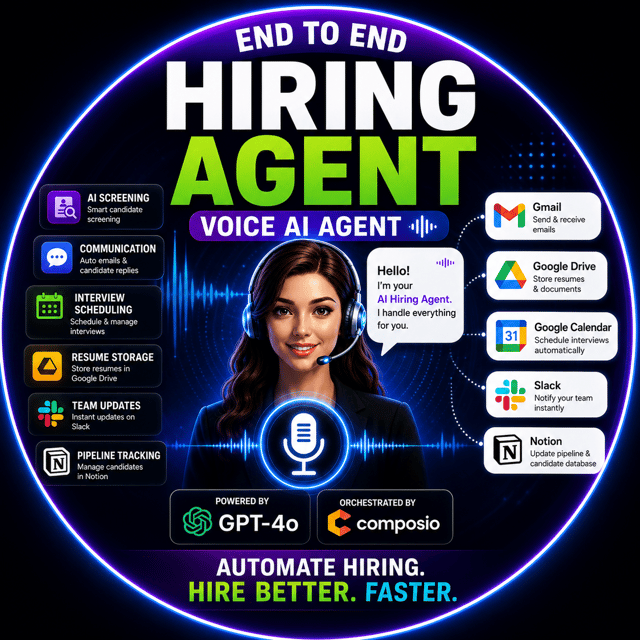
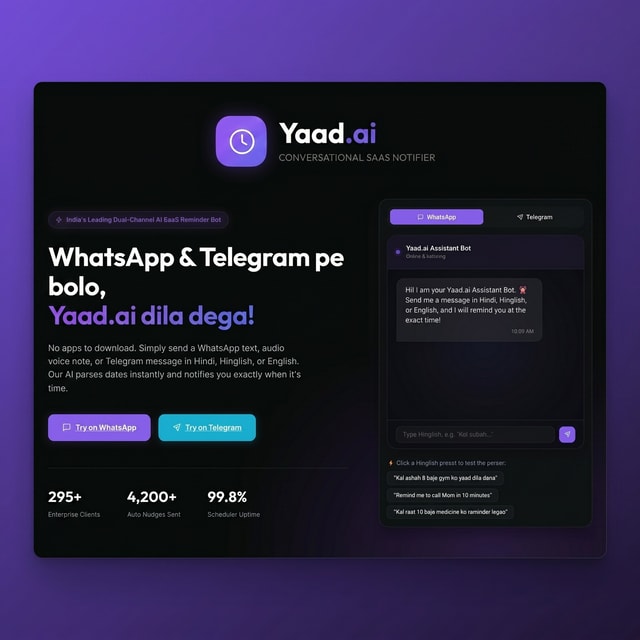
Yaad.ai — AI WhatsApp & Telegram Reminder SaaS
SQL Master Package [Revision + Case Studies + MNC]
About me
Frequently asked questions
What is generative AI and how does it work?
Generative AI refers to AI models that create new content — text, images, code, audio, or video — instead of only analysing existing data. It works by training large neural networks (usually transformers) on massive datasets so they learn patterns, and then generating an output step by step from your prompt. When you ask ChatGPT a question, the model predicts the most useful response token by token based on everything it learned during training. Techniques like RAG, fine-tuning, and prompt engineering are then layered on to make outputs accurate for real business use cases.
What is agentic AI and how does it work?
Agentic AI doesn't just generate a response — it plans, takes actions, and completes multi-step tasks on its own. You give an agent a goal, and it breaks the goal into steps, calls the right tools or APIs (search, code execution, databases, CRMs), checks the results, and iterates until the task is done, usually with memory across steps. This ability to act autonomously is why agentic AI is considered the next stage after chat-based generative AI.
Generative AI vs agentic AI: what is the difference?
Generative AI creates content from a single prompt — it writes text, generates code, or answers a question in one response. Agentic AI goes a step further and takes action: it plans the steps, uses tools, executes workflows end to end, and self-corrects along the way. A simple way to remember it: generative AI answers, agentic AI acts. If you're starting out, learn generative AI and LLM fundamentals first and then move on to agentic systems.
Agentic AI vs AI agents: are they the same thing?
The terms overlap, but they're not identical. An AI agent is a single software program that performs a task autonomously — for example, a bot that books meetings or answers support tickets. Agentic AI is the broader design approach where systems use planning, memory, and tool calling — often with multiple agents collaborating — to pursue goals with minimal human input. So not every agent is truly "agentic"; agentic AI usually implies deeper, goal-driven, multi-step autonomy.
What are some real-world agentic AI examples?
Common agentic AI examples include customer support agents that resolve tickets end to end, voice AI agents that screen or onboard candidates, AI resume-screening systems, coding agents that fix and test code, and research assistants that browse, compare, and summarise sources. In India, companies are actively deploying such agents in hiring, customer support, and sales operations. Even a WhatsApp or Telegram reminder bot that reads context and schedules actions on its own is a lightweight agent.
How to build agentic AI from scratch?
Start with an LLM and a well-designed system prompt, then add capabilities one layer at a time: tool/function calling, memory, and RAG for domain knowledge. Use an orchestration framework like LangChain, LangGraph, or CrewAI to manage the agent's workflow, and finally deploy it with proper monitoring and CI/CD so it survives real users. Most self-taught projects fail at production-readiness — which is exactly why hands-on programs like Shivan's Production-Ready Agentic AI Bootcamp focus on deployment and real-world use cases, not just demos.
How to learn agentic AI as a beginner?
Follow this sequence: strengthen your Python → learn LLM and prompt engineering basics → understand RAG → learn tool calling and agent frameworks → build 2–3 portfolio projects (a RAG assistant, a tool-using agent, and a multi-agent workflow) → deploy at least one on the cloud. Free resources are enough for the fundamentals, but structured agentic AI courses or 1:1 mentorship help you move faster and avoid bad habits. Practising through Kaggle competitions or hackathons also sharpens real-world ML instincts.
Which agentic AI tools should I learn first?
Focus on a small, job-relevant stack: LangChain or LangGraph for orchestration, OpenAI or Claude APIs, a vector database such as FAISS, Pinecone, or Chroma, and one multi-agent framework like CrewAI or AutoGen. Add deployment skills — Docker, AWS or Azure, and CI/CD — because companies want agents that run reliably in production. Depth in one framework beats surface-level familiarity with ten tools.
Do you need a certification to get a job in generative AI?
Certificates help your resume get shortlisted, but hiring decisions in India are driven mostly by projects and interviews. A generative AI certification is useful for freshers to show structured learning, and an agentic AI certification or bootcamp that includes deployed, working projects signals far more than a badge alone. A GitHub portfolio with working RAG systems or agents will usually outweigh most certificates.
Which generative AI course is best for beginners in India?
Pick a generative AI course that is project-based, covers current topics (LLMs, RAG, fine-tuning, agents), includes mentor feedback or code reviews, and teaches deployment — not just theory. You can start with free generative AI courses with certificates to test your interest, then invest in a deeper, hands-on program once you're serious about a GenAI role. Always check when the content was last updated, because this field changes every few months.
Which generative AI tools should I learn?
Start with the core tools: ChatGPT, Claude, and Gemini for LLM work, GitHub Copilot for coding, and Hugging Face for open-source models. Then add supporting tools like vector databases and one orchestration framework. The concepts behind these generative AI tools — prompting, RAG, and evaluation — matter more than any single tool, because the tooling landscape changes quickly.
What is prompt engineering in the context of generative AI?
Prompt engineering is the practice of designing instructions so LLMs produce accurate, consistent, and useful outputs. In generative AI applications, it includes setting the model's role, providing context and constraints, giving few-shot examples, specifying output formats, and using techniques like chain-of-thought reasoning. It is a foundational skill for every GenAI role — a well-engineered prompt often removes the need for fine-tuning altogether.
How to do prompt engineering in ChatGPT?
Use a simple structure: assign a role ("Act as a senior data analyst"), give clear context, state the exact task, add constraints (length, tone, format), and specify the output format you want. Add one or two examples for tricky tasks, ask the model to reason step by step for complex problems, and iterate by comparing two or three prompt versions. The same approach works when you prompt engineer Claude or Gemini, since the underlying principles are identical.
Is a prompt engineering certification worth it in India?
It can be, but only as a supplement. A prompt engineering certification adds structure and helps a fresher's resume clear filters, but recruiters care far more about what you can actually build with LLMs. Before paying for any prompt engineering course, check that it includes hands-on projects such as building a RAG bot or an agent — and remember that free resources already cover the fundamentals well.
Are prompt engineering jobs in demand in India, and what salary can you expect?
Dedicated prompt-engineering-only roles are limited but growing; most demand is absorbed into GenAI engineer, LLM engineer, and AI product roles where prompting is one required skill. Typical prompt engineering salary ranges in India are roughly ₹6–12 LPA for freshers and can cross ₹25–40+ LPA for experienced GenAI engineers, depending on the company and your portfolio. Combining prompt engineering with RAG, agentic AI, and deployment skills makes you far more employable than prompting alone.