Testimonials
Services
✨Makeup & Accessories Styling✨
Airport Look & Accessory Styling
🔥Communication Skills Training (30min)
✨Power Dressing & Image makeover 1:1 Session 30min
15min-Discovery Call
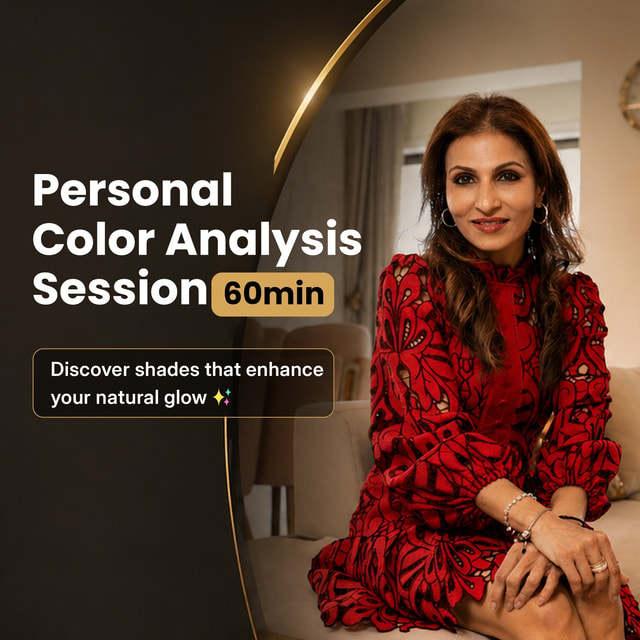
🔥Personal Color Analysis Session (60min)
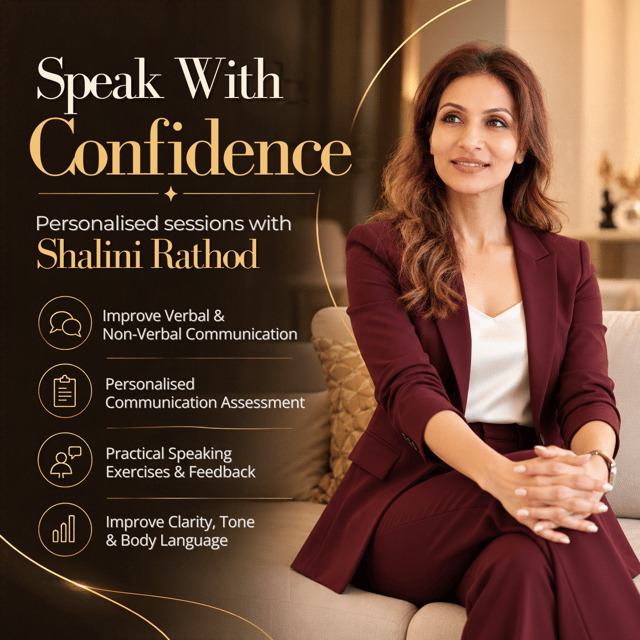
Professional Communication Training Session
Face Shape Assessment 1:1 Session
🚀 Curated styling for formal occasions
📝 Detailed Tailored Style recommendation Booklet

🔥Communication Skills Training (60-min)
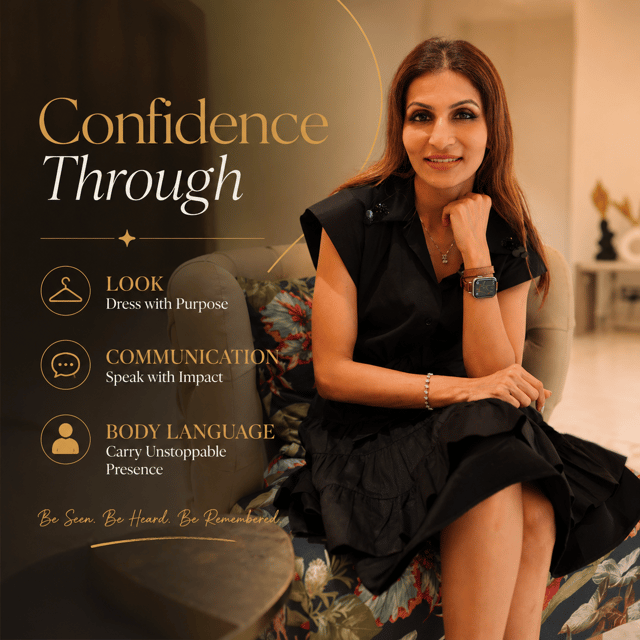
✨Lifestyle & Image Analysis 1:1 session
🔥Body Shape Analysis 1:1 Session

✨Complete Makeover Session✨
About me
Frequently asked questions
How to improve public speaking skills?
Focus on the fundamentals: structure your message with a clear opening, key points and closing, practise out loud daily, record yourself and review it, and work on voice modulation, pauses and body language. Start with low-stakes situations like team meetings or small group discussions and gradually increase the audience size. Structured practice, honest feedback and consistent exposure are what turn average speakers into confident ones.
How to overcome fear of public speaking?
The fear usually comes from being judged, not from speaking itself. Reduce it by preparing thoroughly, rehearsing your opening line until it feels automatic, breathing slowly before you begin, and shifting your focus from "how am I coming across" to "how can I help this audience." Gradual exposure in smaller settings rewires the fear over time, and working with a coach can speed things up by targeting your specific triggers.
What is fear of public speaking called?
The fear of public speaking is called glossophobia, derived from the Greek words "glossa" (tongue) and "phobos" (fear). It is one of the most common phobias worldwide, and mild nervousness before speaking is completely normal. When the anxiety is strong enough to cause a racing heart, shaky voice or blanking out, structured practice and coaching help manage it effectively.
What are public speaking skills?
Public speaking skills are the abilities that let you speak clearly and confidently in front of an audience — structuring your thoughts, speaking with clarity and pace, using eye contact and body language, managing nervousness, telling stories and adapting to your listeners. None of these are inborn talents; they are learnable and improve fastest with deliberate practice and feedback.
What are the best public speaking tips for beginners?
Start small and speak often. Know your topic better than your script, open with a hook, keep sentences short, pause instead of using fillers, and make eye contact with a few friendly faces. Record yourself once a week, treat every meeting or class as practice, and remember that confidence follows competence — the more you speak, the easier it gets.
What are some useful public speaking tips for students?
The classroom is your best training ground. Prepare a two-line outline instead of memorising, volunteer early for presentations, practise in front of a mirror or friends, and convert nervous energy into enthusiasm. Students who participate regularly in class, seminars, debates and college fests build the skill years before it matters in placements and interviews.
What is communication skills training?
Communication skills training is a structured programme that teaches you to express ideas clearly, listen actively, handle conversations and conflicts, and present with confidence at work and in personal life. It usually covers verbal and non-verbal communication, tone, body language and real scenarios like meetings and interviews, and is delivered through workshops, online sessions or 1:1 coaching.
Is communication skills training online as effective as in-person training?
Yes, online communication skills training can be just as effective and far more convenient. Live online sessions let you practise speaking, get real-time feedback and review recordings of yourself without losing time to travel. What matters is choosing interactive training with personal feedback rather than only pre-recorded videos — for people balancing jobs or college, 1:1 online coaching often works fastest because sessions focus only on your gaps.
Is communication skills training for employees worth it?
For most teams, yes — it is one of the highest-return investments a company can make. Communication skills training for employees improves clarity in emails and meetings, reduces misunderstandings and conflicts, and builds confidence in presentations and client conversations. Employees who communicate well are also more likely to be considered for leadership roles, so the payoff compounds over a career.
What is interpersonal skills training?
Interpersonal skills training focuses on how you interact with people one-on-one and in groups — conversation skills, active listening, empathy, polite assertiveness, reading body language and building rapport. While public speaking training is about addressing an audience, interpersonal training is about winning everyday conversations with colleagues, managers, clients and new connections, making you a confident communicator both on stage and off it.
Can introverts become good public speakers?
Absolutely — many of the best speakers are introverts. Introverts typically prepare deeply, listen well and connect genuinely, all of which are strengths on stage. What they usually need is a system: structured preparation, controlled practice exposure and techniques to manage overthinking before and during a talk. With the right guidance, introverts can confidently present at work, host sessions and even build an audience online.
Should I mention fear of public speaking as a weakness in an interview?
Yes, it can work — it is honest, relatable and shows self-awareness, which interviewers value more than a fake weakness. The key is pairing it with action, for example: "I used to struggle with public speaking, so I started volunteering for presentations and working with a coach to improve." This turns the weakness into proof that you can identify gaps and fix them. Never state it without showing the steps you are taking.
Should I look for communication skills training near me or join an online programme?
Searching for communication skills training near me makes sense if you want in-person group practice or corporate workshops, but don't limit yourself by location. A skilled online coach can deliver the same speaking practice and feedback over a video call, usually with more flexible timings and 1:1 attention. Judge the trainer's experience, structure and reviews rather than the distance — for personal goals like interviews, public speaking or confidence, 1:1 online sessions often produce faster results than generic local classes.