Testimonials
Services
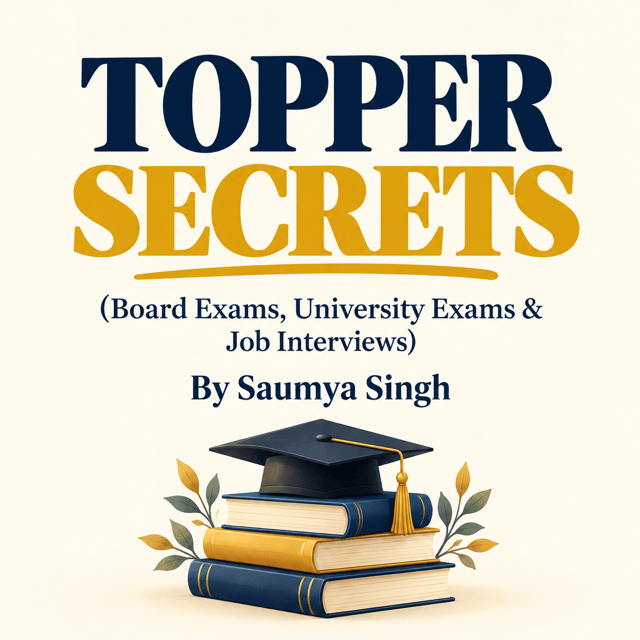
Topper Secrets (Excel in any Exam or Interview)
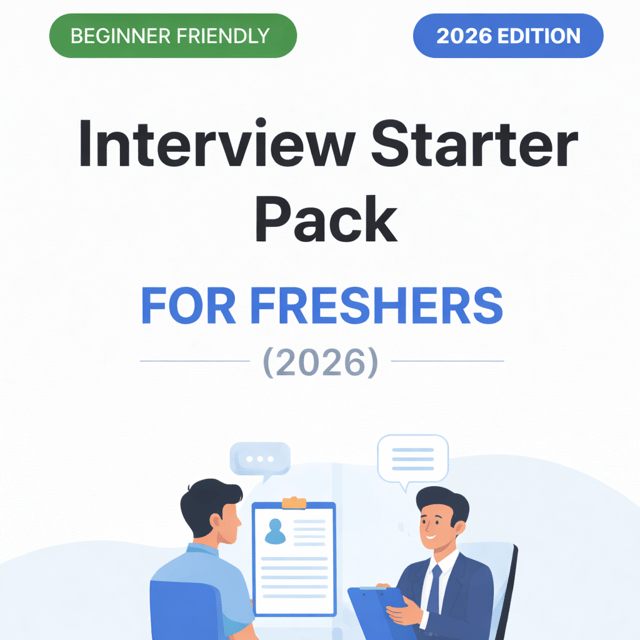
Interview Starter Pack for Freshers (2026).pdf
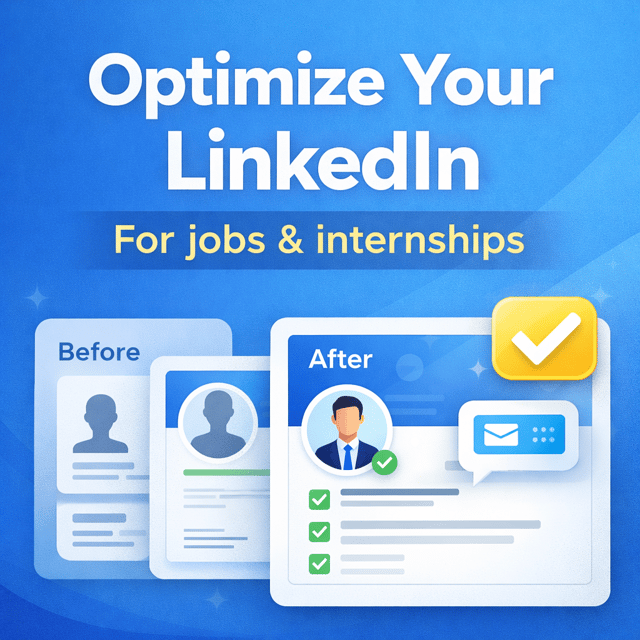
LinkedIn Profile Optimisation Guide
Get Hired Immediately Kit 2026
1:1 Mentorship for Your Career Growth
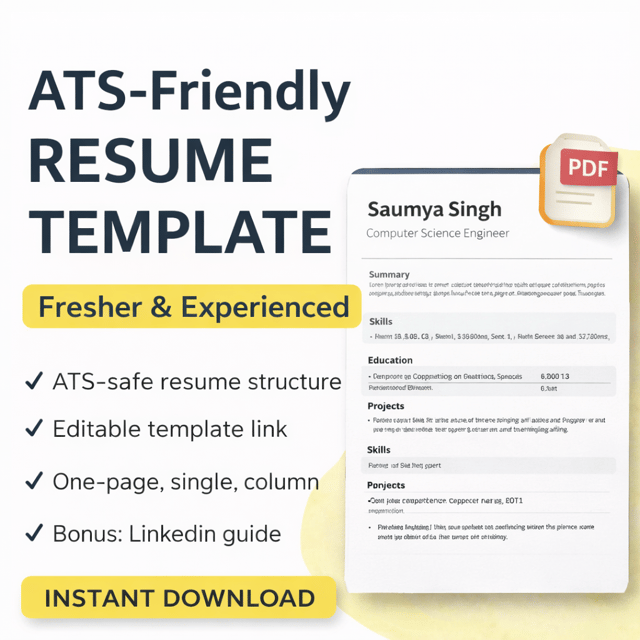
ATS-Friendly Resume Template For All
The Hackathon Playbook: Ideas, PPTs & SIH Guide
Career Launch Pack
How to earn from Brand Collaborations?
About me
- Saumya praised for insightful, clear sessions, expertly covering diverse domains from tech to personal branding.
 AI-generated based on testimonials
Frequently asked questions
How to crack a software engineer interview as a fresher?
Build three things in parallel: problem-solving through consistent DSA practice (arrays, strings, trees, graphs), CS fundamentals like OS, DBMS, OOP and networks, and two or three resume-worthy projects you can explain in depth. For Indian service companies, expect aptitude and basic coding rounds, while product companies test tougher DSA. Add an ATS-friendly one-page resume and a few mock interview sessions, because explaining your thought process clearly often decides the result more than raw knowledge.
What is the typical software engineer interview process in India?
Most companies follow four to five stages: an online assessment with aptitude and coding questions, one or two technical rounds covering DSA, SQL and core subjects, sometimes a machine coding or system design round for product roles, and a final HR or managerial discussion. Service-based companies like TCS, Infosys and Wipro often add group discussion or email-writing rounds, while startups may compress everything into one or two technical calls. The full cycle usually takes two to six weeks.
What are the most common software engineer interview questions for freshers?
Expect a mix of theory and live coding. Frequently asked topics include OOP concepts with real examples, arrays vs linked lists, SQL joins and normalization, process vs thread, and the time complexity of your own project. Coding rounds usually start with patterns like string reversal, finding duplicates or sorting problems before moving to medium-level DSA. Interviewers also judge communication through "tell me about yourself" and project walkthroughs, so rehearse these answers as seriously as the technical ones.
Why are software engineering interviews so hard?
Because they test applied problem-solving under time pressure, not memorized theory. In India, a single opening often attracts thousands of applicants, so companies deliberately set a high bar that combines DSA, core subjects, communication and culture fit. Freshers also juggle college, internships and preparation at the same time. The difficulty drops quickly once preparation becomes pattern-based — solving problems topic by topic and practising out loud makes even tough rounds predictable.
How to crack a Google software engineer interview?
Plan for three to six months of focused preparation. The rounds test medium-to-hard DSA with clean, optimal code, complexity analysis, thinking out loud, and a behavioural round that checks collaboration and problem-solving attitude. Freshers usually face lighter design questions than experienced candidates. Practise medium and hard problems consistently, simulate full onsite rounds, and get feedback through mock interviews. A referral from a current employee also improves the chances of your resume being shortlisted.
How do I answer "Why did you decide to become a software engineer" in an interview?
Keep it personal but professional: mention a genuine trigger — a project you built, a problem you solved, or curiosity about how apps actually work — then connect it to the skills you have built through coding, projects or internships. Avoid memorized lines about money or vague "passion for computers". Interviewers use this question to check self-awareness and communication, so one specific story with a lesson lands better than a generic speech. Practise it aloud until it sounds natural, not recited.
Is interview prep worth it in India?
Yes, especially given the competition for fresher roles. Structured preparation shortens the journey because you practise the right topics in the right order instead of solving random problems. It matters most if you are repeatedly getting rejected at the resume or online assessment stage — that usually signals a fixable gap in projects, keywords or fundamentals. Expensive courses are not mandatory though; self-study, free resources and a few focused mock sessions with a mentor deliver most of the value at a fraction of the cost.
How long should interview prep take?
For most freshers, two to three months of consistent effort — around two to three hours daily — is enough to become placement-ready starting from basics. If your DSA is already decent, four to six weeks of polishing your resume, projects and behavioural answers usually works. Starting from scratch alongside a degree can take six months or more. Track progress topic-wise and include revision and mock rounds in the plan, because unstructured preparation almost always takes longer than it should.
What is interview preparation and how do I start it as a student?
It is a structured process of getting ready for every stage of hiring: understanding the company's rounds, strengthening DSA and CS fundamentals, building projects for your resume, and preparing clear answers about yourself and your work. To start, pick one programming language, solve problems topic-wise, maintain a simple progress tracker, and get your resume reviewed early. Students ideally begin two to three semesters before placements, keeping the final months for mock interviews and company-specific practice.
Is interview preparation for freshers different from preparation for experienced candidates?
Yes, significantly. Freshers are evaluated on potential — DSA depth, CS fundamentals, projects, internships and aptitude — while experienced candidates are grilled on system design, real-world trade-offs and the impact of their past work. So freshers should spend most of their time on fundamentals and project storytelling rather than advanced architecture. The upside is that fresher rounds are more predictable, and a focused few months of preparation can outperform years of unfocused study.
What to wear for a software engineer interview in India?
For product companies and startups, smart casuals — a clean shirt with chinos or plain jeans — are perfectly acceptable, and even casual works for fully remote interviews. For service-based giants, campus placement drives and formal settings, stick to formals: a light shirt with dark trousers and closed shoes, or simple formal ethnic wear, with minimal accessories. When unsure, dress one level above the company's everyday culture. For virtual interviews, wear a solid-coloured upper and sit against a tidy background.
Is career counselling worth it for engineering students in India?
It is worth it when you are at a real decision point — choosing a specialisation, deciding between a job and higher studies, or switching from service-based to product roles. A counsellor with actual industry experience gives you an honest market view, a realistic roadmap, and feedback on your resume and interview gaps, which saves months of trial and error. Paying only for generic information that is freely available online is not worth it; the real value lies in personalised feedback and accountability.
Why is career guidance important for students?
Most students pick careers based on peer pressure, family expectations or outdated assumptions, and realise the mismatch only after spending years and money. Good guidance maps your strengths to actual market demand, sets realistic milestones, and exposes students — especially those from Tier-2 and Tier-3 colleges — to opportunities and networks that are invisible from campus. That is exactly why career guidance is important for students before they choose a branch, a specialisation or their first job.
How do I get career guidance after 12th to become a software engineer?
Start with free options: talk to working software engineers on LinkedIn, follow credible tech educators, and understand what a CS degree actually involves. Then choose your path — BTech in CS or IT, BCA, or a related degree. For a personalised roadmap covering which branch to pick, which skills to build, and when to start DSA and internships, book a session with an industry mentor or career counsellor who works with school leavers. One focused session right after 12th can give you a clear four-year plan.