Testimonials
Services

Resolve Your Query

Quick chat
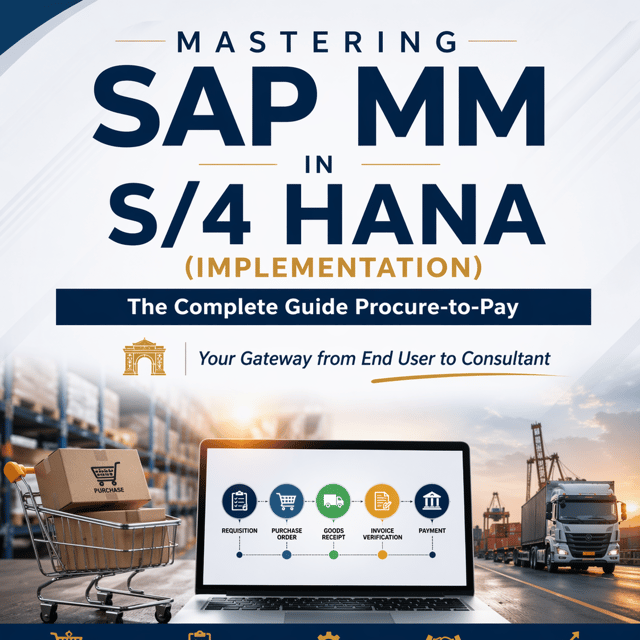
SAP MM S/4 HANA COMPLETE GUIDE: PROCURE TO PAY
SAP Project Implementation Training Program

SAP Resume Building & Review
About me
- Let's Connect on LinkedIn

Frequently asked questions
Is SAP a good career in India?
Yes, because almost every large Indian company across IT services, manufacturing, pharma, retail, and banking runs on SAP, creating constant demand for skilled consultants. SAP careers in India also offer clear progression — you can start as a support analyst or junior consultant and grow into senior consultant, lead, and project manager roles as your module expertise and project experience increase.
What is a SAP career track?
A SAP career track is a structured path where you choose one module (such as SAP MM, SD, FICO, or ABAP), get trained on it with hands-on server practice, work toward global certification, and then enter roles like SAP support analyst or associate consultant. From there you progress to functional consultant, senior consultant, and project lead. Going deep into one module is usually better than trying to learn everything at once.
What are the best SAP careers for freshers?
Freshers usually begin with entry-level SAP jobs such as functional consultant (MM, SD, FICO), ABAP developer, SAP support analyst, or master data associate. SAP careers for freshers work best when the module matches your background — a procurement, supply chain, or commerce profile fits SAP MM naturally, while an accounting profile fits FICO. Adding an internship or live project experience makes your profile far more employable.
What is the SAP MM module?
SAP MM (Materials Management) is the supply chain module that handles procurement and inventory. It covers the complete procure-to-pay cycle — purchase requisition, purchase order, goods receipt, invoice verification, and payment integration with finance — along with material master data, stock movements, and material planning. It is one of the most widely implemented modules in India because manufacturing, retail, and pharma companies all depend on materials management.
What does a SAP MM consultant do?
A SAP MM consultant helps companies configure and run the Materials Management module. Daily work includes gathering business requirements, setting up purchasing organization structures and pricing procedures, testing the procure-to-pay process, supporting data migration, and resolving user issues during implementation and support projects. The role sits between the business team and the technical team.
What is covered in a SAP MM course?
A complete SAP MM course covers enterprise structure, material and vendor master data, the procure-to-pay cycle, inventory management and movement types, pricing procedures, release strategies, and integration with FI and SD. Along with theory, you should get hands-on practice on an SAP S/4HANA server, live project exposure, study notes, and interview preparation. Always confirm that server access is included before enrolling.
How to learn SAP MM as a beginner?
Start by understanding the procure-to-pay process conceptually, then join a structured training program that gives you access to an S/4HANA server for daily practice. Practice end-to-end scenarios yourself — creating purchase orders, posting goods movements, and verifying invoices — because employers test practical knowledge, not just theory. Finish with a live project, a strong resume, and mock interviews to become job-ready.
How to learn SAP MM for free?
You can build the fundamentals through free SAP training videos on YouTube, official SAP documentation, and community forums. The limitation is hands-on practice — real configuration skills need server access, which is rarely free. A practical approach is to learn concepts for free and then join an affordable structured program for live system practice and placement support.
How to get SAP MM certification?
The recognized route is SAP's own global certification — for MM, this is typically the S/4HANA Sourcing and Procurement associate exam, booked through SAP's learning portal or an authorized exam channel. You can prepare self-paced or through an institute that provides certification guidance and practice tests. Keep in mind that the exam fee is separate from training fees, and certification carries the most weight when backed by hands-on project experience.
What is included in a SAP training program?
A job-oriented SAP training program typically includes live project training, access to an SAP server for practice, comprehensive study notes, global certification guidance, resume building, interview preparation, and placement support through a dedicated HR team. When comparing programs, check the trainer's implementation experience, how long you get server access, and whether placement assistance is genuine and ongoing.
How much does SAP training cost in India?
It depends on the module, mode (online or classroom), and duration. Short online module courses can start around ₹20,000–₹30,000, while comprehensive programs with live projects, extended server access, internship opportunities, and placement support can go above ₹50,000. Global certification exam fees are usually charged separately, so always ask for a complete fee breakup before enrolling.
How do I choose a SAP training institute in Pune with placement?
Evaluate any SAP training institute in Pune with placement claims on five things: genuine S/4HANA server access, live project training instead of only theory, trainers with real implementation experience, a dedicated placement team that supports you until you are placed, and honest reviews from past students. Attend a demo class, ask about internship opportunities, and compare two or three institutes before paying.
Are there SAP MM jobs for freshers without experience?
Yes. SAP MM jobs for freshers are regularly posted by IT services companies, consultancies, and manufacturing firms for support and junior consultant roles. What matters most is demonstrable skill — server practice, a live project or internship, a well-built resume, and interview readiness. Training programs that include a 3–6 month internship help bridge the experience gap that freshers usually face.
What is the demand for SAP MM jobs in Pune?
The market for SAP MM jobs in Pune is one of the strongest in India because the city combines a large IT sector in areas like Hinjewadi, Kharadi, and Magarpatta with a big automobile and manufacturing belt that runs on SAP. Freshers and professionals can target both IT consultancies and manufacturing companies, and local institutes with dedicated placement teams help connect candidates to these openings.
What are the most common SAP MM interview questions?
Frequently asked SAP MM interview questions cover the procure-to-pay cycle, the difference between a purchase requisition and a purchase order, material and vendor master data, movement types, release strategy, pricing procedure, stock transport orders, subcontracting, and integration with the FI module. Interviewers also give scenario-based problems, so practice explaining each process end-to-end, and a mock interview with an experienced SAP consultant before the real one can make a big difference.