Testimonials
Services

Free AI + QA Interview Preparation – Sample Note



2000+ Playwright Interview Questions
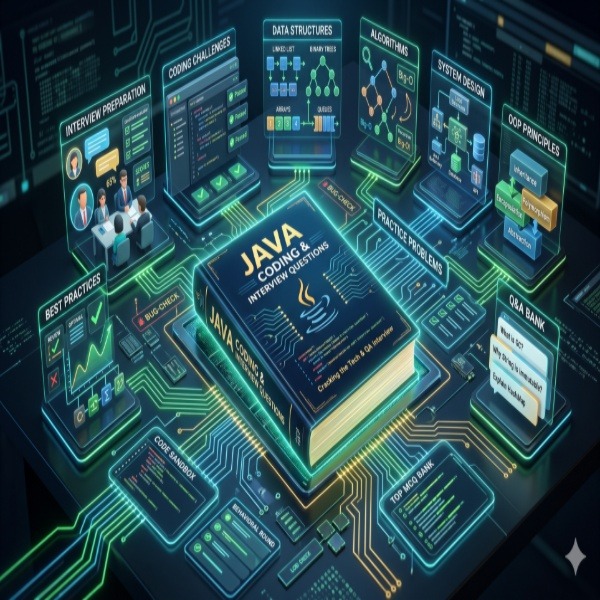
Java Coding & Interview Questions
Locators Notes
Selenium Interview Questions
TestNG Notes with Framework Concepts
Jira Notes
Linux Notes
Jenkins Notes
JMeter Notes
Agile Notes
API Testing Interview Questions
Cucumber Notes
HTML Notes

3000+ Automation Testing Interview Questions


2026 AI-POWERED QA ENGINEER PACKAGE



5000+ Company-Wise Interview Questions
150+ Java Coding Questions
Framework Explanation
Selenium Notes
Maven Notes
Rest Assured Notes
Git Notes
Appium Notes
API Testing Notes
Manual Testing Notes
Database Testing (SQL) Notes
Cypress Notes

4000+ Manual Testing Interview Questions
2026 QA ENGINEER INTERVIEW SUCCESS KIT


About me
- Excellent guidance from Rushikesh on Manual Testing, Automation and career growth. He answered every question patiently and shared practical industry insights.Recommended by By Jenny Raisen on

- Rushikesh has strong QA expertise and explains complex topics in a simple way. I gained valuable knowledge on Playwright, Selenium and interview strategies.Recommended by By Mohammad Shaikh on
- Highly recommend Rushikesh for QA mentorship. His practical approach, clear explanations and career guidance made the session valuable and worth attending.Recommended by By Poonam Shinde on
- QAverse | Manual → Automation → AIhttps://whatsapp.com/channel/0029VbBjR6vJkK71Bd4Kzh0h

Frequently asked questions
How to automate testing with AI?
The practical way to automate testing with AI is to use AI assistants for generating test cases from requirements, creating test data, drafting Selenium or Playwright scripts, and fixing broken locators. Many QA teams also use AI-powered platforms that offer self-healing tests and visual validation. The right approach is to first be comfortable with one automation tool and a programming language, then use AI to speed up scripting, maintenance, and documentation instead of relying on it blindly.
How to learn automation testing?
If you are wondering how to learn automation testing, follow this sequence: pick one programming language (Java is the most demanded for QA roles in India), learn Selenium WebDriver with TestNG, understand framework design like the Page Object Model, then add API testing with Postman or Rest Assured, SQL, Git, and Jenkins. Build two to three practice projects on demo websites and keep the code on GitHub, because interviewers ask more about your framework decisions than tool syntax.
How to learn manual testing?
The simplest way to learn manual testing is to start with SDLC and STLC, testing types such as functional, regression, smoke and sanity, test case design techniques, and the defect life cycle. Practise by writing test cases and bug reports for apps you already use, learn Jira for defect tracking, and pick up basic SQL. Most freshers become interview-ready within four to eight weeks with structured notes and consistent practice.
What is automation testing and manual testing?
Automation testing and manual testing are the two main approaches to software testing. In manual testing, a tester executes test cases step by step without scripts, which suits exploratory, usability and ad-hoc checks. Automation testing uses scripts and tools such as Selenium, Playwright and Cypress to run repetitive tests automatically, which is faster for regression suites. Most teams use both, and many testers start manually and move to automation for better salary growth.
Which automation testing tools should I learn first?
Among automation testing tools, start with Selenium WebDriver along with Java, because it appears in the majority of QA job postings in India. Add TestNG for test management, Cucumber for BDD, Postman for API testing, and Git and Jenkins for CI/CD basics. Playwright and Cypress are strong modern additions, but mastering one tool deeply is better than knowing five superficially.
Which automation testing practice websites are best for beginners?
Widely used automation testing practice websites include SauceDemo, DemoQA, the-internet (Herokuapp), ParaBank and OrangeHRM demo instances. They let you practise real scenarios such as login flows, dynamic elements, alerts, iframes, tables and form handling without any setup. Once comfortable, automate an end-to-end flow like search, add to cart and checkout, and push it to GitHub as a portfolio project.
What are the most commonly asked automation testing interview questions?
The most common automation testing interview questions revolve around Selenium locators and waits, handling dynamic elements, TestNG annotations and assertions, framework types such as POM, data-driven and BDD with Cucumber, API testing, SQL queries, and scenario-based questions like how you would automate a given feature. Preparing from a structured, topic-wise question bank with answers is far more effective than reading scattered tutorials.
How should freshers prepare for manual testing interview questions?
Freshers should prepare for manual testing interview questions in three layers: fundamentals (SDLC, STLC, testing types, defect life cycle), application (writing test cases for features like login, payment or search, and explaining bug reports clearly), and tooling (Jira, basic SQL and Agile/Scrum concepts). Interviewers frequently ask scenario questions such as "how would you test a pen or a lift", so practise explaining your approach logically rather than memorising definitions.
Which Selenium interview questions and answers for experienced candidates should I focus on?
For Selenium interview questions and answers at the experienced level, focus on framework architecture (POM, hybrid, BDD), waits and synchronization, handling dynamic and stale elements, parallel and cross-browser execution using grids or BrowserStack, Jenkins integration, reporting, and how you reduced flaky tests or execution time in past projects. At three to five years of experience, interviewers expect you to justify decisions, not just recite definitions.
How to handle dynamic elements in Selenium?
To handle dynamic elements in Selenium, avoid absolute XPath and build robust locators using contains(), starts-with() or stable attributes like data-testid, or locate elements relative to a static parent. Combine these with explicit waits so the script waits for the element instead of failing instantly. If IDs regenerate on every page load, a pattern-based locator such as //input[starts-with(@id,'user_')] usually works.
What is POM in Selenium?
POM in Selenium stands for Page Object Model, a design pattern where every web page of the application is represented by a separate class containing its locators and action methods. It separates test logic from page structure, so when a page changes you update only one class instead of many scripts. POM is the most commonly expected framework pattern in Selenium interviews and is usually paired with TestNG and reporting.
What is Maven in Selenium?
Maven in Selenium projects is a build and dependency management tool that downloads and manages all required libraries — Selenium, TestNG and others — through the pom.xml file instead of manual jar handling. It gives the project a standard folder structure, runs test suites through plugins like Surefire, and connects easily with Jenkins, which is why interviewers frequently ask about it in automation rounds.
Are there manual testing jobs in Pune for freshers?
Yes, manual testing jobs in Pune for freshers are regularly available in areas like Hinjewadi, Kharadi, Magarpatta and Baner, across service companies, product companies and startups. Freshers should target roles such as QA Analyst or Trainee Software Tester, build a resume around STLC knowledge, test case writing, Jira and basic SQL, and apply through Naukri, LinkedIn and off-campus drives. Learning Selenium basics alongside manual skills significantly improves shortlist chances, since many Pune roles expect a manual-plus-automation profile.
What skills do companies expect for automation testing jobs?
For automation testing jobs, companies typically expect one strong programming language (mostly Java, sometimes Python), Selenium, Playwright or Cypress, TestNG or Cucumber, API testing with Postman or Rest Assured, SQL for database validation, Git, Jenkins for CI/CD, and Agile exposure. The ability to design a framework from scratch and domain knowledge of sectors like banking, e-commerce or healthcare give you a clear edge in interviews.
Where can I find a good manual testing notes PDF for interview preparation?
A good manual testing notes PDF should cover SDLC and STLC, black-box techniques like equivalence partitioning and boundary value analysis, testing types, defect life cycle, Agile and Scrum, Jira and basic SQL — all organised topic-wise with interview questions at the end of each section. Such structured notes are available from QA mentors and testing communities, and they save weeks of time compared with collecting information from scattered tutorials and blogs.