Testimonials
Services
ABAP Interview Prep : E2E
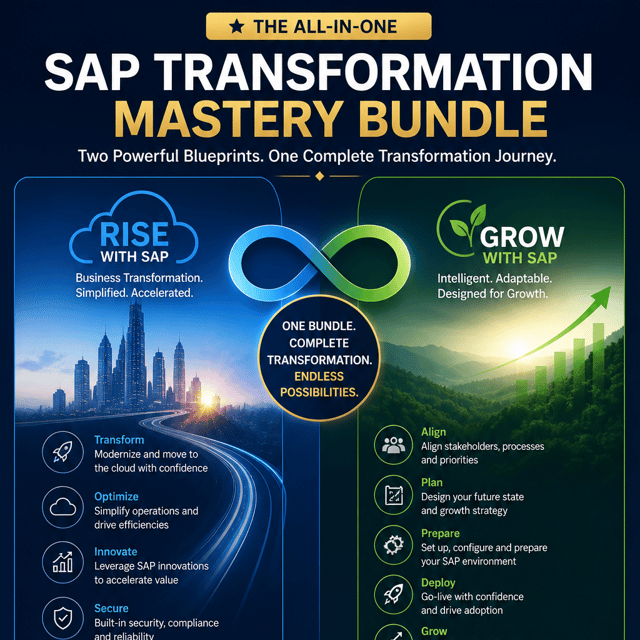
SAP Success Blueprint: GROW + RISE Edition
About me
- Ruhani Garg – Mediumhttps://medium.com/@garg.ruhani19

- Ruhani Garg - YouTubehttps://www.youtube.com/@Helpingbean

Frequently asked questions
What are CDS views in SAP ABAP?
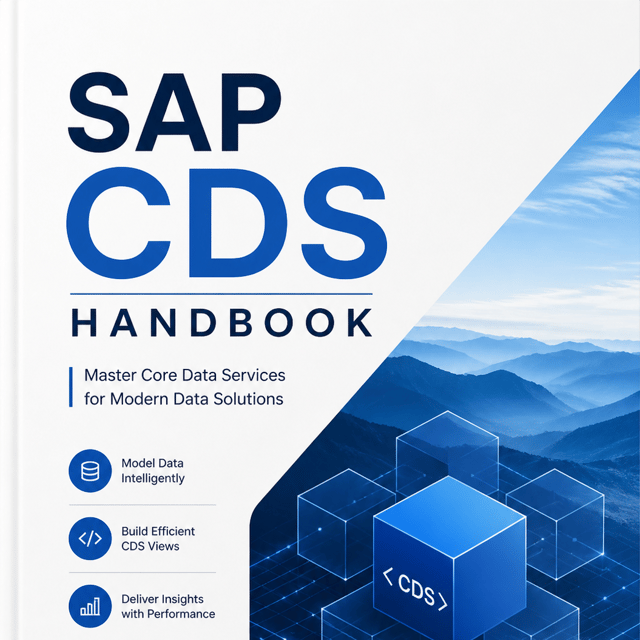
CDS (Core Data Services) views in SAP ABAP are semantically rich data models defined over database tables using DDL sources in ADT (Eclipse). They push data logic down to SAP HANA (code pushdown), support annotations, associations, parameters and access control, and form the foundation for OData services, SAP Fiori apps and ABAP RAP business objects.
How to create a CDS view in SAP?
Install ABAP Development Tools (ADT) in Eclipse and connect to your system, then create a new Data Definition (New > Core Data Services > Data Definition). Write the view using "define view ... as select" with the required annotations such as @AbapCatalog.sqlViewName, activate it and check the result with data preview (F8). Note that classic SE11 cannot create CDS views — ADT is mandatory.
How to check CDS views in SAP?
The most reliable way is ADT in Eclipse: search the Project Explorer or use Open Resource to locate the Data Definition, open it and press F8 for data preview. In SAP GUI you can find related entries through SE11 or table TADIR (object type DDLS), but annotations, associations and the actual source logic can only be reviewed properly in ADT.
What are the different types of CDS views in SAP?
The main types of CDS views in SAP are basic/interface views (the reusable modelling layer, such as released I_* views), projection or consumption views (exposing selected fields for a specific service or app), extension views (adding fields to standard views) and analytical/query views for analytics. In modern development, CDS view entities have largely replaced classic CDS views, and in ABAP RAP you additionally work with interface and projection views for business objects.
What are the most asked CDS views interview questions in SAP ABAP?
Frequently asked CDS views interview questions include: what CDS views are and why code pushdown matters, associations vs joins, CDS view vs CDS view entity, parameters and annotation types (@UI, @OData, @Analytics), access control through DCL, buffering, extending standard CDS views, CDS vs AMDP, and how CDS powers Fiori Elements and RAP. Mid-level ABAP interviews in India almost always include at least one hands-on CDS scenario.
What is SAP RAP?
SAP RAP (RESTful Application Programming Model) is SAP's modern, ABAP-based framework for building enterprise services and Fiori applications on S/4HANA and the SAP BTP ABAP environment. It combines CDS-based data modelling, behavior definitions and implementations for business logic (CRUD, actions, validations, determinations, draft handling) and service bindings that expose OData services — effectively the successor to classical Dynpro, SEGW and BOPF-based development.
What is SAP RAP and CAP?
RAP and CAP are both SAP application programming models. RAP (RESTful Application Programming Model) is ABAP-based and used when your data and logic sit on an ABAP stack — S/4HANA on-premise or the BTP ABAP environment — making it ideal for clean-core extensions of S/4HANA. CAP (Cloud Application Programming Model) is polyglot (Java, Node.js) with CDS modelling, built for cloud-native applications on SAP BTP. Choose RAP for ABAP-centric extensions and CAP for standalone cloud apps outside the ABAP world.
How to learn ABAP RAP from scratch?
Strengthen CDS views and OData first, since ABAP RAP is built on both. Then learn the RAP structure — business objects, behavior definitions and implementations, service definition and service binding — and build a simple managed-scenario app with draft and Fiori Elements on a BTP ABAP environment trial or an S/4HANA developer system. Move on to unmanaged scenarios, EML, validations, determinations and actions; with consistent daily practice, an experienced ABAP developer usually gets comfortable in about 6–8 weeks.
How to deploy a SAP RAP application?
In ADT, expose your RAP business object through a service definition and publish it in a service binding (OData V4 UI for Fiori apps, or Web API). For the UI, generate a Fiori Elements application from the service binding using Fiori tools or SAP Business Application Studio, then deploy the app to the ABAP repository or the HTML5 repository depending on your setup. On-premise moves happen through transports, while on BTP you typically use abapGit and the HTML5 repository deployer.
What are the most common ABAP RAP interview questions?
The most common ABAP RAP interview questions cover managed vs unmanaged scenarios, behavior definition vs behavior implementation, draft handling, early vs late numbering, actions/validations/determinations, EML, service binding types (OData V4 UI vs Web API), key CDS annotations for Fiori Elements, RAP vs CAP, and how you would build and deploy a RAP app end to end. Interviewers also probe hands-on experience, so be ready to walk through a real object you built.
Can anyone explain the ABAP RAP architecture in simple terms?
ABAP RAP architecture has four layers: the data-modelling layer uses CDS views/entities to define business objects; the behavior layer declares operations (CRUD, actions, validations, determinations, draft) in the behavior definition and implements them in ABAP classes using EML; the projection layer adapts what each service exposes; and the service layer (service definition plus service binding) publishes everything as OData for Fiori Elements or any API client. In managed scenarios the RAP framework handles standard operations for you, while in unmanaged scenarios you implement them yourself.
Is an ABAP RAP course worth it, or is a free ABAP RAP tutorial enough?
A free ABAP RAP tutorial and SAP's developer tutorials are enough to build your first managed-scenario app. A structured ABAP RAP course becomes worth it when you need depth — unmanaged scenarios, EML, draft handling, clean-core rules and deployment — plus interview-style practice, because RAP roles in India expect hands-on answers rather than definitions. If you already work on an S/4HANA project, pair free tutorials with system practice; if you're switching into RAP roles, structured guidance plus mock interviews shortens the curve.
What are the most common SAP ABAP interview questions?
The most common SAP ABAP interview questions cover internal tables and their types, modularization (subroutines vs function modules vs methods), OO ABAP, classical/interactive/ALV reports, joins vs FOR ALL ENTRIES, the enhancement framework (user exits, BAdIs), data dictionary objects, performance tuning with ST05 and SQL Monitor, and newer topics like CDS views, AMDP and OData. For experienced roles, expect deep dives into your live projects and production-issue scenarios rather than only definitions.
What are the common ABAP interview questions for 5 years experience?
At five years, interviewers move beyond syntax. The common ABAP interview questions for 5 years experience focus on performance optimization (SAT, ST05, SQL Monitor, parallel processing), complex OO design, enhancement framework and clean-core practices, CDS/AMDP code pushdown, OData service design, integration via proxies, BAPIs and RFCs, and increasingly RAP exposure — plus detailed walkthroughs of your project architecture and "how did you fix this production issue" stories. Prepare two or three project narratives with measurable outcomes.
What are common ABAP interview questions for freshers?
ABAP interview questions for freshers usually stay limited to fundamentals: data types and internal tables, report events, classical vs interactive vs ALV reports, joins, debugging, function modules vs subroutines, basic OO ABAP, and dictionary objects such as tables, views and search helps. Interviewers mainly test clarity of basics and genuine hands-on exposure, so practise in a trial system and add basic CDS knowledge to stand out from other candidates.