Testimonials
Services
MSME to Startup Growth Mode
Unlock Your Startup's Potential (Offline)
Exclusive Founder Narrative & Personal Brand Audit
Business Growth with Perfect Brand Strategy
Accelerate Your Startup Success :Power Pack
About me
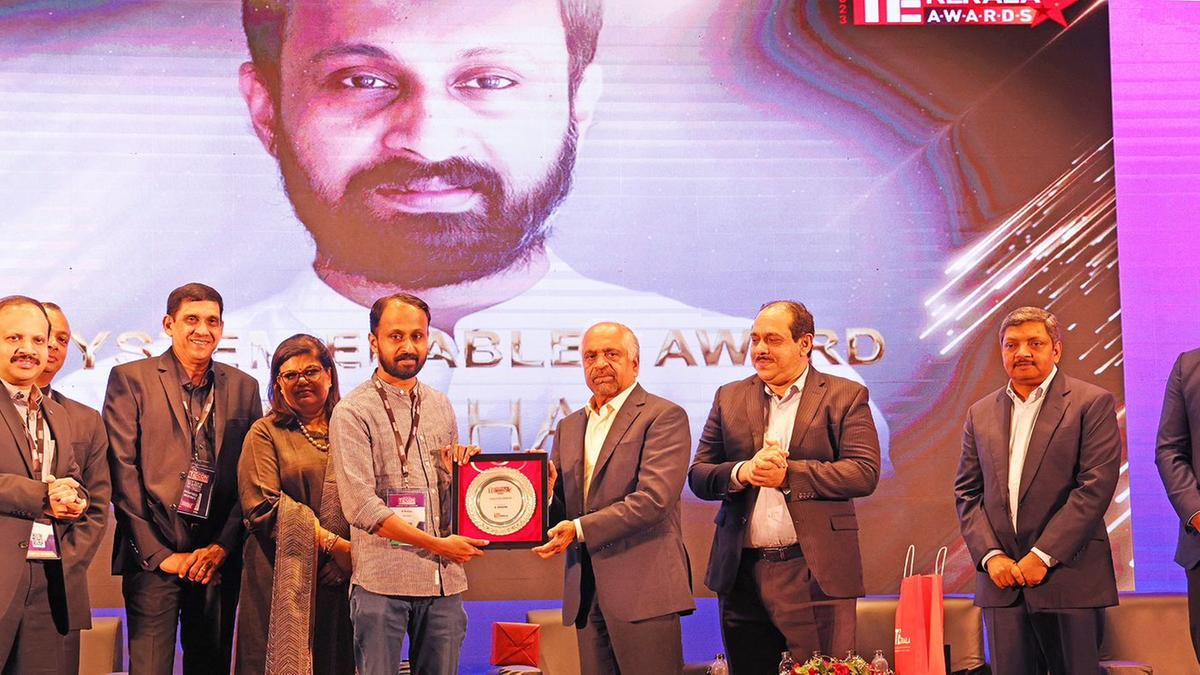
- Mathrubhumi journo R. Roshan wins TiE Kerala Ecosystem Enabler Awardhttps://english.mathrubhumi.com/news/kerala/r-roshan-wins-tie-kerala-ecosystem-enabler-award-1.9160325
Frequently asked questions
How to apply for Startup India funding?
Start by incorporating your business as a Private Limited Company, LLP or registered partnership, then register on the Startup India portal and apply for DPIIT recognition — this is the entry gate for every official scheme. Your entity must be under 10 years old, have annual turnover below ₹100 crore, and be working on an innovative, scalable product or service. Once recognised, you can apply for the Startup India Seed Fund Scheme, approach Fund of Funds-backed investors, or tap state-level schemes. If you are still unclear about how to get Startup India funding at your stage, get your pitch deck, unit economics and traction numbers reviewed before approaching any investor or grant committee.
How do I raise funds for my startup?
Most founders combine routes: bootstrapping or friends-and-family for the early stage, angel investors once there is early traction, and venture capital when the model is repeatable. Government support is a real option too — the Seed Fund Scheme and state startup missions back early-stage founders without heavy dilution. Before approaching anyone, be clear on three things: the problem you solve, how much money you are raising, and what milestone that money will unlock. Investors fund clarity and evidence, not ideas alone.
What is the Startup India Fund?
There is no single "Startup India Fund" that startups apply to directly. Startup India is an umbrella initiative, and funding under it flows through two main channels: the Fund of Funds for Startups, which invests in SEBI-registered Alternative Investment Funds that in turn back startups, and the Startup India Seed Fund Scheme, which supports very early-stage founders. The most accessible route for most founders is the Startup India grant under the Seed Fund Scheme, which funds proof of concept, prototype development, product trials and market entry.
What is the Startup India Fund of Funds 2.0?
Fund of Funds 2.0 is the next phase of the government's Fund of Funds for Startups, announced with a fresh ₹10,000 crore corpus in the 2025 Union Budget. The money is not given out through direct applications; it is deployed via SEBI-registered Alternative Investment Funds, with a stronger push towards deep-tech, AI and other emerging sectors. For a founder, the practical route to this capital is getting funded by an AIF that draws from the corpus — so your pitch, metrics and valuation story need to be at the level those funds expect.
What are the options for government startup funding in India?
Beyond the Startup India umbrella, founders can look at the Seed Fund Scheme for early-stage support, Stand-Up India loans for women and SC/ST entrepreneurs, and schemes like PMEGP and MUDRA for very small businesses. Sector-specific grants exist for biotech, electronics and emerging technologies, and every state startup mission — from Kerala Startup Mission to Startup Karnataka — runs its own grants, incubation and market-access support. The right option depends on your stage: grants and state missions for idea-to-prototype, debt and equity schemes once you have revenue or traction.
What will startup funding in India 2026 look like?
The broad expectation for startup funding in India 2026 is more disciplined capital: investors are rewarding profitability, clean unit economics and clear paths to revenue rather than growth at any cost. Deep-tech, AI, climate and energy, and export-facing SaaS are likely to attract a larger share of cheques, while domestic capital — family offices and IPO exits recycling into the ecosystem — plays a bigger role. Early-stage founders should plan for smaller rounds tied to proof points, raising money for specific milestones rather than long runways.
Where can I find a reliable startup funding list in India?
Business news platforms publish weekly and monthly funding round-ups that list every disclosed round, and the DPIIT-recognized startup directory on the Startup India portal is useful for tracking registered companies. For investor-side lists, look at angel network websites, VC firm portfolio pages, and annual industry reports that map active investors by sector and stage. The smarter move is to filter any startup funding list in India down to investors who already back your sector and stage, and work with a shortlist of 20-30 names instead of cold-emailing hundreds.
How to make a business growth plan?
Keep it to one page and make it numbers-first. Start with an honest audit of your current revenue, margins, customer acquisition cost and repeat business, then set a single clear 12-month target. Pick only two or three growth levers that can actually move that number — new channels, better pricing, stronger retention or geographic expansion — and break them into 90-day milestones with owners and metrics. A growth plan fails when it is a collection of ambitions; it works when every month has a measurable checkpoint.
How to make business growth projections?
Build them bottom-up, not top-down. Instead of claiming a percentage of a large market, start from your own numbers: price per customer, leads generated, conversion rate and how long customers stay. Use the last 12-24 months of actual data as your base, then create three scenarios — conservative, expected and ambitious — with every assumption written out. Tie each projection to a capacity reality like team size, inventory or cash flow, because investors and lenders trust projections they can trace back to assumptions.
What does MSME business mean?
MSME stands for Micro, Small and Medium Enterprises — businesses classified under the MSMED Act based on their investment in plant, machinery or equipment and their annual turnover. MSME business types cover both manufacturing and service enterprises, from single-workshop units to mid-sized companies, and registration happens through Udyam. Formal MSME recognition matters because it unlocks priority-sector lending, subsidies, delayed-payment protection and easier access to government tenders and schemes.
What does MSME business development involve?
It is the work of making a small business scalable: expanding into new markets and channels, improving product quality and margins, adopting digital tools for sales and operations, and building a brand that goes beyond word-of-mouth. It also includes funding readiness — clean accounts, a clear growth story and the right legal structure — because most MSMEs hit a ceiling when everything still depends on the promoter. Strong business development turns a stable business into one that can handle larger orders, bigger clients and outside capital.
How does an MSME move into startup growth mode?
The shift is less about size and more about mindset. Startup growth mode means moving from cash-flow thinking to market-share thinking: standardising the product so it can scale, building a team beyond the promoter or family, adopting technology for repeatable operations, and telling a brand story that attracts customers, talent and investors. Many MSMEs also get DPIIT recognition once they have an innovative edge, which opens the door to startup-specific funding and schemes. The hardest part is usually the first step — documenting processes so growth no longer depends on the owner being everywhere.
What is personal branding and why does it matter for founders?
Personal branding is the deliberate shaping of how the market sees your expertise — your story, your proof of work and your visibility, packaged so that opportunities come to you. For founders and CEOs it compounds quietly: warm inbound leads, easier hiring, faster investor trust and media interest, all before a single sales call. It is built on substance — real results, sharp opinions and consistency — not vanity metrics, and it works best when it reflects how you actually think.
Is it worth hiring a founder personal branding agency?
It depends on your bottleneck. An agency is genuinely useful for consistency — editing, design, distribution and ghostwriting when you have no time — but founder-led personal branding collapses the moment the content stops sounding like you, because audiences and investors can spot a generic voice. The hybrid approach works best: you own the opinions, stories and lessons, while the agency handles production and cadence. Before signing, check whether they have worked with operators in your sector, ask for measurable outcomes like inbound leads, and walk away from anyone promising guaranteed virality.
How do I build CEO personal branding on LinkedIn?
Start with positioning: a headline and About section that clearly say who you are, the sector you operate in, and the specific expertise people should come to you for. Then post two or three times a week on real operator content — decisions you made, numbers you saw, mistakes and what they taught you — because documented experience outperforms motivational quotes. Spend as much time commenting thoughtfully on industry conversations as you do posting, and measure success by inbound DMs, calls and opportunities rather than likes. CEO personal branding on LinkedIn is a compounding asset; the first real returns usually show up after three to six months of consistency.