Testimonials
Services






SAP-EWM-KIT TO ORDER CONFIGURATION AND TESTING

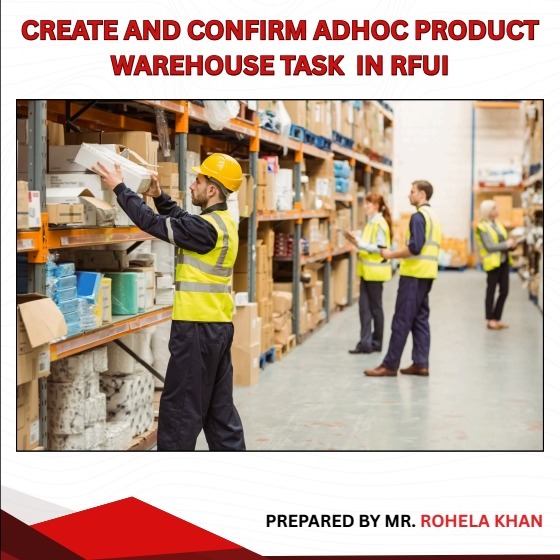
CREATE & CONFIRM ADHOC PRODUCT TASK IN RFUI

SAP-EWM cutover Activities 3 docs
Create Adhoc Product Warehouse Tasks in SAP EWM
EWM Scenario based Real time Interview Q&A- 115+
PPF actions to print warehouse documents.





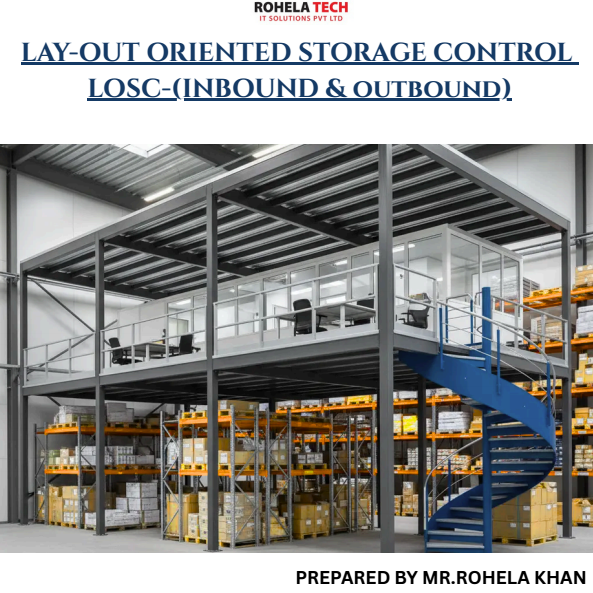
LAY-OUT ORIENTED STORAGE CONTROL LOSC

SAP-EWM MASTERDATA UPLOADS DURING IMPLEMENTATION.
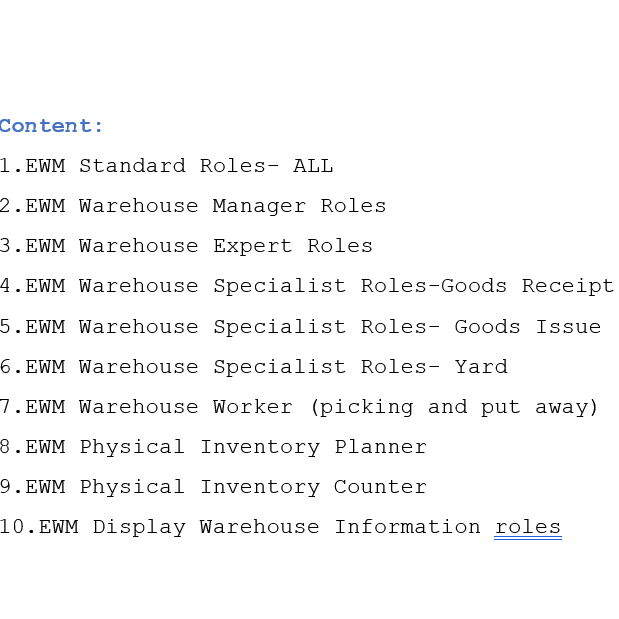
SAP-EWM SUPPORT TICKETS WITH SOLUTIONS.
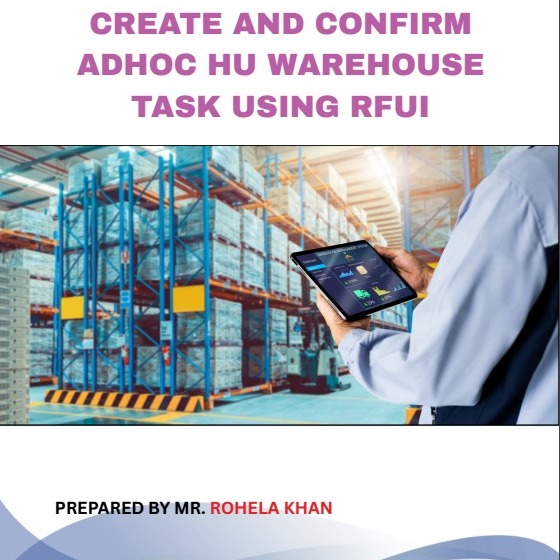
CREATE & CONFIRM ADHOC HU WAREHOUSE TASK IN RFUI
SAP-EWM CONFIGURATION PLAY BOOK
About me
- Rohela Khan Linked IN profilehttps://www.linkedin.com/in/rohela-khan-28775a167

- Rohela is hailed for his expert, easy-to-understand EWM documents, highly recommended for beginners.
 AI-generated based on testimonials
Frequently asked questions
What is the SAP EWM module?
SAP EWM (Extended Warehouse Management) is SAP's advanced warehouse management module, part of the SCM suite and now embedded in SAP S/4HANA. It is the successor to the older SAP WM module and is built for large or complex warehouses, offering deeper functionality such as process-oriented storage control, wave management, RF-based execution, value-added services, and yard management.
What is SAP EWM used for?
SAP EWM is used to manage end-to-end warehouse operations — goods receipt, putaway, picking, packing, staging, and shipping — along with physical inventory, batch and serial number management, kitting, labelling, replenishment, and cross-docking. It is widely used in e-commerce, retail, pharma, FMCG, automotive, and 3PL logistics where high volumes and complex processes demand more than basic stock storage.
What is the SAP EWM full form?
The SAP EWM full form is Extended Warehouse Management. SAP itself stands for Systems, Applications and Products in Data Processing, and EWM is the module within it that handles advanced, warehouse-specific processes beyond what inventory management or the older WM module can handle.
What is a SAP EWM consultant?
A SAP EWM consultant is a functional specialist who designs, configures, and supports warehouse solutions on SAP EWM. The role involves understanding a client's warehouse operations, setting up the warehouse structure and master data, configuring inbound and outbound processes, testing scenarios, and supporting go-live and production issues. Strong consultants also understand integrations with MM, SD, TM, and RF/device usage on the warehouse floor.
How is SAP EWM as a career?
SAP EWM is a strong niche career choice because far fewer consultants know it well compared to core SAP modules, so skilled EWM professionals face less competition. Demand is growing as companies move to S/4HANA, where classic WM is phased out, and as e-commerce and 3PL operations expand. A typical path moves from support or junior consultant to lead and then solution architect, and pairing EWM with TM or Yard Logistics makes the profile even stronger.
How to learn SAP EWM as a beginner?
Start by understanding basic warehouse processes (inbound, outbound, storage, inventory), then get hands-on access to an EWM system to practice configuration yourself. Follow the SAP Help documentation, work through step-by-step configuration guides with screenshots, and practise the full flow — warehouse structure, master data, inbound delivery, putaway, picking, and packing. With consistent daily practice, most beginners reach job-ready level in three to six months.
What are the basic SAP EWM configuration steps in a new implementation?
A typical configuration sequence is: define the warehouse number and assign it to plant and storage location, create storage types, sections, and bins, set up warehouse products and packaging specifications, configure inbound and outbound document types and item types, and define putaway and picking strategies. After the core setup, consultants configure storage control (POSC/LOSC), the RF framework, wave management, slotting, and physical inventory, along with bulk master data uploads during implementation.
Where can I find a reliable SAP EWM configuration guide PDF?
Good sources include the official SAP Help Portal, SAP Community blogs, and configuration documents prepared by experienced EWM consultants. Before using any guide, check whether it gives step-by-step IMG paths, screenshots, transaction codes, and real business scenarios with testing steps — not just theory. Interview-focused or implementation-style config documents that walk through complete scenarios end to end are usually the most useful for learning and on-the-job reference.
What are the most commonly asked SAP EWM interview questions and answers?
Most SAP EWM interviews cover the difference between IM and EWM, warehouse structure, storage type search, putaway and picking strategies, POSC and LOSC, PPF, the RF framework, wave management, batch and serial number management, physical inventory, value-added services, packaging specifications, and integration with MM, SD, and TM. Preparing scenario-based answers — not just definitions — is what separates selected candidates from the rest.
Are SAP EWM interview questions for freshers different from those for experienced candidates?
Yes. SAP EWM interview questions for freshers usually focus on fundamentals — warehouse structure, master data, basic inbound and outbound flow, and differences between EWM, IM, and WM. For experienced candidates, the questions shift to scenario-based configuration, integration design, production support issues, and real project decisions, so your preparation should match your experience level.
What is the SAP EWM consultant salary in India?
The SAP EWM consultant salary in India varies with experience, city, and company type. Freshers and consultants with one to two years of experience typically earn in the lower bracket (roughly ₹3.5–6 LPA), mid-level consultants with three to five years of implementation experience earn noticeably more, and senior consultants or architects with eight-plus years command premium packages. Hands-on configuration skills and S/4HANA exposure push you toward the higher end of the range.
Is SAP EWM certification worth doing?
SAP EWM certification is useful for freshers because it helps a resume get shortlisted and adds structure to your learning, but it is not mandatory — especially for experienced roles, where interviewers test practical configuration and project knowledge. The best approach is to treat certification as a supplement to hands-on system practice, not a replacement for it.
How much are SAP EWM course fees in India?
SAP EWM course fees in India vary widely by institute, city, and mode of training. Local classroom or online institutes commonly charge somewhere between ₹15,000 and ₹50,000, while official SAP learning subscriptions plus the certification exam can cost significantly more. Self-paced learning using configuration documents and system access is usually the most budget-friendly route for motivated learners.
What kind of SAP EWM jobs are available in India?
Most SAP EWM jobs are functional consultant roles, along with techno-functional positions, production support/AMS roles, and solution architect openings for senior profiles. Hiring spans e-commerce, retail, pharma, FMCG, automotive, and third-party logistics companies. There is a steady flow of SAP EWM jobs in Pune, Bengaluru, Hyderabad, Chennai, and Mumbai, along with an increasing number of remote openings.
Are SAP EWM classes in Pune worth joining, or can I learn SAP EWM online instead?
SAP EWM classes in Pune can help if you need a fixed schedule, face-to-face doubt clearing, or placement assistance, since Pune has many SAP training institutes. However, online learning with a practice system, step-by-step configuration guides, and mentor support can be just as effective, usually cheaper, and easier to fit around a job. Choose classroom training only if you specifically need that structure — otherwise guided self-learning works well for EWM.