Testimonials
Services
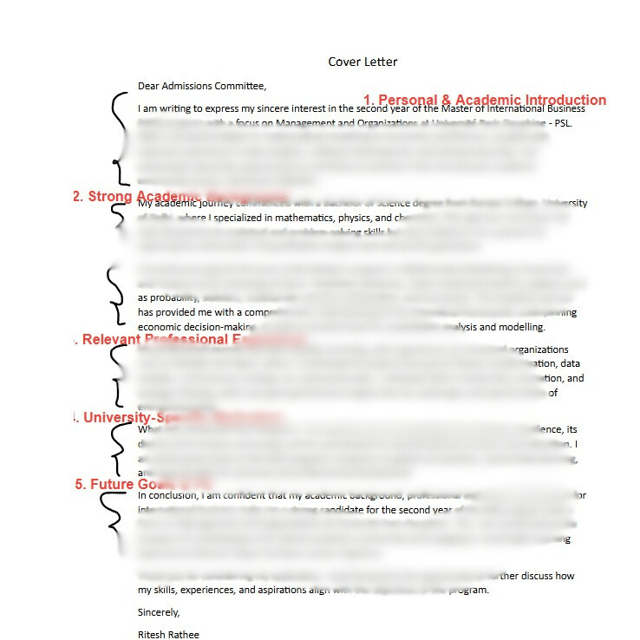
SOPs for PSL & Panthéon Sorbonne (Accepted)
MY CV & SOP

Apprenticeship and Job Strategy Session
My CV which helped me get in Top Universities

SOP / Motivation Letter Review

Study in France: 1:1 Consultation Call
About me


- Ritesh Rathee is generous, friendly, and highly informative about French universities, earning high praise from bookers.
 AI-generated based on testimonials
Frequently asked questions
How to study in France from India?
Start by shortlisting programs and universities — public universities, business schools, or grandes écoles — around 10–12 months before your intake. Study in France for Indian students usually runs through the Campus France "Études en France" portal, where you submit transcripts, an SOP, a CV, and recommendation letters before your application is processed. Once you receive an offer, you arrange finances, apply for the long-stay student visa, and plan accommodation for the September intake. Starting early matters because language tests, SOP drafts, and visa appointments each take weeks to complete.
What is best to study in France?
France is strongest in finance, economics, luxury and brand management, data science and analytics, aerospace, and hospitality, and its public universities are especially respected for economics, applied mathematics, and business programs. The "best" course depends on your academic background and career goal — choose a field where you can show prior coursework or work experience, and check whether that industry recruits through alternance, because work-study hiring dramatically improves your chances of landing a job in France. Finance, consulting, data, and tech roles in Paris recruit large numbers of apprentices and interns every year.
Can I study in France without IELTS?
Yes. Many French universities accept alternatives such as a medium-of-instruction certificate from your previous institution, Duolingo or TOEFL scores, or an interview-based assessment, and the French student visa itself does not mandate IELTS. That said, every university sets its own English requirement, so check the specific program page before applying. If you choose a French-taught program, you will instead need proof of French proficiency such as DELF, DALF, or TCF.
Can I study in France in English?
Yes, particularly at the master's level. Business schools, engineering schools, and a growing number of French public universities with English programs let international students complete an entire degree in English, while most bachelor's programs are still taught in French. Learning basic French is still strongly recommended — it makes daily life easier and is often essential for internships, part-time jobs, and alternance positions.
How to study in France for free?
You can rarely study entirely for free, but you can get very close. Public universities charge only a few hundred euros per year in tuition, many of them waive the higher non-EU fee, and merit scholarships can cover tuition or living costs. The biggest lever is alternance — a work-study contract where a company pays your tuition and a monthly salary while you study. International students can also work part-time up to 20 hours a week during the semester to offset living expenses.
Are there scholarships to study in France for Indian students?
Yes. Options include the Eiffel Excellence Scholarship (nominated through the university), Charpak scholarships offered by the French Embassy in India, regional and university-specific fee waivers, and program-specific funding. Since scholarships to study in France are competitive, apply to several in parallel and treat low public tuition as your baseline backup. Alternance is another route — technically not a scholarship, but your employer covers tuition and pays you a salary.
Are study in France consultants worth it?
You don't strictly need one — the Campus France process is transparent and can be done on your own. Where paid help adds real value is shortlisting realistic universities, getting a second opinion on your SOP and CV, and understanding the alternance and job market, which general overseas-education agencies often don't know in depth. If you take help, prefer someone who has actually studied or worked in France, and be cautious of anyone promising guaranteed admissions.
When should I start applying to study in France in 2026?
Work backwards from the September 2026 intake. Applications for public universities generally open around October–November 2025, with most deadlines falling between December 2025 and March 2026, while business schools often accept applications earlier or on a rolling basis. Plan to finalize your SOP, CV, and recommendation letters by late 2025 and finish any language test before your first deadline. If you want an alternance seat, start contacting companies even earlier because securing the contract takes its own cycle.
What is work-study in France?
Work-study in France is known as "alternance" — a formal arrangement where you split your time between classes and a paid job at a company. Under an alternance program in France, the employer pays your tuition fees and a monthly salary on top of it, usually through a contrat d'apprentissage or contrat de professionnalisation, so you graduate with a degree, work experience, and no education debt. International students on a student visa are eligible, and it is common in business, engineering, finance, data, and management programs.
Can I find an alternance program in English in France?
It's possible but difficult. Most alternance positions expect you to work in French alongside local colleagues, so the majority of contracts go to students with conversational French. A limited number of business schools and grandes écoles offer English-taught tracks with apprenticeship options, mainly around Paris, but competition is intense. Your realistic path is to start an English-taught program while improving your French to at least B1, which multiplies the number of alternance offers you can target.
How do I find an alternance program in Paris?
First enroll in a program whose schedule supports alternance, such as a master's running on a three-weeks-work, one-week-class rhythm. Then treat the job hunt as its own project: search LinkedIn, Indeed France, HelloWork, and Welcome to the Jungle, use your school's company partnerships, and apply 4–6 months before the contract start date with a French-style one-page CV. Large employers in banking, insurance, consulting, tech, and luxury recruit apprentices in the Paris region every year.
Can I do an alternance program for a master's in France?
Yes — a large share of two-year master's and MSc programs offer an apprenticeship track, typically starting in the second year, though some begin from the first. You secure admission first and then sign a contract with a company, which pays your tuition and a monthly salary for the duration. It is one of the most popular ways to fund a master's in France, especially in finance, data, marketing, supply chain, and engineering.
Which are the best French public universities for international students?
Frequently shortlisted options include Université Paris 1 Panthéon-Sorbonne, Université Paris Dauphine-PSL, Sorbonne Université, Université Paris-Saclay, Université Paris Cité, and Université Grenoble Alpes. French public universities for international students are attractive mainly because of low tuition, strong academics, and nationally recognized degrees, but admissions are merit-based and many programs — especially at the bachelor's level — are taught in French. Always check the language of instruction and whether the program accepts applications through Campus France or directly.
What are the top French public universities in Paris?
Within Paris, the leading public institutions include Université Paris 1 Panthéon-Sorbonne, Sorbonne Université, Université Paris Cité, and Université Paris Dauphine-PSL, which is part of the PSL group ranked among the top universities globally. Studying at French public universities in Paris gives you access to a large internship and alternance market, though rent in the city is higher than in other French cities. Each university handles admissions and English-taught options differently, so shortlist by program rather than by name alone.
What are the fees at French public universities for international students?
Domestic-rate tuition is roughly €175 a year for a bachelor's and €250 a year for a master's. Non-EU students are officially charged differentiated fees — about €2,770 per year for a bachelor's and €3,770 for a master's — but many universities waive these fully or partially, and students routinely complete full master's degrees at French public universities for under €1,000 per year in total tuition. Fee policies vary by institution, so always confirm with the specific university before applying.