Testimonials
Services
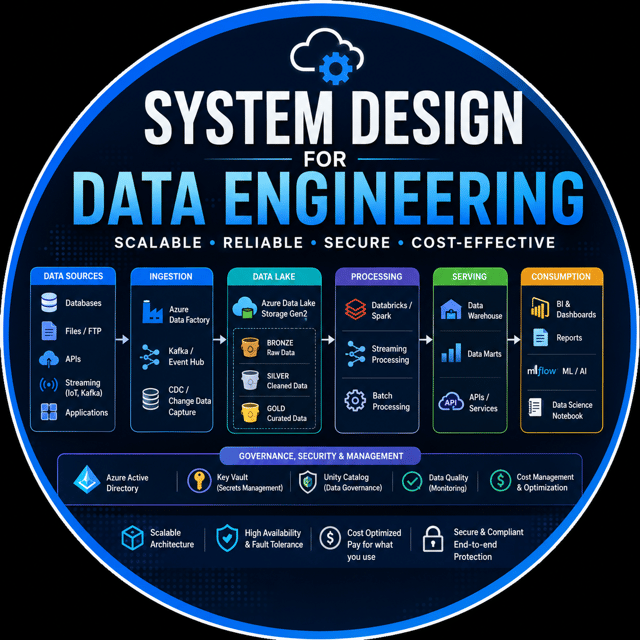
Data Engineering System Design
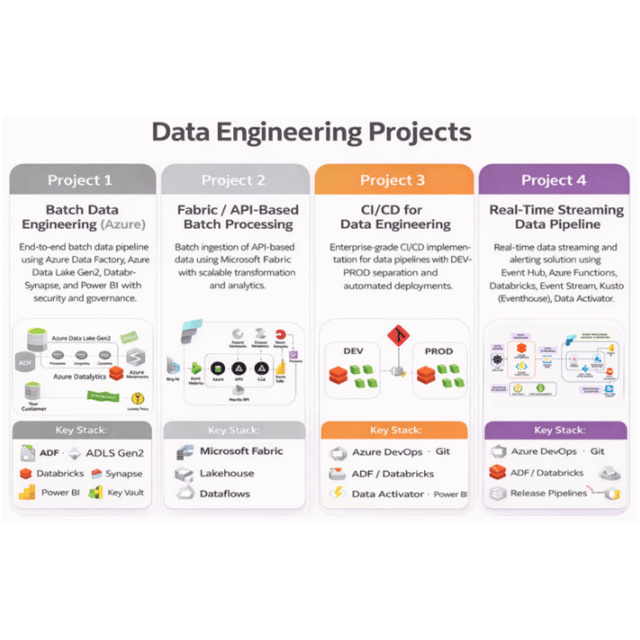
End-to-End Azure Data Engineering Industry Project

Cloud Data Engineering Materials and Resources!
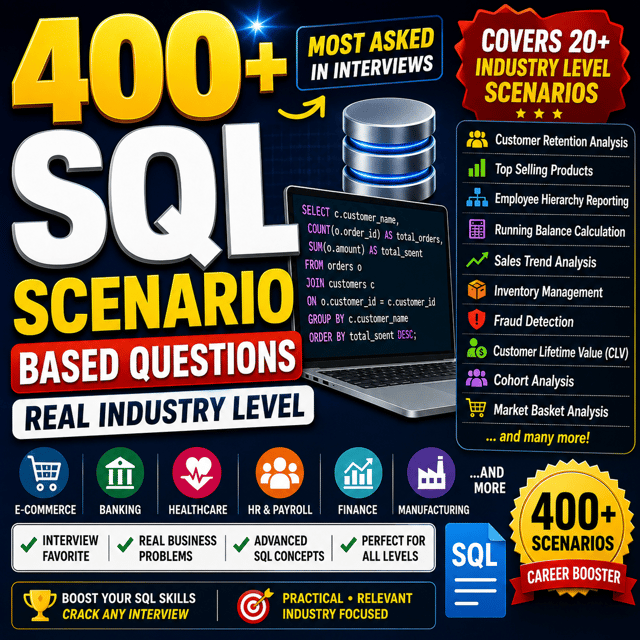
SQL Scenario Based Industry Level Real Time...
ATS Resume for Data Engineer
Building Portfolio Website & GitHub Page!
About me
- Login • Instagramhttps://www.instagram.com/rg_data_talks/

- WhatsApp Channel!https://lnkd.in/gV_Bf3fT

Frequently asked questions
How to become an Azure Data Engineer?
Build skills in this order: SQL and Python first, then Azure fundamentals, then the core data services — Azure Data Factory for pipelines, Databricks and PySpark for transformations, Synapse for warehousing, and Power BI for reporting. Learn by building two or three end-to-end pipeline projects, publish them on GitHub, add a relevant certification, and then start applying to entry-level data engineering roles. Practical, project-based learning consistently beats only watching tutorials.
How long does it take to learn Azure Data Engineering?
Most people need around 6–9 months of consistent effort (1–2 hours a day) to become job-ready starting from SQL and Python, and about 3–4 months if they already work with data in some form. A practical Azure Data Engineering roadmap runs: SQL → Python → Azure basics → Data Factory → Databricks and PySpark → Synapse → Power BI → projects and certification. If you are figuring out how to learn Azure Data Engineering alongside a full-time job, stick to one structured roadmap instead of jumping between random tutorials.
How do I get an Azure Data Engineering certification?
Pick the current Microsoft data engineer exam, prepare through Microsoft Learn's free learning paths, get hands-on practice in an Azure free account or sandbox, and take practice tests before booking the exam. Microsoft replaces exams over time — DP-203 was retired and replaced by DP-700, the Fabric Data Engineer Associate exam — so confirm the current exam on Microsoft Learn before you begin preparing. Hands-on labs matter far more than memorizing dumps.
What does the Azure Data Engineer role involve?
An Azure Data Engineer designs, builds, and maintains data pipelines: ingesting data with Data Factory, transforming it with PySpark, Databricks, and SQL, loading it into Synapse or Azure Data Lake, orchestrating and scheduling jobs, and monitoring performance and cost. The role also involves working closely with analysts and data scientists who consume the data. Interviews for this role mostly test SQL, Python, Spark, and pipeline design scenarios.
Which end-to-end Azure Data Engineering projects should I build?
Build projects that mirror real industry work: ingest sales, finance, or HR data from files or APIs into Azure Data Lake Storage using Data Factory, clean and transform it with Databricks and PySpark using a medallion (bronze/silver/gold) structure, load it into Synapse or a SQL database, and visualize it in a Power BI report. Repeat the pattern with a variation such as incremental loads, document your architecture decisions, and host the code on GitHub. Recruiters value well-explained end-to-end Azure Data Engineering projects over many disconnected mini-exercises.
How do I prepare for Azure Data Engineering interview questions?
Cover five areas: advanced SQL, Python, Spark and PySpark internals, Azure services (ADF, Databricks, Synapse, ADLS), and scenario or system-design questions like "design a pipeline for daily sales data." Practice explaining your projects end-to-end, because interviewers dig deep into whatever is on your resume. Writing out answers to common Azure Data Engineering interview questions and doing a few mock interviews beforehand makes a noticeable difference.
How do I choose the right Azure Data Engineering course?
Judge any Azure Data Engineering course on four things: whether the syllabus is updated for current Azure services, whether it includes hands-on labs and real projects instead of just slides, whether it covers interview-focused topics like SQL and PySpark scenarios, and whether you get doubt-solving or mentorship support. You should finish the course with portfolio-ready projects, not only a completion certificate.
How do I get an Azure Data Engineering job as a fresher?
Entry-level Azure Data Engineering jobs in India usually expect strong SQL, working knowledge of Python, familiarity with Data Factory and Databricks, and at least one or two projects you can defend in depth. Since fresher data engineering openings are fewer than analyst openings, also apply to data analyst, ETL, and BI roles to get a foot in the door, keep a visible GitHub and LinkedIn presence, and seek referrals — a solid project plus a referral converts far better than mass applications.
How do I build my first Power BI dashboard?
Download Power BI Desktop (it is free), connect a dataset such as sales or finance data from Excel or CSV, clean it in Power Query, create a proper data model with relationships, and write a few basic DAX measures like total sales and year-over-year growth. Then pick four to six meaningful visuals, keep the layout clean, and publish it to the Power BI service. Rebuilding the same Power BI dashboard with different datasets is what makes the skill interview-ready.
How do I prepare for Power BI interview questions?
Focus on DAX (especially CALCULATE and filter context), Power Query and M transformations, data modeling with star schemas, refresh schedules, row-level security, and dashboard design decisions. Expect a practical round where you explain how you would build a report from raw data, so keep two or three dashboards in your portfolio. Reviewing recent Power BI interview questions helps you spot the repeated patterns quickly.
What is Power BI used for?
Power BI is Microsoft's business intelligence tool used to connect to data sources such as Excel, SQL databases, and cloud services, model that data, and build interactive dashboards and reports for decision-making. It is widely used by analytics, finance, and operations teams, and it pairs naturally with Azure-based data engineering work — which is why data engineers are also expected to know it.
What is the difference between Power BI and Tableau, and which should I learn?
Both are BI and visualization tools. Power BI is more affordable, integrates tightly with Excel and Azure, and dominates in organizations already on the Microsoft stack, while Tableau is known for advanced visual exploration and is common in larger enterprises. If you are building a data career in India — especially alongside Azure or SQL skills — Power BI generally offers more entry-level opportunities, and the core concepts transfer easily to Tableau later.
How to prepare for SQL interview questions?
Master the topics that appear in nearly every interview: JOINs, GROUP BY with HAVING, subqueries, CTEs, and window functions like ROW_NUMBER and RANK. Practice writing queries daily on real datasets rather than just reading solutions, and learn to explain your approach out loud, since interviewers evaluate your reasoning. Solving scenario-based problems such as finding duplicates, the second-highest salary, and running totals is the most effective preparation.
What are the most common SQL interview questions for freshers?
Freshers are usually asked the differences between WHERE and HAVING, types of JOINs, DELETE vs TRUNCATE vs DROP, primary key vs foreign key, normalization basics, and classic query tasks like finding the second-highest salary or removing duplicates. Theory questions typically come first, followed by one or two live query-writing rounds. Practicing SQL interview questions for freshers from recent hiring drives gives you a clear picture of the difficulty level to expect.
How do I write a data engineer resume that passes ATS screening?
Keep the format simple with standard section headings, avoid heavy tables and graphics that break ATS parsers, and mirror the exact tools from the job description — SQL, Python, Azure Data Factory, Databricks, PySpark, Synapse, and Power BI. Quantify your project impact in terms of data volumes handled, runtimes reduced, or costs saved instead of listing only responsibilities, and tailor the resume for every application. A clean, keyword-aligned data engineer resume gets you through the ATS filter and makes recruiters stop scrolling.