Testimonials
Services
I Got Hired as a AI PM with 11 Prompts + tracker
AI Job Hunt Automation

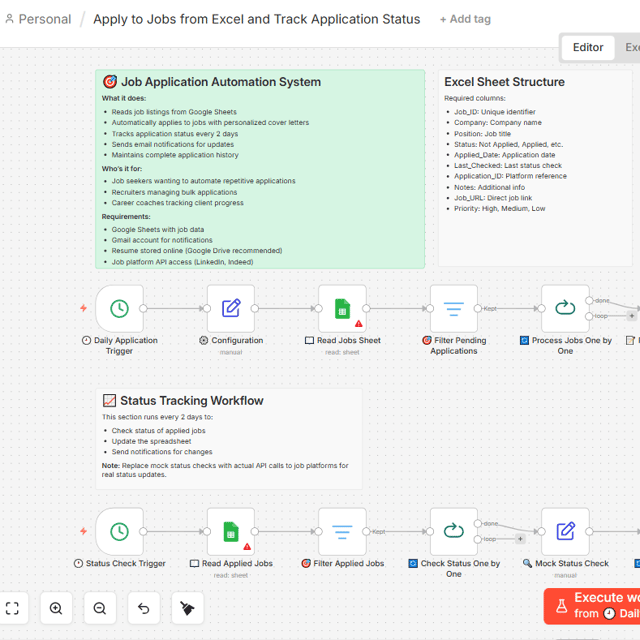
AI Job Application Automation System
The LinkedIn AI Growth System
About me
Frequently asked questions
How to ATS optimize a resume?
Start by mirroring the exact keywords from the job description in your skills and experience sections, since most applicant tracking systems rank resumes on keyword match. Use a clean single-column layout, standard section headings (Summary, Skills, Experience, Education), no tables, graphics, or text boxes, and submit in .docx or a simple PDF unless the posting says otherwise. Quantify achievements with numbers, spell out acronyms at least once, and test your resume through an ATS checker before every application. Tailoring for each role takes only 10–15 minutes and noticeably improves callback rates.
What is the best resume format to pass ATS?
The reverse-chronological format is the most reliable resume format to pass ATS screening — recruiters expect it and parsers read it most accurately. Keep it to one page (two if you have 5+ years of experience), use a single column, standard fonts like Calibri or Arial, bullet points that start with action verbs, and consistent date formats. Avoid designer templates with icons, skill-rating bars, and information in headers or footers, because these often break when the ATS parses your file and your details get read incorrectly or skipped.
Is there a free ATS resume optimization tool that actually works?
Yes — a free ATS resume optimization tool typically scores your resume against a pasted job description and flags missing keywords, formatting risks, and file-type issues, which makes it genuinely useful for a first pass. What it cannot do is the thinking for you: read the job description yourself, rewrite your bullet points to match the role, and preview your resume in plain text to see exactly how an ATS will read it. Also, start from an ATS-tested template rather than a heavily designed one, because fixing a bad layout later costs more time than the tool saves.
What is the best product manager roadmap for freshers?
A practical roadmap to become a product manager as a fresher looks like this: learn product fundamentals (discovery, prioritization, and metrics like retention and activation), study how popular apps make product decisions, build 2–3 case studies or side projects, get comfortable with SQL and basic analytics, and then target APM, Associate PM, or product analyst roles — Indian startups, fintech, and SaaS companies hire freshers far more readily than large MNCs. Referrals and a visible LinkedIn presence speed things up considerably at this stage.
What is the product manager roadmap after 12th?
There is no direct entry into product management right after 12th, so the roadmap starts with your bachelor's degree — B.Tech, BCA, BBA, or any stream with strong problem-solving. From the second year onward, focus on internships (even analytics, marketing, or operations roles count), build small products or no-code projects, join product clubs and case competitions, and learn tools like Figma, SQL, and basic analytics. In your final year, aim for APM programs, product internships at startups, and associate PM roles — that is the standard entry point in India.
What is a product management roadmap?
A product management roadmap is a strategic document that communicates where a product is headed, why, and in what order — including priorities, timelines, and the reasoning behind them. It aligns engineering, design, marketing, and leadership around one direction, and it is a living document that shifts as priorities change. Note that a "product roadmap" (the plan for a product) is different from a "product manager roadmap" (the career path to become a PM) — searchers often mix the two up, and the resources for each are completely different.
What is included in a product roadmap?
A typical product roadmap includes goals and objectives, key initiatives or themes, planned features and improvements, a timeline (often expressed as now/next/later rather than hard dates), dependencies, success metrics, and the status or confidence level of each item. Strong roadmaps also state what the team is deliberately not doing, which prevents scope creep. The structure depends on the audience — leadership wants outcomes and timelines, while engineering wants scope and dependencies.
Is a product manager in demand in India?
Yes — product manager roles continue to be in demand in India, driven by SaaS, fintech, e-commerce, and the wave of AI-first products being built by startups and global capability centers alike. Entry-level openings are competitive because so many people want to break in, but PMs who pair product sense with data skills like SQL and hands-on AI tooling command strong salaries and faster growth. The role is evolving rather than shrinking, and PMs who use AI to ship faster are becoming the new baseline.
Where can I find a product manager roadmap PDF or a product manager roadmap on GitHub?
Both are easy to find free: you will find a detailed product manager roadmap on GitHub in several open-source repositories covering skills, tools, and interview prep step by step, and a product manager roadmap PDF is easy to download from product career blogs and communities. Use them for orientation, but remember that a generic roadmap cannot account for your starting point — a fresher, a developer switching to PM, and a business analyst all need different sequences — so treat it as a checklist and adapt the order to your own background. A 1:1 session with a product mentor is the faster route to a personalized version.
How to use AI for job search?
Use AI at every stage: tailor your resume to each job description, generate keyword-matched cover letters in seconds, set up auto-fill and auto-apply systems for high-volume applications, draft LinkedIn outreach messages, and run mock interviews with an AI interviewer for HR, role-specific, and case questions. The biggest mistake is mass-applying with unedited AI output, which recruiters spot instantly. Treat AI as an accelerator for preparation and personalization, and keep the final quality check manual.
What is the best AI job search tool?
There is no single best AI job search tool — the right pick depends on where you are stuck. Resume and keyword optimizers help if you are not getting callbacks, auto-apply and job-matching platforms help if applications take too long, and AI interview-prep tools help if you keep stalling at the interview stage. Judge any tool on four things: whether its output stays ATS-friendly, how much personalization you control, whether it works with the portals you actually use like LinkedIn, Naukri, and company career pages, and how it handles your data.
Is AI job search in India actually effective?
Yes — AI job search in India is effective because hiring here is high-volume and heavily ATS-filtered, which is exactly what AI handles well: matching keywords, tailoring resumes per posting, and tracking dozens of applications across LinkedIn, Naukri, and company portals. Where AI alone falls short is conversion after the shortlist, because referrals and human networking still close roles in India faster than cold applications. The winning combination is AI for volume and precision, plus genuine outreach to land the interview.
What is an AI job search agent, and can it apply to jobs for you?
An AI job search agent is an automated system that scans job boards, matches listings to your profile, fills in application forms, and in some setups submits applications on your behalf — many also auto-tailor your resume for each role. It can realistically save hours every day during a mass application push, but fully automated "set and forget" applying usually produces generic submissions that convert poorly. The best results come from letting the agent handle matching, auto-fill, and tracking while you personally review and customize the applications that matter most.