Testimonials
Services
FREE Mentorship For My Digital Product Customers
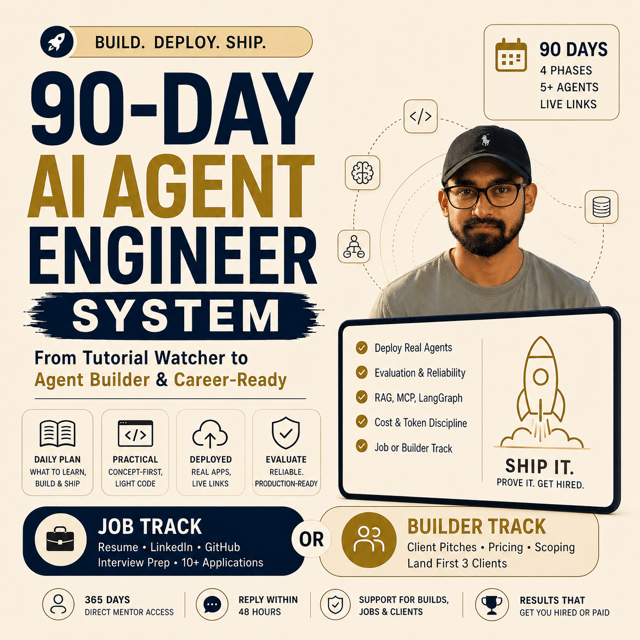
Data Science & Analytics Guidance
Mathematics & Statistics Infographics
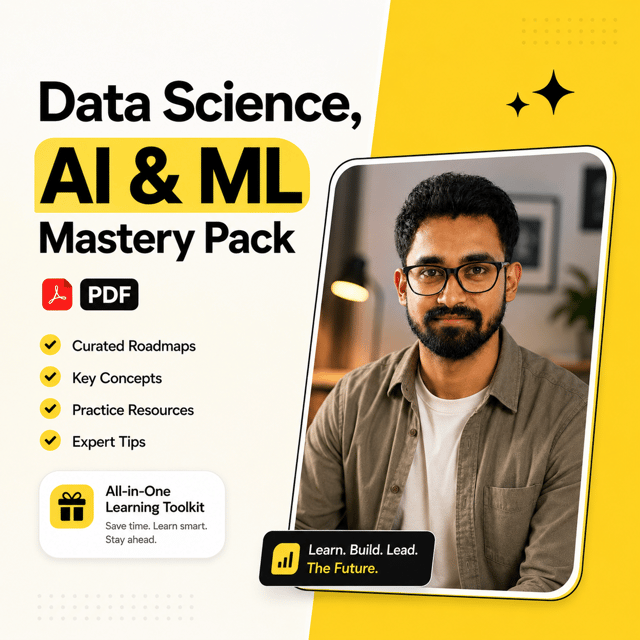
Data Science, AI & ML Mastery Pack
About me
- How To Prepare For Machine Learning Jobshttps://open.substack.com/pub/growtechie/p/how-to-prepare-for-machine-learning?r=4r4gz9&utm_campaign=post-expanded-share&utm_medium=post%20viewer

Frequently asked questions
How to crack a data science interview?
To crack a data science interview, build strong fundamentals in statistics, Python, SQL, and machine learning, then back them with 2–3 end-to-end projects you can explain confidently. Practise case studies out loud, revise SQL queries daily, and do a few mock interviews so you stay calm and structured under pressure.
What are the most common data science interview questions for freshers?
Data science interview questions for freshers usually cover probability and statistics, Python and pandas, SQL joins and aggregations, basic machine learning algorithms, and deep-dives into projects on your resume. Scenario questions like handling missing data or imbalanced datasets are also very common.
How should I plan my data science interview preparation?
Start your data science interview preparation with a 6–8 week plan: first fundamentals (SQL, Python, statistics), then machine learning theory, then past interview questions and case studies, and finally mock interviews. Tracking weak areas in a sheet and revising them weekly keeps the process structured instead of overwhelming.
Are data science interview books enough to prepare?
Data science interview books are excellent for theory and understanding question patterns, but on their own they are rarely enough. Pair them with hands-on SQL and Python practice, real projects, and mock interviews, because interviews test how you think and communicate, not just what you have read.
How to answer data analyst interview questions?
The best way to answer data analyst interview questions is to structure every response: clarify the question, state your approach, walk through your SQL or analysis logic, and end with the business impact. Use the STAR method for behavioural questions and quantify results wherever possible, such as "reduced reporting time by 30%".
Where can I find data analyst interview questions and answers for freshers?
Data analyst interview questions and answers for freshers are available in curated question banks, mentor-created PDFs, and interview prep communities. Instead of reading passively, pick 20–30 frequently asked questions, write your own answers, and practise them aloud — that is what actually sticks in the interview room.
Is preparing from a data analyst interview questions and answers pdf enough?
A data analyst interview questions and answers pdf is a good starting point because it shows you what gets asked, but memorising one often backfires. Use it as a topic checklist, then practise writing SQL queries live and explaining your reasoning, since interviewers judge your thinking process more than recited answers.
Which data analyst interview questions for 3 years of experience should I expect?
Data analyst interview questions for 3 years of experience go deeper than fresher level: expect complex SQL like window functions and query optimisation, A/B testing and metric design, dashboarding and data modelling, and ownership-style scenarios where you explain how your analysis influenced a real business decision.
How to start a data science career?
To start a data science career, begin with Python, SQL, and statistics, then learn machine learning and build 2–3 portfolio projects on real datasets. Apply for entry-level roles such as data analyst or junior data scientist, share your work on LinkedIn and GitHub, and take guidance from mentors already working in the field to shorten the learning curve.
How to start a data analytics career?
Starting a data analytics career needs fewer prerequisites than most people think: get comfortable with Excel, learn SQL thoroughly, pick one visualisation tool like Power BI or Tableau, and understand basic statistics. Build 2–3 dashboards on publicly available data and target entry roles such as data analyst or BI analyst to get your first break.
What is the right data science career roadmap for beginners?
A practical data science career roadmap looks like this: months 1–2 for Python, SQL, and statistics, months 3–4 for machine learning and exploratory projects, months 5–6 for advanced projects, case studies, and interview preparation, with networking and applications running throughout. Adjust the pace to your background, but learn in the order SQL → Python → ML → specialisation.
What are the best data science career options in India?
Popular data science career options in India include data analyst, data scientist, machine learning engineer, data engineer, AI engineer, and business analyst roles across IT services, fintech, e-commerce, and healthcare. Freshers usually enter through data analyst or business analyst positions and then specialise into ML or AI engineering with experience.
What salary can I expect from a data science career in India?
The data science career salary in India typically starts around ₹4–8 LPA for freshers, moves to ₹10–20 LPA within 3–5 years for strong performers, and can cross ₹25–40 LPA for senior or specialised ML and AI roles. Actual numbers vary by city, company, and negotiation, so your skills and portfolio matter most.
Are there good data science careers for freshers in India?
Yes, data science careers for freshers are widely available in India, especially in analytics-heavy sectors like IT services, banking, e-commerce, and fintech. Entry is easiest through data analyst, business analyst, and junior data scientist roles, and candidates with strong SQL, a solid project portfolio, and mock interview practice stand out immediately.
What does a data science career in the future look like with AI advancing so fast?
A data science career in the future will look different, not smaller — routine tasks like writing basic queries are getting automated, but demand is growing for professionals who can frame business problems, validate AI outputs, and build AI-powered solutions such as agents and LLM applications. Upskilling toward AI engineering alongside core data skills is the safest long-term bet.