Testimonials
Services
Doubt clearance (upto 3 questions)
Portfolio website masterclass
Resume Crafting Masterclass

Research Paper Writing Masterclass
Videsh University Shortlisting
SciML Bootcamp: Student Plan
Videsh Letter of Recommendation (LOR) crafting
Career pathway guidance
SOP writing Masterclass
Videsh Resume Review
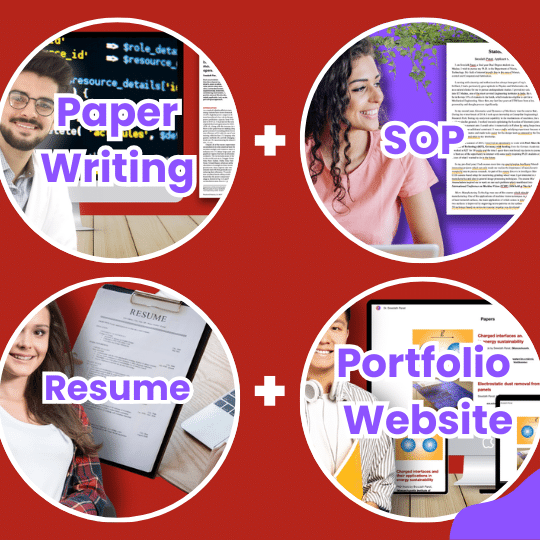
Grad school masterclass bundle
Videsh SOP Review
Frequently asked questions
How to study abroad after 12th from India?
Start by choosing your country and course, since entry requirements differ. Most universities ask for class 9–12 transcripts, English proficiency scores like IELTS or TOEFL, and sometimes SAT results. You will also need a complete application with a statement of purpose, letters of recommendation, proof of funds, and finally a student visa. Begin preparing 12–18 months before your intake so you have enough time for tests, applications, and scholarship deadlines.
How to study abroad for free?
Studying abroad for free usually means winning full funding rather than finding tuition-free universities alone. Countries like Germany charge little or no tuition at public universities, while the US, UK, and Canada offer merit scholarships, need-based aid, and — at the graduate level — research or teaching assistantships that cover tuition plus a living stipend. Apply early, write strong scholarship essays, and treat funding deadlines as seriously as admission deadlines.
Which study abroad scholarships for Indian students are worth applying for?
Focus on three categories: government and externally funded awards such as Fulbright-Nehru, Chevening, and Commonwealth scholarships; university-specific merit and need-based scholarships, for which you are often considered automatically when you apply; and departmental funding like research or teaching assistantships for master's and PhD students. Before investing time, check the eligibility criteria, the deadline, and whether the award covers tuition only or tuition plus living costs.
Do I need study abroad consultants to apply to universities abroad?
No — thousands of Indian students apply successfully on their own every year. What matters most is accurate university shortlisting, a well-written SOP and LORs, and disciplined deadline management. Study abroad consultants can add structure and accountability, but always verify their credentials and track record. Many students now prefer online mentors and application review services over visiting a local office.
How to start grad school applications?
Start about a year before your intended intake. Shortlist 8–12 programs, note every deadline in one tracker, and book your GRE, TOEFL, or IELTS dates early. Then tackle the materials: request transcripts, update your resume, ask two or three professors or supervisors for letters of recommendation well in advance, and draft your SOP. Completing the people-dependent tasks first — recommenders and transcripts — prevents last-minute bottlenecks.
How do grad school applications work?
Each university runs its own application through an online portal. You typically submit transcripts, a statement of purpose, two or three letters of recommendation, a resume, English test (and sometimes GRE) scores, and an application fee. Some programs add writing samples or interviews. After the deadline, the admissions committee reviews files in rounds and releases decisions a few weeks to a few months later, mostly between February and April for the fall intake.
How to write a statement of purpose that stands out?
A statement of purpose is a short essay connecting your past, present, and future — what drew you to the field, what you have built or researched so far, and what you want to work on next, whether for a master's or a PhD. Use concrete proof like projects, internships, and papers instead of claims such as "I am passionate." Name professors, labs, or courses at that specific university to show genuine fit, and refine the essay through multiple drafts with feedback from someone who has been through the process.
What is the correct statement of purpose format?
Most programs expect around 800–1,000 words written in the first person and organised into 5–7 paragraphs without headings: an engaging opening, your academic and research background, relevant projects or work experience, your goals, and why this particular program. Unless a university specifies otherwise, use a clean, readable font and never exceed the stated word or page limit. Always check the department's own guidelines, since some programs ask for shorter, more focused statements.
Where can I find a good statement of purpose example?
Look at sample statements published by university writing centres, department pages, and verified essays shared by admitted seniors in student communities. A strong statement of purpose example shows you how successful applicants structure their story and tie experiences to goals. Use it to study structure, tone, and specificity — never to copy lines, because admissions committees use similarity checks and template language is easy to spot.
How to format a resume for a grad school application?
An academic resume is different from a job biodata — drop the photo, personal details, and declarations. Keep it to one page (two if you have substantial research), lead with education, and then list research projects, publications, internships, technical skills, and awards in reverse-chronological order with measurable outcomes. Expand the projects and publications sections if you are applying to research-heavy programs.
How many letters of recommendation for grad school do I need?
Most programs ask for two or three, so confirm each university's requirement before requesting them. Pick recommenders who have seen your work closely — a professor who supervised your project or research outweighs a famous name who barely knows you. Ask at least four to six weeks before the deadline, share your SOP, resume, and project summaries with them, and send polite reminders as dates approach.
What does a realistic grad school application timeline look like for the fall 2026 intake?
Work backwards roughly 12–15 months: shortlist programs and prepare for tests about a year out, draft your SOP and resume over the following months, and lock in recommenders at least two months before deadlines. Most grad school application deadlines for fall 2026 fall between December 2025 and February 2026, with some early or rolling programs closing in November. Submitting before the peak-week rush also improves your chances of funding consideration.
How to shortlist universities for a master's abroad?
Start from your own profile — GPA, test scores, and projects — then filter programs by academic fit: faculty whose work matches your interests, course structure, funding availability, location, and placement outcomes. Build a balanced list of 8–12 schools across ambitious, moderate, and safe categories instead of applying only to top-ranked names. Reading recent lab pages or theses confirms whether a department genuinely works on what excites you.
How to build a profile to get into colleges like MIT?
Top institutes look for evidence, not just marks. Build depth in one or two areas: work on research that leads to a publication or preprint, ship real projects, compete in olympiads or hackathons, and go beyond your syllabus with advanced coursework. Document everything on a portfolio or GitHub, find mentored research opportunities early, and build genuine relationships with professors who can later write detailed recommendation letters. Start one to two years before applications — profiles are built over time, not assembled at the last minute.
How to publish a research paper as a student?
Begin by reading recent papers in your area to find a narrow, unanswered problem, then approach a professor or mentor who works on it, since most student publications happen under supervision. Either contribute to an ongoing project or start a small, well-scoped one, target a reputable conference or journal in your field rather than predatory outlets, and be prepared for multiple rounds of revision. Workshops and long-term mentorship can shorten the learning curve if no one around you has published before.