Testimonials
Services
WTF is a Credit Score? An intro for the clueless
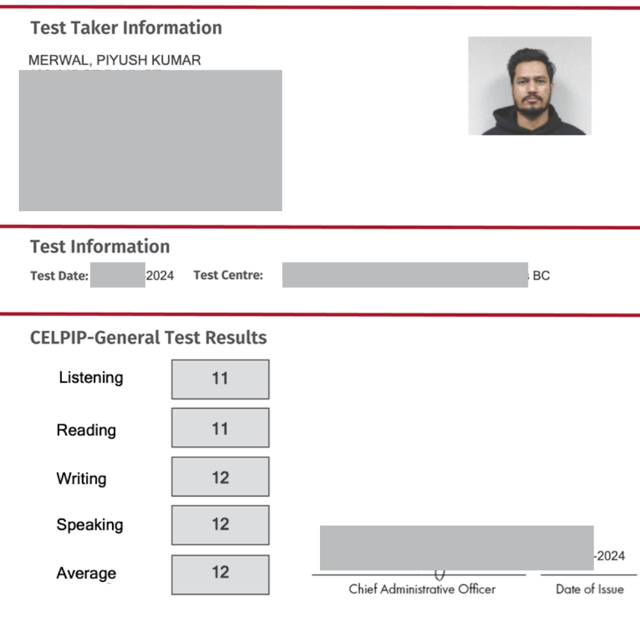
Ultimate Guide to Scoring CLB 10 and Beyond
FULLY EDITABLE RESUME GUIDE FOR JOBS IN CANADA
Ask me anything (Priority response in 24 hours)
Quick chat - 20 min
LinkedIn Profile Audit : 30 Min session


Frequently asked questions
How to study in Canada as an international student?
The path to study in Canada as an international student usually starts 12+ months out: pick a program and a designated learning institution (DLI), confirm admission requirements, arrange proof of funds, apply to the school, and use the acceptance letter to apply for your study permit. Build in extra time for language tests, transcripts, and tuition deposits so no deadline catches you off guard.
What is a study permit in Canada?
A study permit is the document that allows foreign nationals to study at a designated learning institution in Canada. Many people call it a "study visa," but study permit is the official term. It typically allows part-time off-campus work during the semester and full-time work during scheduled breaks (IRCC has adjusted these hour limits recently, so check the current rules), and you may also need a visitor visa or eTA to enter Canada itself.
How to study in Canada for free?
Studying in Canada for free is rare, but you can slash costs by applying for entrance and merit-based scholarships at the same time as admission, seeking external and graduate-level funding like assistantships, choosing more affordable provinces and colleges, and working part-time during your studies. The students who win the most funding are usually the ones who apply early and treat scholarship hunting like a part-time job.
Can I earn CRS points for studying in Canada?
Yes — Canadian credentials can add up to 30 CRS points for studying in Canada under Express Entry, depending on the length and level of your program. You can stack those points with Canadian work experience and strong language scores, so build your CRS strategy from your first semester rather than after graduation.
How to start the Canada PR process?
If you're wondering how to start the Canada PR process, first identify your best pathway — usually Express Entry (Federal Skilled Worker or Canadian Experience Class) or a Provincial Nominee Program. Then get an Educational Credential Assessment for your education, take an approved language test (your CLB level directly affects your score), create your Express Entry profile, and keep improving your points while you wait for an Invitation to Apply.
How long does the Canada PR process take?
How long does the Canada PR process take? There's no single number: Express Entry applications are generally finalized within about six months of submitting a complete application, while PNP-linked applications can take longer because of the nomination stage. Your own speed in gathering documents, giving biometrics, and responding to IRCC requests often matters as much as the stream itself.
What is the Canada PR processing time for CEC?
The Canada PR processing time for CEC (Canadian Experience Class) applications is generally about six months after you submit a complete application, since CEC runs through Express Entry. Your overall wait also includes time spent in the pool before receiving an Invitation to Apply, which depends heavily on your CRS score.
What is AOR in the Canada PR process?
In the Canada PR process, AOR stands for Acknowledgement of Receipt — the official letter confirming IRCC has received your complete permanent residence application and processing has begun. It includes your application number, which you'll use to track your file and, in eligible cases, to apply for a bridging open work permit.
How to check credit score in Canada?
Checking your credit score in Canada is free: Equifax offers free access to your score, Credit Karma shows your TransUnion-based score, and many Canadian banks and card issuers display your score inside their apps. Checking your own score is a soft inquiry, so it never damages your credit.
How to improve credit score in Canada?
The fastest levers to improve credit score in Canada are paying every bill on time, keeping utilization under roughly 30% of your limit, holding your oldest accounts open, and spacing out applications that trigger hard checks. If you're new to Canada with no credit history, a secured credit card or student card is the standard starting point.
What is a good credit score in Canada?
Credit scores in Canada run from 300 to 900, and a good credit score in Canada is generally 660 or higher — with 725+ considered very good and 760+ excellent. Newcomers and students start with no score at all, which is completely normal; lenders mainly want to see established history and clean payments, so start building early with a secured or student card.
What is a credit report in Canada?
A credit report is the detailed file behind your score — your accounts, payment history, balances, limits, and inquiries, maintained by Equifax and TransUnion. You can request your credit report in Canada free from both bureaus, and it's smart to review it for errors before any major application, because reporting mistakes are more common than people think.
What is CLB in Canada?
CLB stands for Canadian Language Benchmark — the standard used to measure English ability (NCLC for French) for immigration purposes. Your IELTS General, CELPIP, or PTE Core results convert into CLB levels, and in Express Entry, reaching CLB 9 or CLB 10 can unlock a major jump in points, which is why so many applicants target it deliberately.
How can international students get part-time jobs in Canada?
Most international students get part-time jobs in Canada by starting on campus, then moving into off-campus roles within IRCC's weekly hour limit (currently 24 hours per week during the semester and full-time during scheduled breaks — verify the latest rule). A Canadian-format resume, early applications, and an active LinkedIn profile with local connections make a bigger difference than job-board volume.
Is Thompson Rivers University good for international students?
Thompson Rivers University in Kamloops is a public university that many international students choose for smaller class sizes, co-op and hands-on program options, and a cost of living far below Vancouver or Toronto. "Good" depends on your program and goals — if you're considering TRU, it's worth talking through housing, winter prep, part-time work, and the path from graduation to PR with someone who has made that exact move.