Testimonials
Services
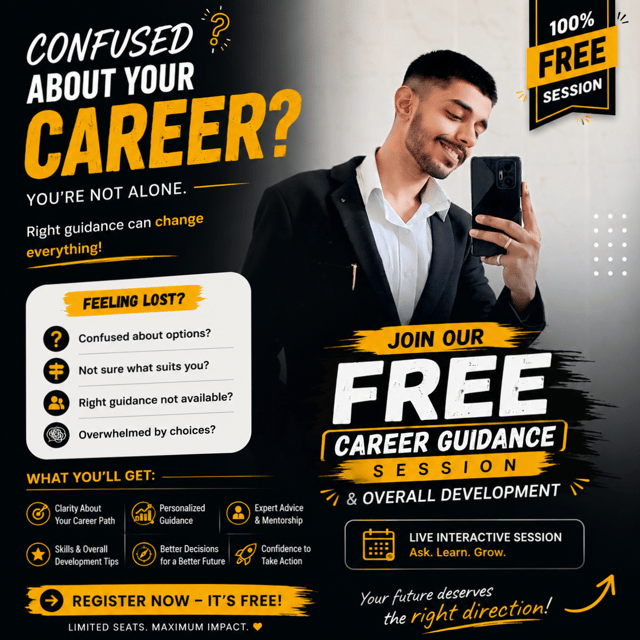
Free Guidance Session
Ask me anything related to Life & career

Linkedin Personal Branding
Public Speaking & Confidence
About me
Frequently asked questions
What is career guidance for students and when should you seek it?
Career guidance for students is a structured process where an experienced mentor or counsellor helps you understand your strengths, interests and skills, and matches them to the right courses, careers and jobs. It is most useful at key decision points — after class 10, after class 12, during college, and when you begin placement or job preparation — but you can seek it anytime you feel confused about your direction.
How to make a career development plan as a student?
Start with an honest self-assessment of your strengths, interests and the skills in demand in your target field. Then set a clear short-term and long-term goal, list the skills, certifications and experience you need, and break them into monthly or semester-wise milestones. Review the plan every few months and update it — a career counsellor can also help you build a realistic plan based on your profile.
How do I find a good career guidance counsellor near me?
Look for a counsellor who has real experience guiding students in your field, check reviews or testimonials from past students, and see whether they offer an introductory call before you commit. A structured approach — assessment, goal setting and an action plan — is always a good sign. Also remember that most career guidance today happens over online 1:1 calls, so you can shortlist mentors through a trusted career guidance website instead of limiting yourself to your own city.
Why is career guidance after 10th important?
The stream you choose after class 10 — science, commerce or arts — shapes the courses and careers open to you later, making it one of the most important decisions of your student life. Proper career guidance after 10th maps your aptitude and interests to the right stream instead of relying on friends or family pressure. Many students also refer to a career guidance chart after 10th to see which streams lead to which careers, but a counsellor helps you apply that information to your own situation.
How does career guidance after 12th help in choosing the right career?
After class 12, students face pressure to pick a degree, college and entrance exam path all at the same time. Career guidance after 12th helps you compare course options, understand emerging careers, plan entrance exams and keep backup options ready. It is especially useful if you are torn between two fields or want to build job-ready skills alongside your degree.
What is placement prep and what does it include?
Placement prep is the structured preparation students do to get selected in campus recruitment drives. It typically covers aptitude tests (quantitative, logical reasoning and verbal), technical or coding rounds, group discussions, and technical plus HR interviews, along with a strong resume. Most students need around 6–12 months of consistent preparation before their campus season begins.
How to start placement preparation in college?
Begin early — ideally from the first or second year. Build one skill at a time: strengthen your aptitude basics, learn coding and core subjects if you are in a technical branch, work on communication skills, maintain a good CGPA, and start adding projects and internships to your resume. By the final year you should mainly be revising, giving mock tests and practising interviews.
How to prepare for placement in the final year with limited time?
Follow a focused 2–3 month plan: revise aptitude and core subjects daily, practise company-wise questions and previous year papers, and keep your resume ready early. Dedicate the last few weeks to mock interviews, group discussion practice and company-specific research. Consistency matters more than long study hours, so track your progress weekly and fix your weakest section first.
What should placement preparation for CSE students include?
Placement preparation for CSE students should focus on data structures and algorithms, core subjects like operating systems, DBMS, computer networks and OOPs, and regular coding practice on problem-solving platforms. Add aptitude practice, at least one or two solid projects, a clean GitHub profile, and mock technical and HR interviews. Communication skills often decide final rounds, so practise explaining your projects clearly.
What are placement papers and how should you use them?
Placement papers are previous years' question papers from company recruitment exams, showing the pattern, difficulty level and type of aptitude, reasoning and technical questions a company usually asks. Solve them under timed conditions to understand the actual exam pattern, spot repeated topics and improve your speed. They work best when combined with mock tests and regular concept revision.
Is joining a placement preparation course worth it?
It depends on your current level and discipline. If you can follow a self-study routine and get honest feedback from seniors, you may not need one. A structured placement preparation course helps if you need guided practice, regular mock tests, interview training and a mentor to correct your mistakes — the things most self-studying students miss. Check whether the course offers personal feedback and mocks before joining, not just recorded videos.
Which is the best placement preparation app or website for students in India?
There is no single best option — it depends on your target companies and role. Most students use a placement preparation website for full-length mock tests and company-specific questions, and a placement preparation app for daily aptitude and coding practice. Whichever you pick, make sure it offers topic-wise practice, detailed solutions and doubt-solving support, and combine it with previous placement papers for the best results.
What is the correct resume writing format for freshers?
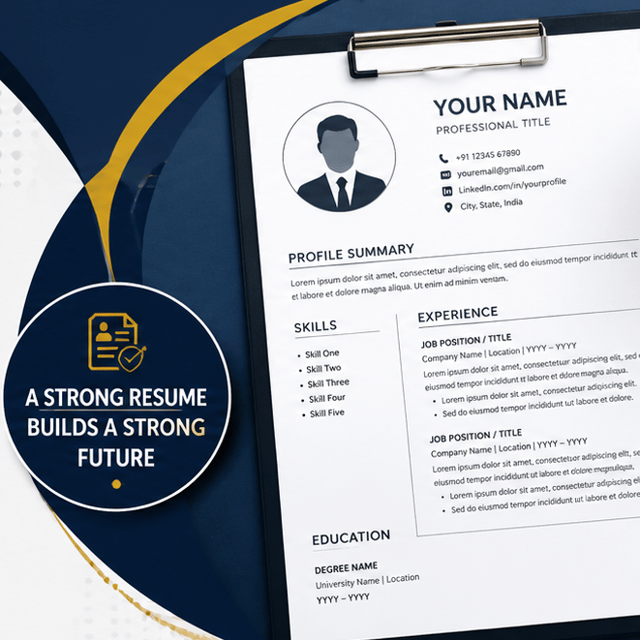
For freshers, the ideal resume writing format is one page with these sections: name and contact details, a short career objective or summary, education in reverse chronological order, key skills, projects, internships and certifications. Use simple bullet points, action verbs and quantifiable results, and keep the design clean so it passes ATS screening. Looking at a few resume writing examples for freshers helps you see how this structure works in practice before you finalise yours.
Are resume writing services worth it for students and freshers?
They are worth it if your resume is not getting interview calls, you are applying for competitive roles, or you don't know how to present your projects and skills convincingly. A good service customises your resume for your target roles instead of using fixed templates. For students with a simple profile, a detailed 1:1 review with a mentor who explains exactly what to change can be as effective as a full service — and usually cheaper.
Should I use resume writing AI tools or write my resume myself?
Resume writing AI tools are useful for fixing structure, improving action verbs and adding role-relevant keywords, but their output often looks generic and can exaggerate or misstate your experience. Use AI for the first draft, then personalise every line with your actual projects, numbers and skills, and ideally get a human review before sending it out. Recruiters can usually spot a fully AI-generated resume, so never skip the final edit.