Testimonials
Services
DBT Data Engineering Interview Kit
Azure DE Interview Questions Top Companies
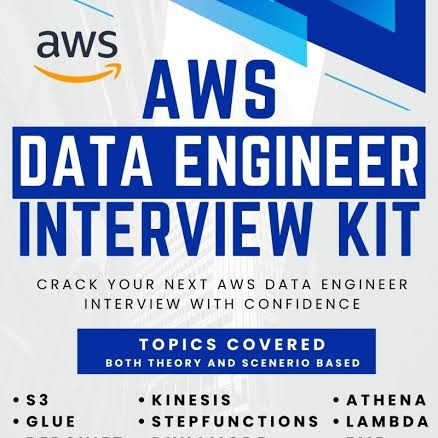
Snowflake + DBT Data Engineering Interview Bundle
Naukri & LinkedIn Profile Optimization Strategy

Profile Optimization & Personal Brand Development
Require Technical Assistance
1:1 Interview Readiness & Strategy Session

Data Engineering 500 Questions
Have a question ? Get my Personal Advice
25 Must-know Scenario based Time Series SQL
Snowflake Data Engineering Interview Kit
Azure Interview Preparation Bundle

Zero to Shortlist - Strategy+Resume+Portfolio
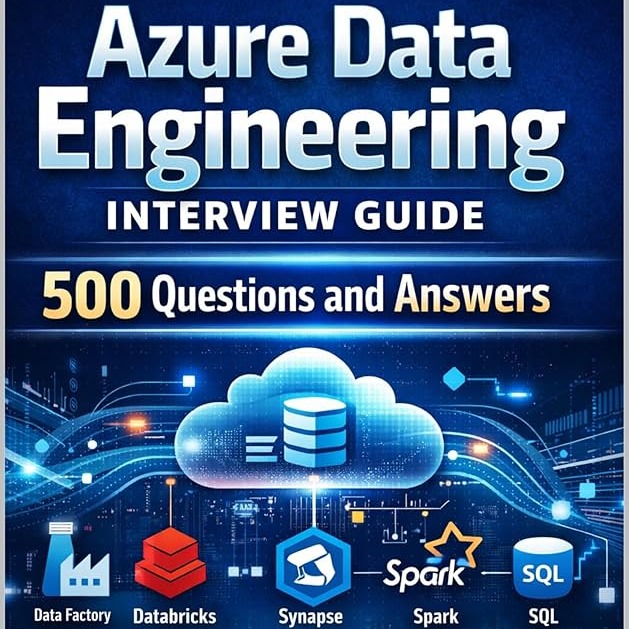
Ace your Azure Data Engineering Interview Guide
Interview Readiness Bundle

Ready for giving a Mock before Actual
SQL Basics for Beginners

About me
Frequently asked questions
How to prepare for a data engineer interview?
Structure your data engineering interview preparation into four blocks: SQL, Python, data modelling and warehousing concepts, and one cloud platform (AWS or Azure). Spend the initial weeks strengthening fundamentals, then move to scenario-based questions on building and debugging pipelines. In the final two weeks, take at least two mock interviews and revise your resume and projects line by line, since most interviewers begin with "walk me through your project."
What are the most common data engineering interview questions and answers?
The most frequently asked data engineering interview questions and answers revolve around SQL queries (joins, window functions, aggregations), data modelling, ETL vs ELT, batch vs streaming, and Spark concepts like partitions and shuffles. Expect scenario questions such as "design a pipeline that ingests millions of records daily," with follow-ups on data quality, idempotency, and cost. Answer in a structure: clarify requirements, explain your approach, then discuss trade-offs.
How to crack a data engineer interview as a fresher?
If you want to know how to crack a data engineer interview with no experience, focus on depth over breadth: strong SQL, solid Python, and two or three end-to-end projects you can explain confidently. Most data engineering interview questions for freshers test fundamentals — SQL, basic ETL concepts, and how well you explain your projects — rather than advanced distributed systems. Pair this with an ATS-friendly resume and referrals, because getting the interview call is often harder than clearing it.
What are the most common SQL interview questions for freshers?
SQL interview questions for freshers usually cover joins (inner, left, self), GROUP BY and HAVING, subqueries, string and date functions, and basic window functions like ROW_NUMBER and RANK. You will typically get 2–3 live queries, such as finding the second-highest salary or identifying duplicates in a table. Practise writing these in a plain editor without autocomplete, since that is how most interviews are conducted.
How to answer SQL interview questions?
Do not jump straight into writing the query. Restate the problem, confirm the expected output, state your approach ("I'll use a CTE to rank orders per customer"), and then build the query step by step. If you forget a syntax detail, say so and reason it out loud — interviewers evaluate your thought process as much as the final output, and they usually drop hints if you communicate clearly.
How to practice SQL interview questions?
A simple routine: solve 2–3 problems daily, starting with joins and aggregations and progressing to window functions and scenario-based questions on real datasets. Set a 15–20 minute timer per question to simulate interview pressure, and narrate your approach out loud while solving. Maintain an error log of every query you got wrong and revise it weekly — most candidates lose offers to repeated mistakes, not to topics they never studied.
What are the common SQL interview questions for 3 years of experience?
SQL interview questions for 3 years of experience go beyond syntax: expect window functions, complex CTEs, query optimisation using execution plans, incremental load handling, and scenarios like deduplicating millions of rows. Interviewers will also deep-dive into your projects — how your SQL fits the pipeline, how you handled data quality, and what you would redesign today. Prepare two or three detailed project stories with measurable outcomes.
What are the most commonly asked AWS data engineering interview questions?
AWS data engineering interview questions typically cover S3 (storage classes, partitioning strategies), Glue, Redshift, Kinesis, Lambda, and EMR or Spark on AWS. Scenario questions dominate: "design a data lake for daily batch and streaming ingestion," "how would you handle late-arriving data," or "how do you optimise Redshift costs." Also be ready to explain an architecture diagram you have personally built, since interviewers quickly spot textbook answers.
How to become an AWS data engineer?
The practical path for how to become an AWS data engineer: master SQL and Python first, then learn core services — S3, Glue, Redshift, Kinesis, and Lambda — and build two or three end-to-end pipeline projects. The most effective approach to how to learn AWS data engineering is hands-on: deploy a small data lake yourself, break it, and fix it, instead of only watching tutorials. Then optimise your resume and profiles with the right project keywords so recruiters can actually find you.
Is an AWS data engineering certification worth it?
An AWS data engineering certification is worth it if you are a fresher or switching into data roles, because it helps your profile pass resume screens and signals structured knowledge. It does not replace hands-on skills — interviews still test SQL, pipeline design, and troubleshooting — so pair it with real projects. If you already have strong project experience, your time is better spent on interview practice than on another certificate.
What AWS data engineering projects should I build for interviews?
Strong AWS data engineering projects are end-to-end: ingest data from a public API into S3, process it with Glue or Spark, load it into Redshift, and add orchestration with Step Functions or Airflow plus a simple dashboard. Adding a streaming component with Kinesis and basic data-quality checks helps you stand out. Document the architecture and write a short README explaining your trade-offs — interviewers frequently start with "explain your project," and that is where most candidates lose points.
How to answer "Why do you want to be a data engineer"?
Tie your answer to a genuine moment — a project or problem where building a pipeline or fixing bad data created real impact — rather than generic lines about a passion for data. Strong answers connect curiosity, problem-solving, and the satisfaction of building systems others depend on, then link that to the specific role. Keep it to 60–90 seconds and practise it aloud so it sounds natural, not memorised.
Where can I find data engineering interview questions and answers PDF?
Curated question banks, GitHub repositories, and structured notes compiled by data engineering mentors are the usual sources for a data engineering interview questions and answers PDF. Whatever you pick, prefer scenario-based questions with worked explanations over plain question lists, since interviews increasingly test the "why" behind your solution. Also build a personal revision sheet of questions you struggled with — that beats any downloaded PDF.
How to get AWS data engineering jobs as a fresher?
For AWS data engineering jobs as a fresher, three things move the needle: end-to-end projects on your resume, an ATS-friendly resume with the right keywords (S3, Glue, Redshift, Spark, SQL), and referrals from employees at target companies. Optimise your Naukri and LinkedIn profiles with these keywords so recruiters searching for data engineers can find you, and apply consistently to both service-based and product companies. Referrals significantly improve your odds of a first interview when you have no experience.