Testimonials
Services
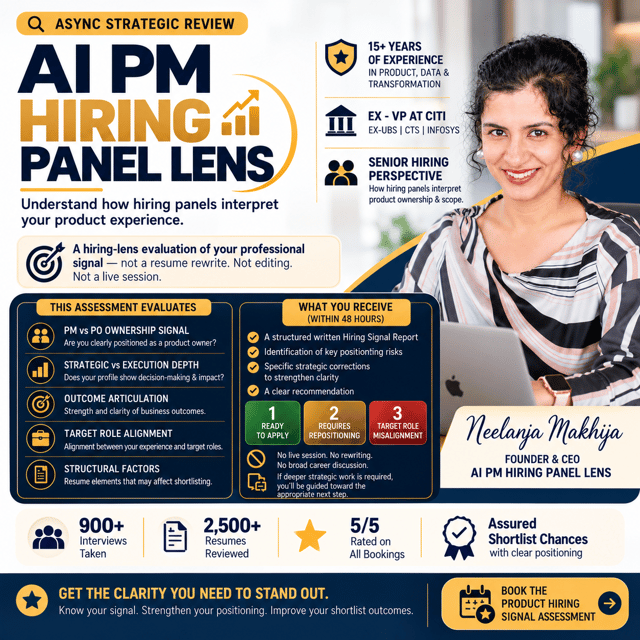
Product Hiring Signal Assessment
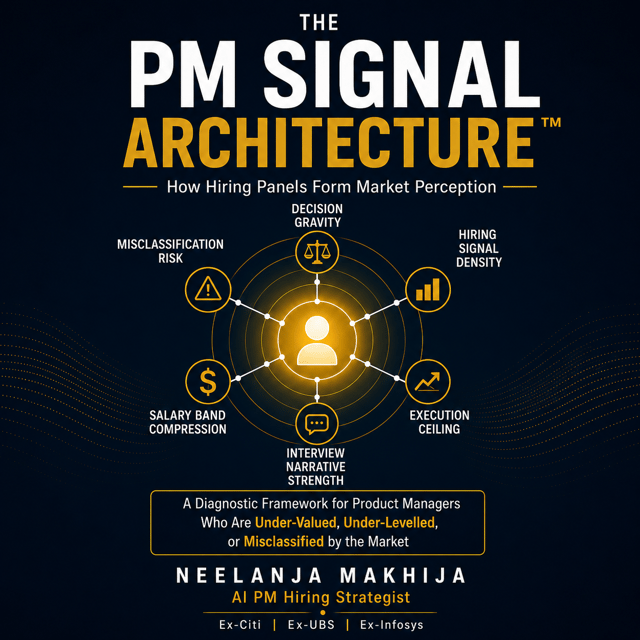
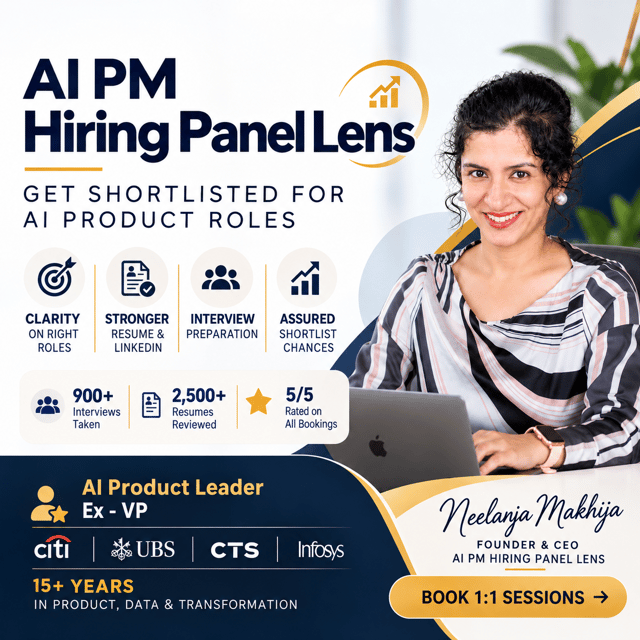
AI PM Market Positioning Strategy Session Live 1:1
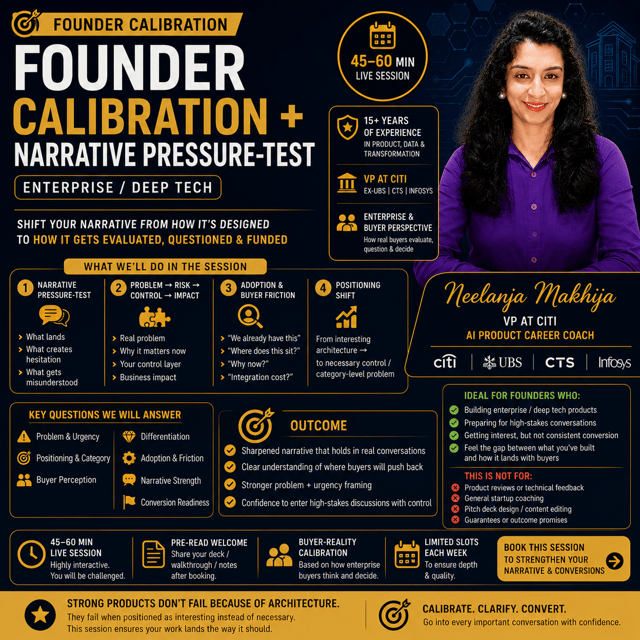
Founder Calibration & Narrative Reset(High-Stakes)
Mock Interview Hiring Panel Simulation (1:1)
About me
Frequently asked questions
How do PM vs PO roles differ?
When people compare PM vs PO roles, the core difference is scope of ownership. A Product Manager is usually accountable for the overall product outcome — strategy, roadmap, stakeholder alignment, and business results — while a Product Owner in a Scrum setup typically owns the backlog, prioritisation, and the value delivered by the development team. In India, many companies use these titles loosely, so hiring panels look at actual PM vs PO responsibilities rather than the designation: what decisions you owned, at what scale, and whether you drove strategy or executed someone else's. That reading of ownership depth is what decides whether you get shortlisted at your target level.
PM vs PO vs BA — where does a business analyst fit in the product career path?
In the PM vs PO vs BA comparison, a Business Analyst focuses on requirements, process analysis, and stakeholder documentation; a Product Owner converts that into a prioritised backlog and works closest to the delivery team; a Product Manager owns the "why" — market positioning, outcomes, and roadmap. If you're moving from a BA-heavy role toward product, panels will judge your profile on whether you can show outcome ownership beyond requirement gathering — so position the prioritisation decisions and business impact you drove, not just the artefacts you produced.
Is a Product Owner in Agile just a junior Product Manager?
No. In the PM vs PO in Agile debate, Scrum defines the Product Owner as accountable for maximising product value — a full ownership role, not a junior one. The confusion arises because many organisations layer both titles: the PM handles strategy, market insight, and roadmap while the PO handles backlog execution. So seniority depends on how a specific company has designed the role, and titles vary widely across Indian companies. Before applying, clarify whether the "PO" role genuinely owns outcomes or only grooming, because hiring panels will read your decision scope from that.
PM vs PO — which role pays better in India?
PM vs PO salary comparisons rarely have a fixed answer because compensation follows scope, not the title. Where a company treats the PO as a delivery-facing backlog role, PMs usually earn more at senior levels because they carry outcome, revenue, and roadmap accountability. But in product-led companies where the Product Owner genuinely owns a product's value, the gap narrows considerably. If you're comparing offers, weigh the decision scope and outcome ownership attached to each role — that also signals how the market will read your profile for future senior moves.
What should a product manager resume look like when you have 8–12 years of experience?
At this level, the real question behind what should a product manager resume look like is not design but proof. Hiring panels scan quickly for three things: role ownership (what you owned end to end), decision scope (choices and trade-offs you personally made), and outcome impact (metrics like adoption, revenue, retention, or activation). Two pages are acceptable at this experience level, as long as every line adds evidence rather than activity. Listing responsibilities instead of outcomes is the most common reason experienced PM resumes fail to convert into shortlists.
Which product manager resume format works best for experienced candidates?
The most reliable product manager resume format for experienced professionals is reverse-chronological, opening with a short positioning line, followed by roles that each state scope (product, platform, team size) and 3–5 outcome-based bullets with metrics. A product manager resume in India is usually filtered by an ATS and a recruiter's 30-second scan before anyone reads it properly, so keep the layout clean — no tables, graphics, or two-column designs — and mirror the language of the roles you're targeting. Skills-first or functional formats tend to raise doubts about career progression at senior levels.
Is it a good idea to copy product manager resume samples available online?
Product manager resume samples are useful as a structural reference, but copying their bullets is one of the fastest ways to blend into the reject pile. Panels read dozens of resumes claiming "worked with stakeholders" or "drove product growth" — differentiation comes from your actual ownership, decisions, and numbers, which no sample can supply. Use samples to check what a strong resume covers, then rewrite every line from your own trade-offs and measurable outcomes so the resume reads as yours, not as a template.
Should your product manager resume and LinkedIn profile tell the same story?
Yes — consistency between your product manager resume and LinkedIn profile is one of the first credibility checks hiring panels run. If your resume claims end-to-end ownership of a launch but your LinkedIn describes the same period as coordination work, panels read it as positioning confusion and move on. Keep the core narrative — scope, ownership, outcomes — identical on both, and let LinkedIn carry the longer story: your product thinking, domains, and the kind of roles you're aiming for next.
How to write a product manager resume when you've never held the official PM title?
The key to how to write a product manager resume without the title is translating ownership, not inventing it. Panels look for product work regardless of designation: 0-to-1 builds, prioritisation decisions, A/B testing, onboarding and activation improvements, and stakeholder trade-offs all count when they're written as outcomes. Open with a positioning line that frames you around the product outcomes you owned, then narrow your applications to roles where that ownership maps directly — applying broadly with activity-based wording is what usually keeps non-titled candidates out of shortlists.
How to crack a product manager interview when you have the experience but keep getting rejected?
For anyone searching how to crack a product manager interview after repeated rejections, the gap is usually positioning, not capability. Panels reject experienced candidates when they can't quickly decode role-fit: whether you owned outcomes, at what scale, and how your decisions moved the business. Fix that before drilling answers — define the exact level and type of role you're targeting, rebuild your resume and narrative around outcome ownership, then rehearse each story as a decision-and-impact arc. Panel-style mock interviews help here because they reveal how your ownership actually lands, not how you think it does.
How many rounds are there in the product manager interview process?
The typical product manager interview process runs 4–6 rounds: a recruiter screen, a hiring manager round on your experience and role-fit, one or two case rounds covering product sense and execution (prioritisation, metrics, guesstimates, and product teardowns are common in India), and often a cross-functional or leadership round on stakeholder handling. At senior levels, expect deeper probing into ownership depth and outcome impact rather than textbook frameworks. Knowing which round tests which signal lets you prepare the right stories for each stage instead of generic answers for all of them.
What is a product manager interview like for someone with 10+ years of experience?
People often ask what is a product manager interview like at senior levels, and the honest answer is: less a quiz, more an ownership audit. Interviewers drill into a single project — what you decided, what you rejected, which trade-offs you took, what result followed, and how you handled conflict with engineering or business. Generic frameworks don't survive that depth; panels are testing whether your years translated into decision-making. Candidates who struggle usually have real impact that was never translated into a clear, outcome-first story.
How do I plan product manager interview preparation while working full-time?
A realistic product manager interview preparation plan for working professionals spans 6–8 weeks of focused effort: product sense and case practice three to four times a week, execution and metrics drills, and behavioral stories rebuilt around ownership and impact. Product manager interview books help with frameworks, but they won't fix positioning gaps — only mock interviews with honest, panel-style feedback show whether your stories read as senior ownership or as activity lists. Reserve at least a third of your prep time for mocks rather than reading.
How to answer product manager interview questions without sounding rehearsed?
Most advice on how to answer product manager interview questions pushes memorised scripts, and panels detect that quickly. Structure every answer around ownership instead: the situation, the decision you personally made, the trade-off you accepted, and the measurable result. Ready-made product manager interview questions and answers for experienced professionals fail at senior levels because interviewers probe two levels deeper than any script — a single follow-up on "what would you have done differently" exposes rehearsed answers. Prepare five or six deep stories that flex across product sense, execution, and behavioral rounds, each clearly showing your decision scope and business impact.