Testimonials
Services

Short 1:1 Video Call
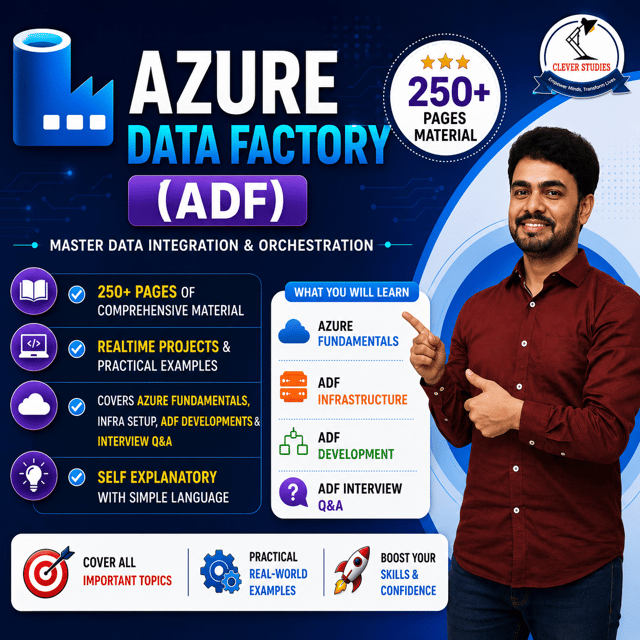
Azure Data Factory (ADF) Fundamentals (eBook)
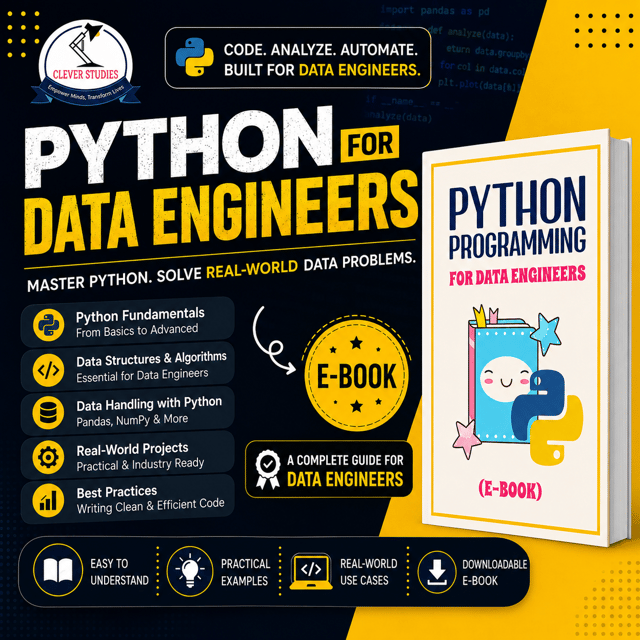
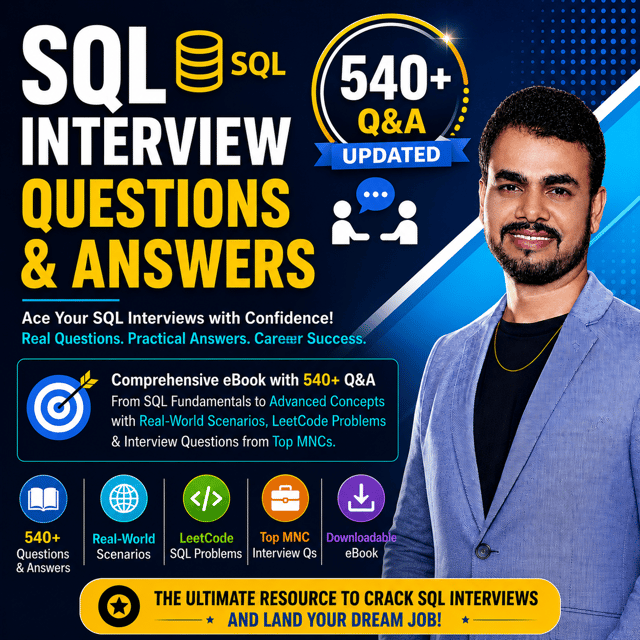
SQL 550+ Interview Questions & Answers (eBook)


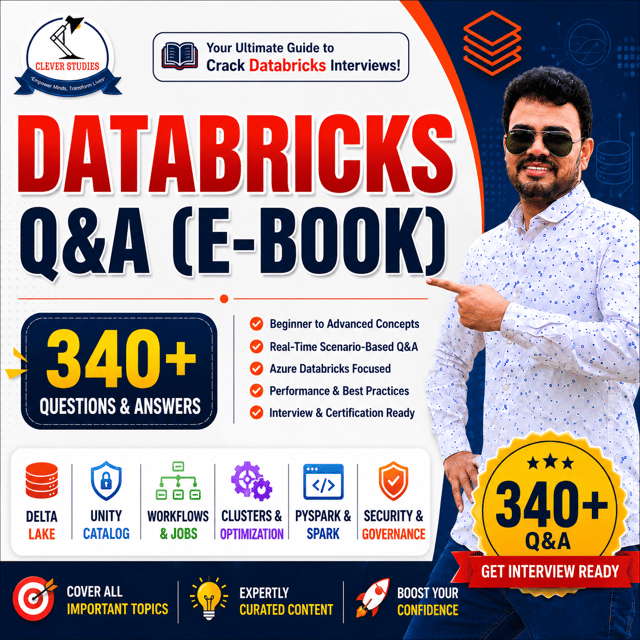
Databricks Interview Questions & Answers (eBook)
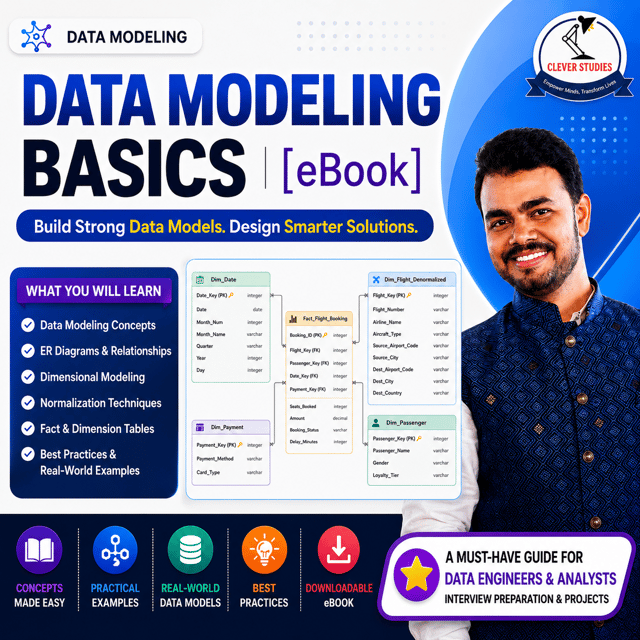
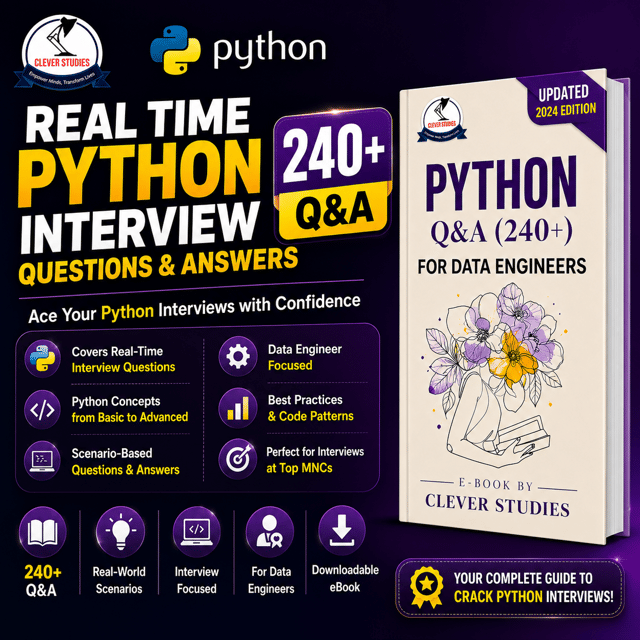
Python 240+ Interview Q&A (eBook)
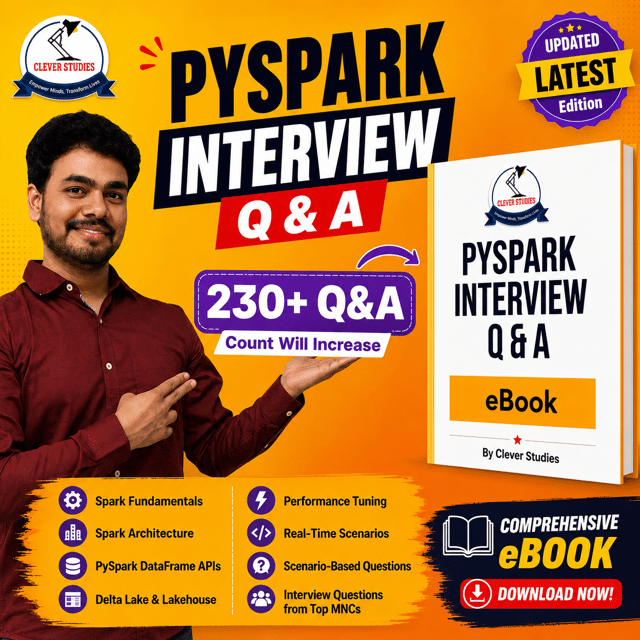
PySpark Interview Q and A (eBook)


About me
- Naresh Kumar excels in mentorship, offering clear, impactful guidance and boosting project confidence.
 AI-generated based on testimonials
Frequently asked questions
How to learn data engineering from scratch?
If you are wondering how to learn data engineering, treat it as skill-stacking: start with SQL since every data engineering role tests it heavily, then move to Python, followed by one cloud platform such as Azure or AWS. Once the fundamentals are in place, learn big data tools like PySpark, Azure Data Factory, and Databricks, and build 2–3 end-to-end projects you can showcase on GitHub. A mix of free YouTube content, structured eBooks, and consistent hands-on practice works far better than passively watching videos.
How long does it take to become a data engineer?
For most learners, a realistic data engineering roadmap takes around 8–12 months: roughly 2 months for SQL, 2–3 months for Python, 2 months for one cloud platform, and the final 3–4 months for PySpark, Azure Data Factory, and portfolio projects. If you already work as a software developer, database administrator, or data analyst, you can compress this to 3–4 months because SQL and programming fundamentals transfer directly. Consistency matters more than speed — daily practice beats weekend-only cramming.
Data engineering vs data science — which career should I choose?
In the data engineering vs data science decision, the core difference is the work itself: data engineers build and maintain the pipelines and platforms that move and store data, while data scientists analyze that data and build models on top of it. Choose data engineering if you enjoy SQL, Python, cloud tools, and system design; choose data science if statistics and machine learning excite you more. In India, data engineering is often the easier entry point because the skill path is clearly defined, and every data science team depends on strong data engineers — many professionals start here and move into data science later.
What is the data engineering life cycle?
The data engineering life cycle covers every stage data passes through in a system: data generation and ingestion from sources like databases, APIs, and files; storage in data lakes or warehouses; processing and transformation using batch or streaming pipelines; and serving, where dashboards, analysts, and applications consume the final data. Monitoring, governance, and security run across all stages. Understanding this cycle helps you see exactly where tools such as Azure Data Factory, Databricks, and SQL fit into real projects.
How can I get a data engineering job with no experience?
Companies hiring for data engineering jobs shortlist primarily on demonstrated skills, so focus on building 2–3 end-to-end projects, a strong GitHub profile, and one recognized cloud certification. If you already work in IT, moving internally into a data team — or transitioning from a support, testing, or ETL role — is the most common route in India. Freshers can target internships, graduate programs, and data analyst roles as stepping stones. Practice interview conversations around your projects, because recruiters weigh what you have built more heavily than certificates alone.
Which data engineering projects should beginners build?
The best data engineering projects for beginners are end-to-end pipelines rather than isolated exercises: pull data from a public API or dataset, ingest it with a tool like Azure Data Factory, store it in a data lake, transform it using PySpark or SQL, and expose it through a simple dashboard. Good ideas include an incremental sales-data pipeline, a cricket or movie analytics pipeline, and a pipeline that handles slowly changing dimensions. Document your architecture and design decisions in a README, because hiring managers usually evaluate how you think, not just whether the code runs.
Are paid data engineering courses worth it, or can I learn for free?
Free resources are enough to learn the fundamentals, so paying is not mandatory. That said, well-structured data engineering courses save time by giving you a clear path, curated interview questions, hands-on projects, and someone to ask when you get stuck — things scattered YouTube playlists rarely provide. Before paying for anything, check whether the content is updated for current cloud tools, includes real project work, and is taught by someone with actual industry experience. If a course merely re-reads documentation, free learning resources will serve you just as well.
What are the most common data engineering interview questions?
Most data engineering interview questions cluster around five areas: SQL (joins, window functions, query optimization), Python (data structures, pandas, coding rounds), data modeling (normalization, star schema, slowly changing dimensions), big data tools like PySpark and Databricks, and cloud services such as Azure Data Factory. Experienced candidates should also prepare for scenario questions, like designing a pipeline that handles late-arriving data or debugging a slow-running job. Be ready to explain your own projects in depth, since the project discussion round often decides the outcome.
How to learn Azure Data Factory as a beginner?
The simplest way to approach how to learn Azure Data Factory is to master the core building blocks first — pipelines, activities, datasets, linked services, triggers, and integration runtimes — and then build a small project that copies data from a source into Azure Data Lake Storage. Follow a hands-on Azure Data Factory tutorial rather than only watching videos, because ADF only makes sense when you create, run, and debug pipelines yourself. Azure's pay-as-you-go model lets you practice cheaply, and once you are comfortable with data movement, move on to mapping data flows and orchestrating Databricks notebooks.
What is Azure Data Factory used for?
Azure Data Factory is a cloud-based ETL and ELT service used to ingest, transform, and orchestrate data at scale. Teams use it to move data from sources like on-premises SQL databases, APIs, and files into Azure Data Lake or Synapse, schedule those movements with triggers, transform data with mapping data flows, and monitor everything from a single place. In real projects it usually acts as the orchestrator — coordinating data movement and calling compute engines like Databricks — which is why it appears in almost every Azure data engineering job description.
Azure Data Factory vs Databricks — which one should I learn first?
The Azure Data Factory vs Databricks comparison is not really either-or, because they solve different problems: ADF is a low-code service for data movement and pipeline orchestration, while Databricks is a Spark-based platform for heavy data processing, transformations, and machine learning. Learn ADF first if you are new to data engineering, since it has a gentler learning curve and teaches you how pipelines are structured. Once you are comfortable with Python and Spark fundamentals, add Databricks — most real-world Azure pipelines use both together, and job postings in India commonly list them side by side.
Is an Azure Data Factory certification worth it?
There is no standalone Azure Data Factory certification — ADF skills are tested as part of Microsoft's broader Azure data engineer certifications. For freshers and career switchers in India, that certification is worth pursuing because it gives your resume structure and helps you clear HR filters; for experienced engineers, hands-on pipeline work usually impresses interviewers more. Treat certification as proof of commitment rather than a substitute for skills, because interviews will still test whether you can actually design, debug, and optimize pipelines.
Which Azure Data Factory interview questions are asked most often?
The most frequently asked Azure Data Factory interview questions cover the difference between pipelines, activities, and triggers; integration runtime types and when to use each; copy activity versus mapping data flows; conditional and looping activities; error handling and retry logic; and how iteration and deployment work across environments. Scenario questions are common too, such as parameterizing connections between dev and prod, scheduling dependent pipelines, or implementing incremental loads using watermarks. Interviewers also like asking how you would troubleshoot a failed pipeline run.
What are the most common PySpark interview questions for experienced data engineers?
PySpark interview questions for experienced data engineers usually go deep into internals and optimization: Spark architecture (driver, executors, cluster managers), transformations versus actions, narrow versus wide transformations, shuffle behavior, caching and persistence levels, window functions, broadcast joins, and handling data skew and small-file problems. Scenario-based PySpark interview questions carry equal weight — you may be asked to deduplicate a billion-row dataset, implement incremental loading, find the top N records per group, or design logic for late-arriving data. Practice writing these solutions in a live editor, not just reading answers.
Which SQL interview questions should I practice for data engineering roles?
Prioritize SQL interview questions on joins (including self and anti-joins), window functions like ROW_NUMBER, RANK, and LAG, aggregation with GROUP BY and HAVING, subqueries and CTEs, handling duplicates and NULLs, and query performance tuning — these appear in almost every data engineering interview. Classic problems include finding the second-highest salary, deduplicating records, calculating month-on-month growth, and sessionizing user events. Since SQL rounds often act as the first filter, timed practice on a real editor matters more than passively reading solutions.