Testimonials
Services
Linkedin Services Discussion
1:1 Consultation
Coffee Chat ☕
Know my charges!
Frequently asked questions
How to use LinkedIn for personal branding?
Start with the basics: a headline that says who you help and how, an About section that reinforces it, and a profile that looks like the real you. Then show up consistently — post two to four times a week on three or four core topics you want to be known for, comment thoughtfully on posts in your niche daily, and share real lessons, results, and opinions instead of generic quotes. Finally, engage with everyone who responds to your content, because relationships, not just reach, are what turn a personal brand into clients.
How to create a LinkedIn content strategy?
Define your goal first — clients, authority, hiring, or community — then identify your audience and the exact problems they want solved. Choose three to five content pillars, pick formats you can produce consistently, such as text posts, carousels, or short videos, and set a realistic cadence like three posts a week plus daily commenting. Plan hooks and calls to action in advance, batch your content weekly, and review performance every 30 days so the next month's plan is based on data, not guesswork.
How does personal branding for startup founders actually get clients without ads?
Buyers trust people more than logos, so when a founder consistently shares insights, mistakes, and results on LinkedIn, prospects start seeing them as the safe choice before any sales call happens. That trust converts into inbound DMs, discovery calls, and referrals — pipeline built on credibility instead of ad spend. It also compounds: good posts keep resurfacing, others share founder content, and warm introductions become easier because people already feel like they know you. For early-stage startups with tight budgets, this founder-led route is often the cheapest and most durable acquisition channel.
What do LinkedIn personal branding services usually include?
Most providers offer some mix of profile optimization, content and positioning strategy, ghostwritten posts, carousel or newsletter creation, engagement management, and guidance on turning inbound attention into sales calls. These are delivered as monthly retainers, one-time profile makeovers, or self-serve products like template kits and playbooks for smaller budgets. Before buying, check whether the service starts with positioning — offerings that only promise a fixed number of posts rarely move actual business outcomes.
Personal branding agency for founders or an independent consultant — which should you choose?
An agency usually gives you a full team — writer, designer, strategist — and a done-for-you setup, which suits busy founders who want hands-off execution at a higher price. An independent consultant is typically more affordable and gives you direct access to the person shaping your brand, which usually means deeper personalization and faster feedback; this is why many early-stage founders in India start there before moving to an agency. Since founder brands depend heavily on your voice and story, whichever route you pick, choose someone who takes the time to interview you properly.
What does a good LinkedIn content strategy template include?
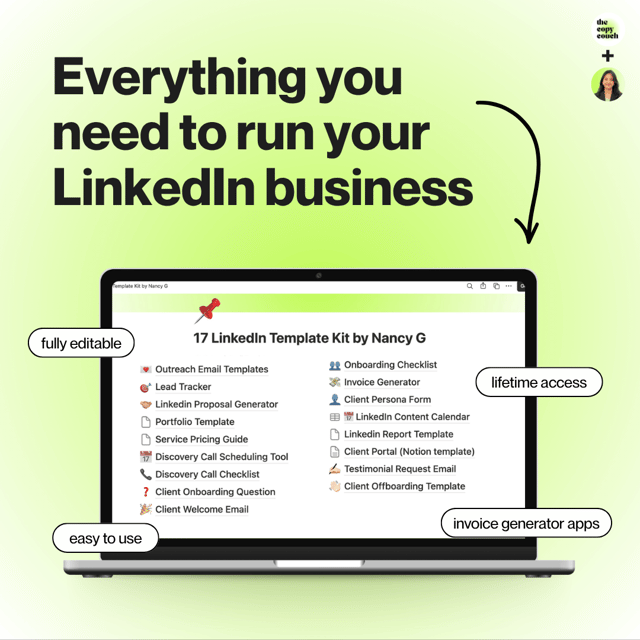
A usable template has six parts: three to five content pillars, a weekly posting calendar, a bank of hooks for opening lines, a format mix of text, carousel, and video, ready-made calls to action for different goals, and a simple tracker for what performed. Fill it in once, batch-create a week of posts in a single sitting, and refine it monthly. Ready-made template kits can save setup time, but the pillars and calendar must still come from your own positioning — a template only works when the strategy behind it is yours.