Testimonials
Services
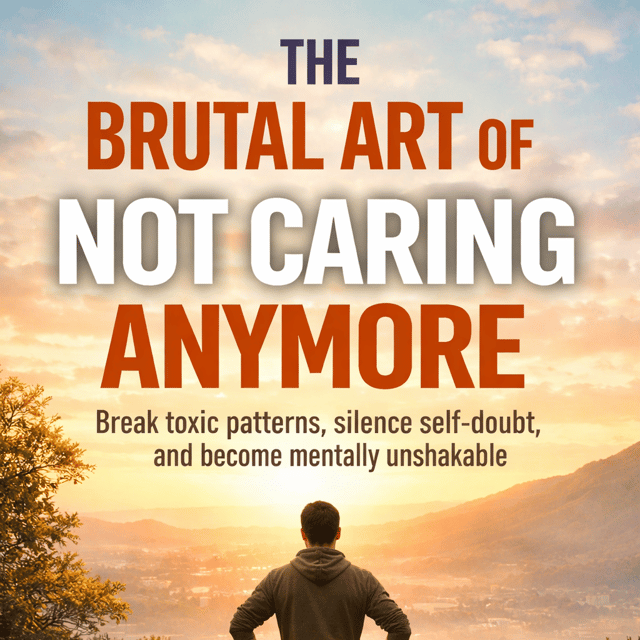
The Brutal Art of Not Caring Anymore
About me
- Ronit Ranjan is appreciated for his clarity, genuine approach, and transformative, solution-oriented guidance that fosters self-reflection and personal growth.
 AI-generated based on testimonials
Frequently asked questions
What is the meaning of emotional wellbeing?
The meaning of emotional wellbeing, in simple words, is your ability to understand, accept and manage your emotions — stress, anger, sadness, excitement — without letting them control your decisions. It also covers how well you cope with setbacks, maintain relationships and feel content in daily life. Good emotional wellbeing doesn't mean being happy all the time; it means you can experience difficult feelings and still function, communicate and recover.
What is the difference between emotional wellbeing and mental health?
Mental health is the broader umbrella — your overall psychological condition, including diagnosable issues like anxiety, depression or burnout. Emotional wellbeing is one part of it: how you recognise, express and regulate feelings in everyday situations. The two are connected but not identical — someone can have no clinical disorder yet still struggle emotionally, and strong emotional wellbeing acts as daily protection for your mental health. Working on both together gives the best results.
How to improve emotional well being?
Start with small, consistent habits: name what you're feeling instead of suppressing it, journal for five minutes, get 20–30 minutes of movement, sleep 7–8 hours, and set boundaries with people and screens that drain you. Talk honestly to at least one person you trust every week. If you stay stuck despite this, working with a therapist or an emotional wellbeing coach can help you uncover the deeper patterns driving those emotions.
What does an emotional wellbeing coach do?
An emotional wellbeing coach helps you identify your emotional patterns — overthinking, people-pleasing, anger, fear of rejection — and gives you practical tools to handle them through structured 1:1 sessions. Unlike a therapist, a coach focuses on present goals and action plans rather than clinical diagnosis. In India, you can book sessions on platforms like Topmate; for example, Ronit Ranjan, a 5X TEDx speaker and ex-Army cadet, offers 1:1 calls and a digital product, The Brutal Art of Not Caring Anymore, focused on emotional fitness.
How do you become an emotional wellbeing practitioner in India?
There is no single licence, but a common path is: complete a bachelor's and preferably a master's in psychology, counselling or a related field; add recognised certifications in counselling skills, CBT basics or coaching (ICF-accredited programmes carry weight); and gain supervised practice through internships, NGOs or assisted sessions. Then specialise in a niche such as men's wellbeing, relationships or workplace stress. Real case experience and ethical boundaries matter more than collecting certificates.
What is men's mental health and why is it often ignored?
Men's mental health refers to the emotional and psychological wellbeing of men, and how issues like depression, anxiety, addiction and burnout show up in them. It gets ignored because men are conditioned to "man up", treat emotions as weakness and avoid asking for help — so distress leaks out as anger, silence, overwork or substance use instead. In India, men make up the large majority of recorded suicide deaths, yet far fewer men ever speak to a counsellor or coach.
When is men's mental health month observed?
June is observed internationally as Men's Health Month, with a strong focus on men's mental health awareness, check-ins and open conversations. November matters in India too — Movember runs all month, and International Men's Day on 19 November is often treated as a men's mental health day to highlight loneliness, stress and suicide among men. Both periods are good triggers to start the conversation with the men in your life.
How to support men's mental health when someone close to you is struggling?
Listen without immediately fixing or judging — most men open up only when they don't fear being mocked or lectured. Ask direct questions ("How are you, really?"), keep low-pressure contact through walks, gym sessions or calls, and frame professional help as strength, not failure. Watch for warning signs like withdrawal, irritability, heavy drinking or talk of hopelessness. In India, the free 24x7 Tele-MANAS helpline (14416) is a good starting point if he won't speak to anyone nearby.
How to self improve as a man?
Build the boring foundations first: a fixed sleep schedule, regular training or a sport, and one skill you're actively getting better at. Then add emotional honesty — name what you feel instead of bottling it up, because suppressed emotions eventually leak out as anger or numbness. Audit your circle, cut doomscrolling, read instead, and get a mentor or coach who challenges you. Self improvement for men fails when it's only about money and looks; discipline without emotional work always collapses.
What is self improvement and personal development?
Self improvement is the deliberate effort to upgrade specific parts of yourself — habits, fitness, communication, mindset, skills. Personal development is the bigger, lifelong version of the same journey: it also includes career growth, relationships, emotional maturity and purpose. In practice they overlap; "self improvement" usually refers to the daily actions, while "personal development" is the direction those actions add up to. Small consistent self improvement is exactly how personal development happens.
What are some self improvement tips that actually work?
Pick one habit at a time and make it laughably small — two pages, two minutes, one set. Track it visibly so you can't lie to yourself. Design your environment: keep the book on your pillow and delete the app that eats your evenings. Do a 10-minute weekly review of what worked and what didn't. Most importantly, apply what you consume — one idea executed beats fifty saved reels. Ninety days of consistency beats any intense plan you quit in two weeks.
What are some realistic self improvement goals for beginners?
Keep them small and measurable: sleep 7–8 hours on a fixed schedule, move your body 20–30 minutes daily, read 10 pages a day, journal for five minutes, save a fixed amount every month, and have one honest, uncomfortable conversation each week. Give every goal 30 days before judging it. Beginners usually fail by copying 15-hour influencer routines; three or four modest goals done consistently will already put you ahead of most people.
Which self improvement books should I start with?
Start with books that give you systems, not just motivation: "Atomic Habits" by James Clear for habits, "Deep Work" by Cal Newport for focus, "Man's Search for Meaning" by Viktor Frankl for resilience, and "The Subtle Art of Not Giving a F*ck" by Mark Manson for priorities. Indian readers can also pick up "The Mighty Mustang" by Ronit Ranjan, written by a 5X TEDx speaker who walked from Kanyakumari to Kashmir, for a desi take on discipline and mindset. One book applied fully beats ten books skimmed.
What is self improvement meaning in Hindi?
If you're searching for self improvement meaning in Hindi, the closest words are "आत्म-सुधार" (aatma-sudhaar) and "आत्म-विकास" (aatma-vikaas), which in everyday language means "खुद को बेहतर बनाना" — improving your habits, mindset, health and skills step by step. The concept is the same as in English: becoming a slightly better version of yourself through conscious daily effort, whether that is discipline, emotional control, fitness or learning something new.
What are some men's mental health quotes to share?
Here are a few you can share: "Strength is not staying silent — it's saying 'I'm not okay' out loud." "Real men don't avoid help; they use it like a weapon." "A man who names his feelings controls them; a man who buries them gets buried by them." "Check on your strongest friend — he's the one nobody asks." These land best during men's mental health month in June or around International Men's Day on 19 November, when such conversations feel most natural.